The SCALPS journal · Practical coverage
How to cover bald spots.
A better starting point for choosing a concealer, changing your style or considering scalp micropigmentation.
Find your coverage options
A bald spot does not come with instructions.
You notice it in a photo. You change the part. You try the mirror from a different angle. Then you search for a cover up and find enough products to open a small store.
Start with the area you want to cover and the hair around it. A thinning crown with plenty of surrounding strands needs a different approach from a smooth patch. Your preferred haircut matters too. So does how much time you want to spend using a coverage product every day.
Concealers and wigs can change the appearance immediately, but they do not regrow hair or slow hair loss. A dermatologist can help identify the cause and discuss treatment when needed. The American Academy of Dermatology explains those options.
This guide focuses on appearance: how to hide a bald spot, what each option needs to work and how to judge the result in ordinary life.
Choose by the area you have
Four ways to cover a bald spot.
There is no need to buy everything at once. Use the remaining hair, size of the area and your preferred style to narrow the choice.
The mirror test
Make the cover up work outside the bathroom.
Bathroom lighting can be very forgiving. Take a photo from above, from behind and in daylight. Keep the camera angle similar when comparing options. You are checking the appearance you will actually live with.
Ask someone you trust to check the crown. It is hard to judge the back of your own head while also holding a phone, a mirror and your patience.
Start with less product.
Use the manufacturer's application directions. Check a small amount first, then review the edge before adding more. Heavy coverage can draw attention to a boundary that was meant to blend.
Check the match.
Look at the roots and the transition into the surrounding hair. Compare shades in ordinary lighting.
Check your routine.
Think through your workouts and wash schedule, as well as your commute. Ask what the product or hairpiece requires for those activities.
Check comfort and cleanup.
Follow label precautions and stop using a product that irritates your scalp. Find out how long application and removal take before relying on it every day.
Check the ongoing cost.
Include refills, attachment products, appointments or replacements. Compare a routine you can sustain with the look you want.
Another coverage approach
Where scalp micropigmentation fits.
SMP places small pigment impressions in the scalp. With longer hair, the goal can be to reduce the contrast between scalp and surrounding strands. With a closely shaved style, the design can create the appearance of short follicles. It changes the appearance rather than growing hair. The technique is described in this clinical review of SMP.
That distinction matters when covering a bald spot. Pigment will not give a smooth patch the height or movement of longer hair. The proposed result needs to make sense alongside your actual hair length and coverage.
At consultation, show the area in the style you wear most. Discuss what happens if you cut your hair shorter, change your part or experience more thinning. Ask to see healed work with a comparable starting point.
For men, compare the shaved appearance and density approaches. For women keeping their hair length, see women's scalp micropigmentation. These pages explain the treatment choices; the consultation confirms your own plan.
Compare the treatment schedule and future maintenance with your current cover up routine. You should know what you are agreeing to before moving ahead.
Look closely at the work
Compare the appearance with your starting point.
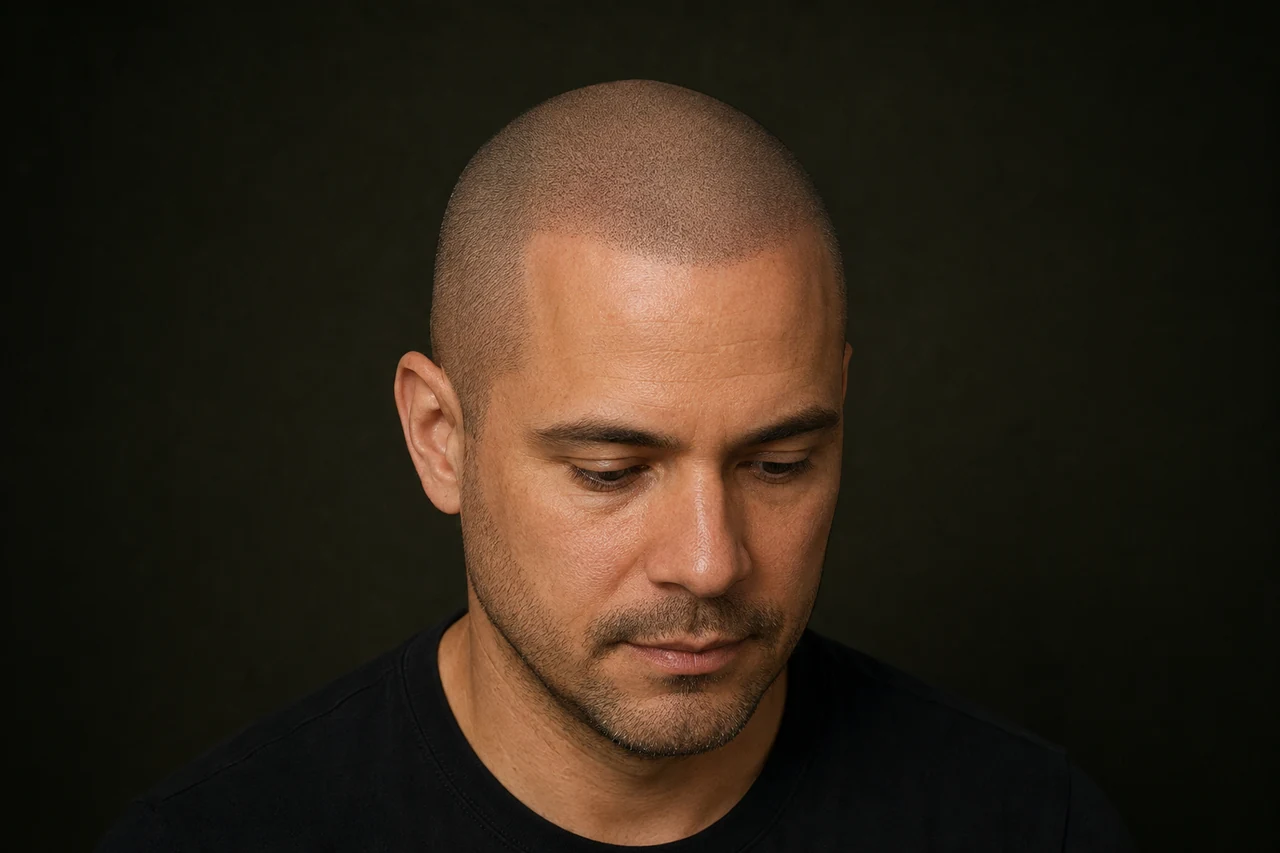
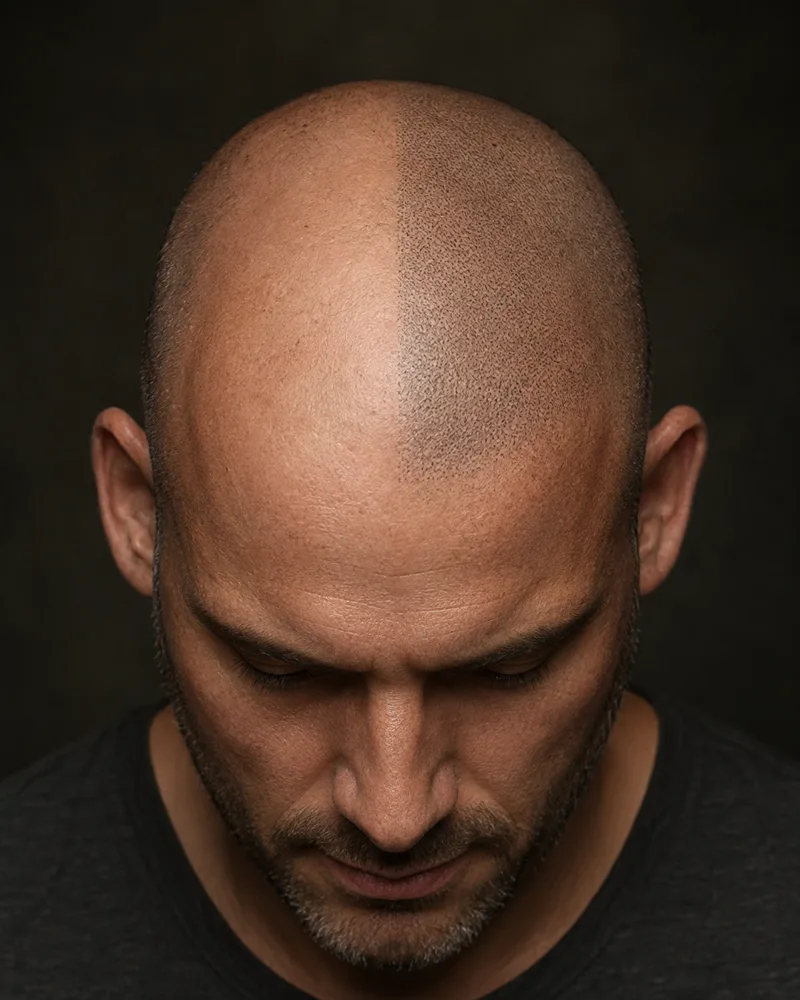
Look at the relationship between visible scalp and surrounding hair in this SCALPS portfolio photograph. Your own assessment should consider the area you want treated and your preferred haircut.
Ask the artist to explain what a comparable result would involve for you. A photo can begin the conversation; it cannot replace an individual plan.
Explore SCALPS client work
Before you decide
Get the appearance right. Understand the cause.
A new patch, sudden change or uncomfortable scalp deserves medical assessment. Tell your dermatologist when you noticed it, how it has changed and what you have used on the area. Cosmetic coverage and medical treatment can serve different purposes.
Medical context: AAD guidance on diagnosing and treating hair loss. This article explains coverage choices and does not diagnose your hair loss.
Can I cover a bald spot with no hair in it?
How do I hide a bald spot at the crown?
Is coverage different for men and women?
What should I bring to an SMP consultation?
Talk through your starting point
Find out whether SMP fits your hair.
Tell us what you want to cover. We can discuss the appearance, treatment plan and price at a free consultation.