
The SCALPS journal · Women's hair
How Scalp Micropigmentation Can Help Female Hair Loss Problems
A wider part. More scalp showing. A closer look at what pigment can change.
Read the guideIf your morning routine now includes hiding your part, start here.
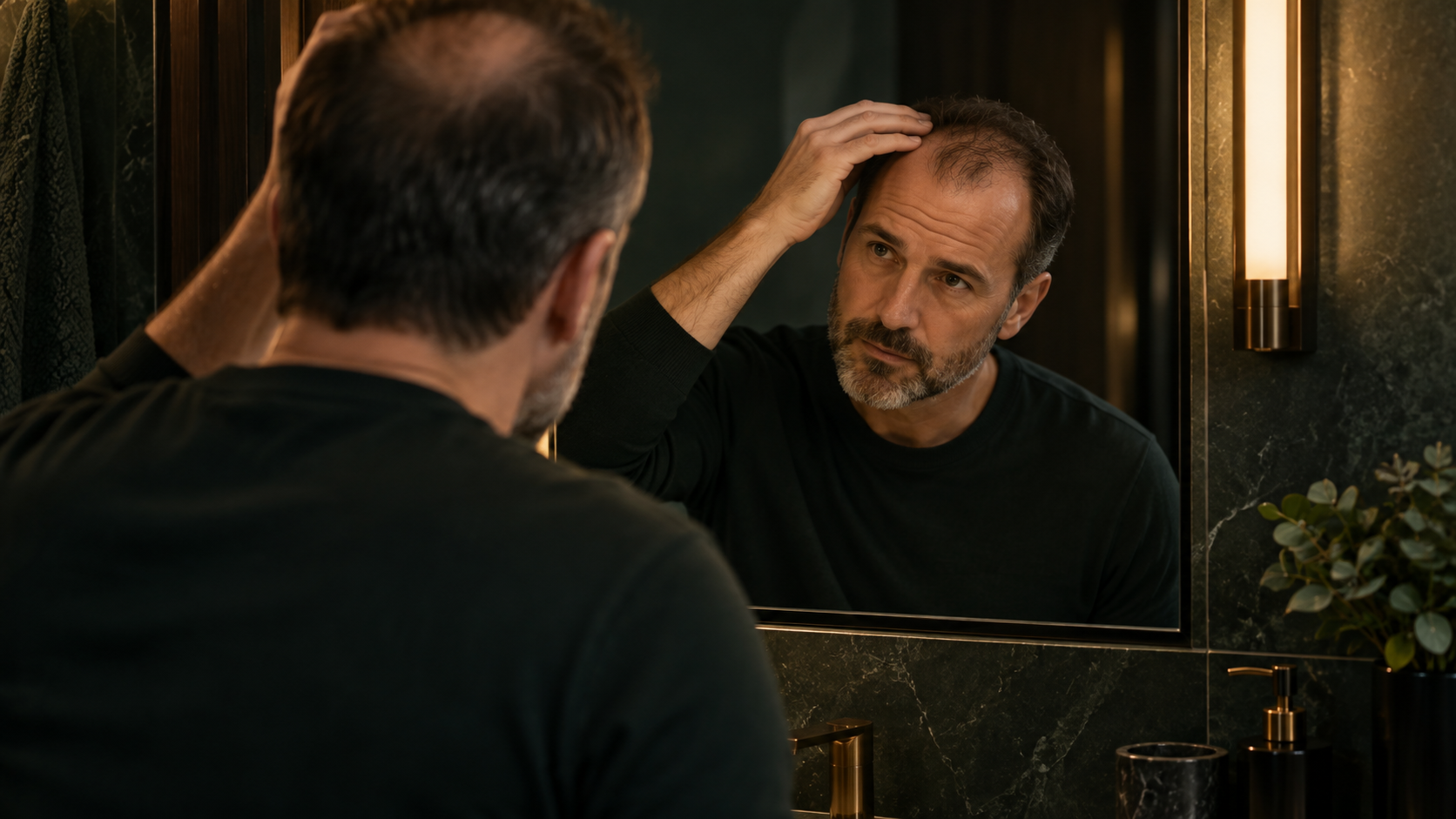
You move your part a little. Add a little volume. Check the back with a second mirror. When more scalp starts showing, the question becomes what would make that area less noticeable.
Scalp micropigmentation changes the visible background.
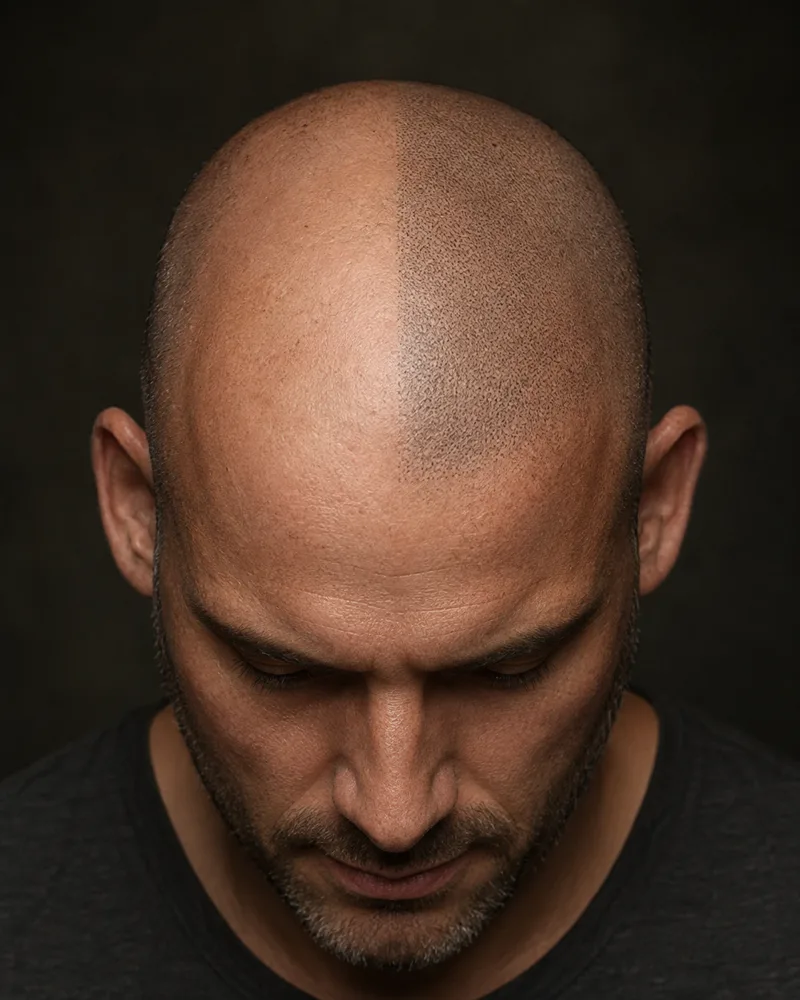
Scalp micropigmentation, or SMP, is a cosmetic tattoo technique. An artist uses fine needles to place small pigment impressions in the scalp. Between existing hairs, those impressions can reduce the contrast between the skin and hair, creating the appearance of fuller coverage.
Your existing hair provides the length, movement and texture. A hair tattoo changes the appearance of the scalp beneath it. SMP does not grow new hair or treat the cause of hair loss. Cleveland Clinic explains the procedure and its limits.
The plan needs to make sense with the hair you have and the way you actually wear it.
That is the focus of this guide. For the full treatment overview, see scalp micropigmentation for women.
Look at the area that bothers you
Same head of hair.
Different design decisions.
The part, crown and hairline each show scalp in a different way. Scalp micropigmentation should follow the pattern of your remaining hair.
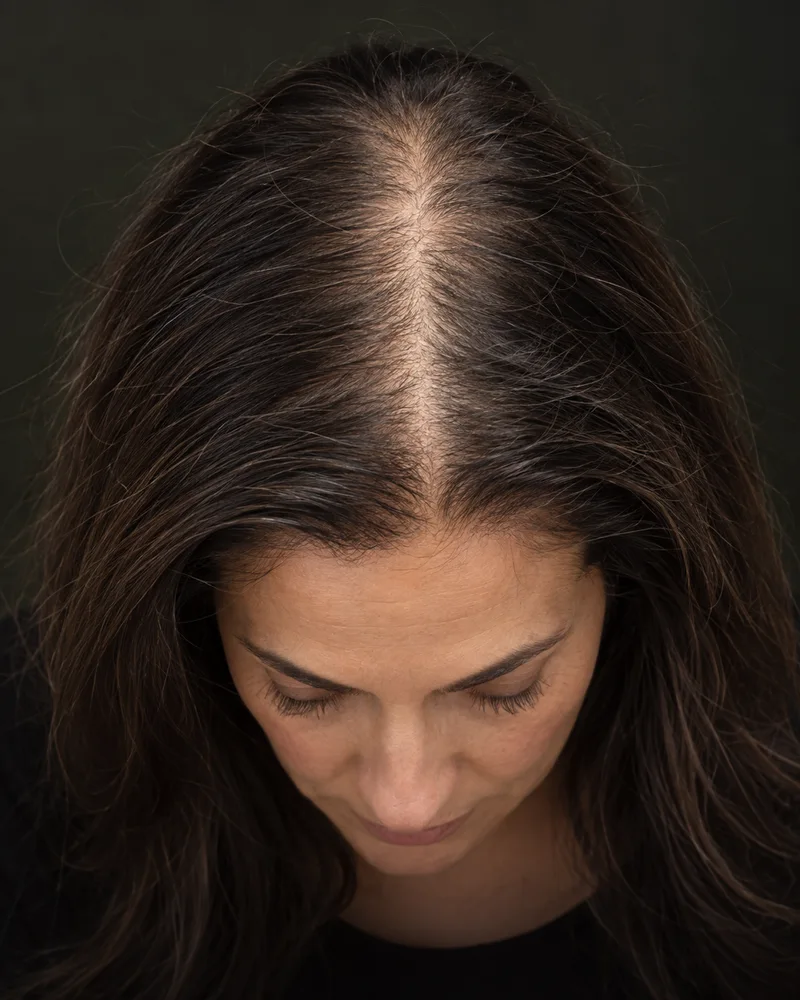
A wider part can become
the first thing you see.
Look at the visible line of scalp and the hair beside it. Small pigment impressions can soften the contrast through that area. The placement also needs to blend into the surrounding coverage.
Show your artist your usual part and any other way you regularly style it. A plan based on one carefully arranged photograph may miss what you see in everyday life.
Bring this up: “I usually part it here, but sometimes I switch sides.” That is useful information for your design.
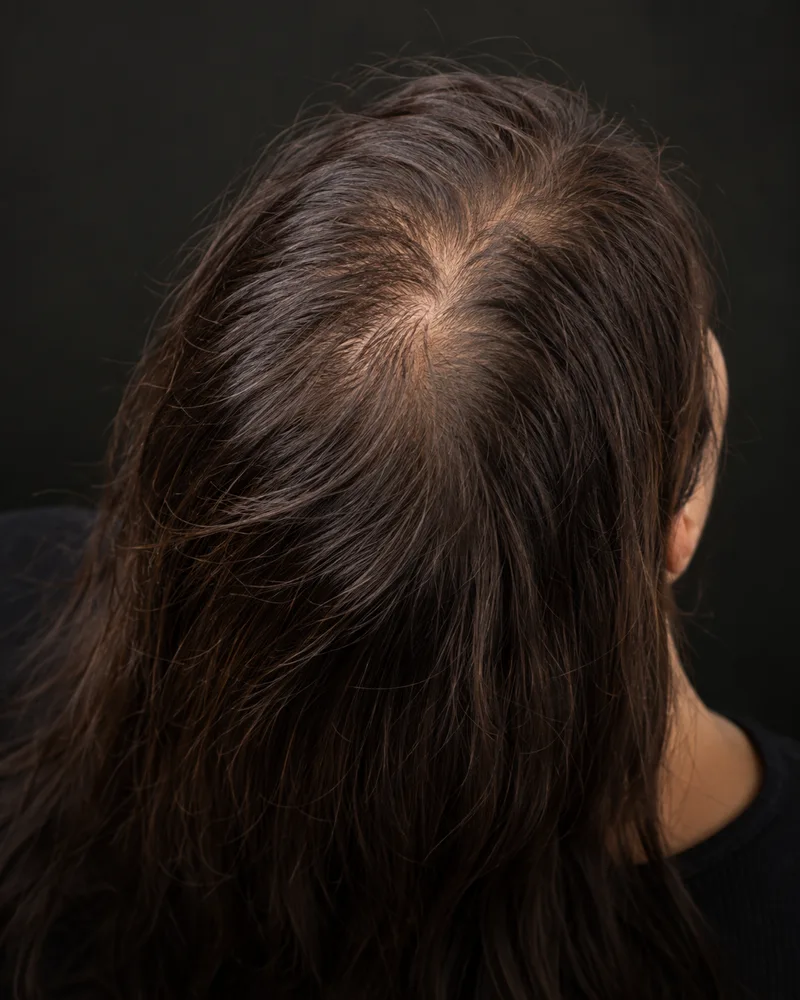
The back of your head
belongs in the plan.
The crown has its own direction of growth. Hair turns around the whorl, and the amount of scalp showing depends partly on how those hairs fall.
A scalp micropigmentation assessment should include views from above and behind. The goal is to consider the whole area of show through, including its transition into fuller coverage.
Ask to see: Relevant crown work from an angle that shows the treated area. A front portrait tells only part of the story.
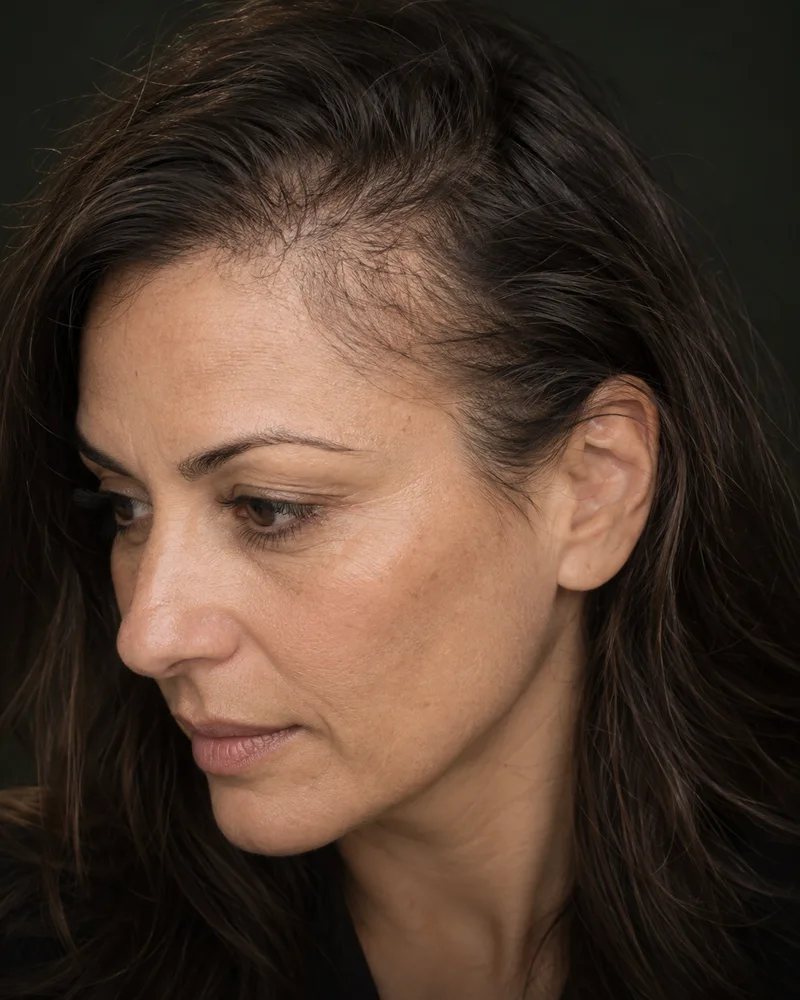
Fine edges call for
a considered approach.
Your natural hairline includes fine hairs, uneven spacing and softer transitions at the temples. The design should account for those details and how much coverage remains.
If you often pull your hair back, show that at the consultation. A hair tattoo places pigment in the skin; it cannot supply the length or texture of missing strands. Discuss what the proposed appearance can look like with your hair both loose and tied back.
Bring your everyday hairstyle. It has a say in the plan.
Look closely at the work
Look at the scalp.
Then the whole head.
This original photograph comes from the SCALPS women's SMP portfolio. Look at the visible scalp between the hairs and how the treatment sits beside the surrounding coverage.
When comparing scalp micropigmentation results, ask whether the starting point resembles yours. Ask to see healed work, clear close views and the area under ordinary lighting. A useful consultation explains how those examples relate to your hair.
Explore the client gallery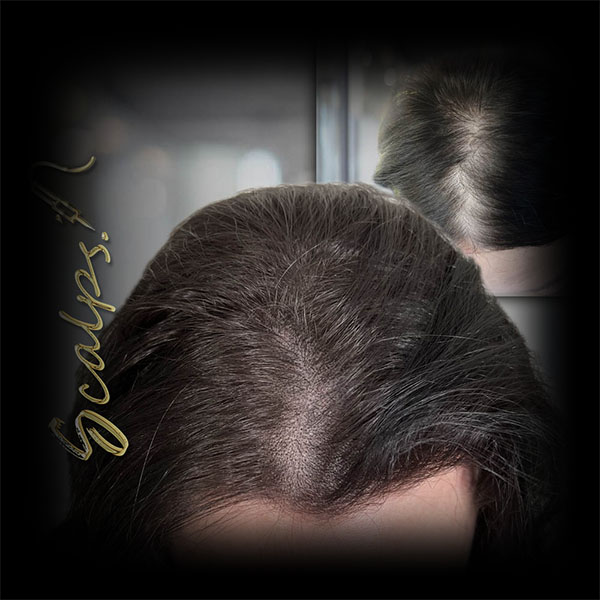
Make the conversation useful
Bring your hair.
And your questions.
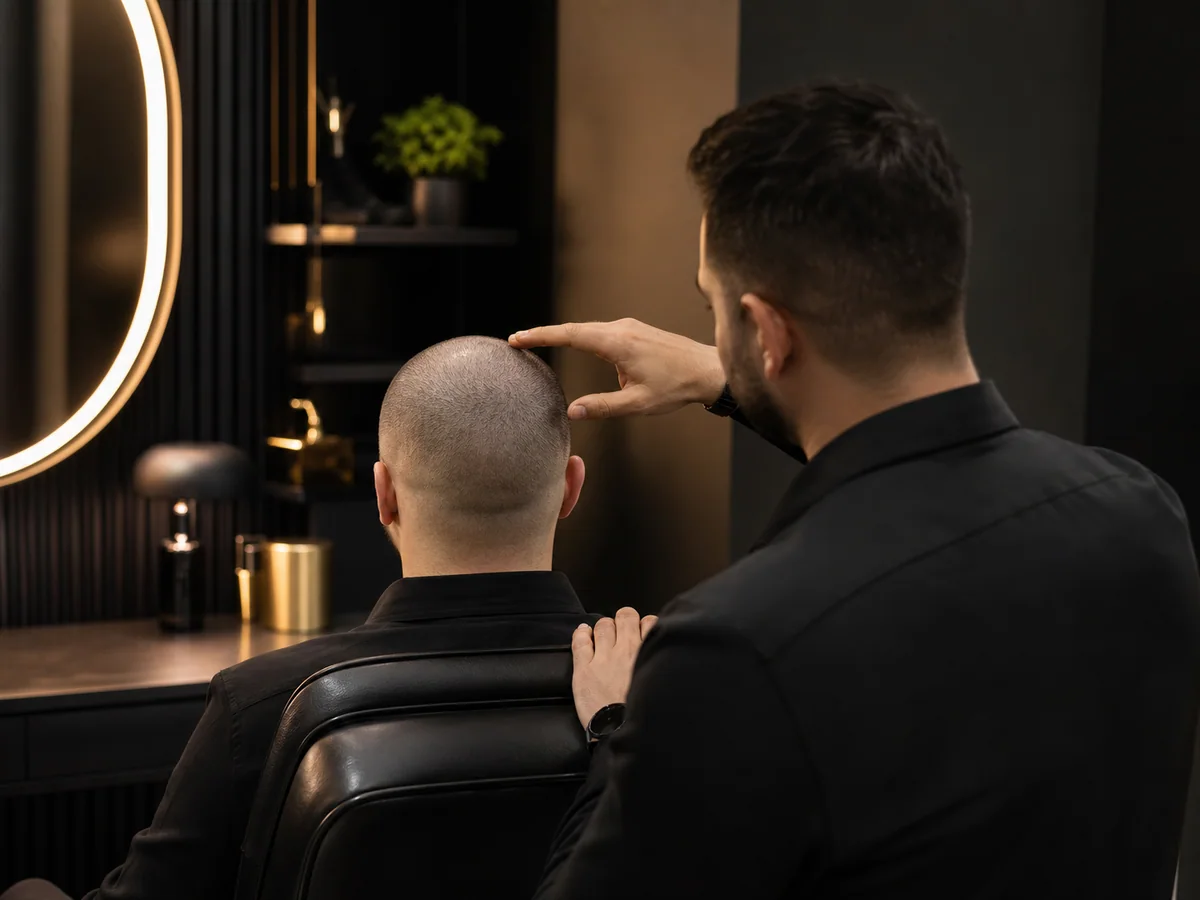
A scalp micropigmentation consultation should turn a general idea into a plan you can understand. These details give your artist something useful to work with.
You can learn about Alex Asher and the SCALPS approach before you meet.
How you wear your hair
Show your usual part and hair length. Include any pulled back styles you want to keep.
Where you see the difference
Point out the part, crown or edges that concern you. Photos in clear, ordinary light can help explain what you mean.
What is happening with your scalp
Mention recent changes, sensitivity, products and any hair loss treatment. Ask what needs to be assessed before pigment is planned.
What the proposed treatment includes
Ask about the design and planned sessions. Have the care instructions, full price and future upkeep explained before you decide.
Know the practical details
Plan for the days
after treatment.
Scalp micropigmentation involves scalp care after each session. Discuss washing, exercise, sun and styling products before treatment so the timing fits your routine.
Read the SCALPS aftercare instructionsFor cost, compare the proposed area, visits and upkeep. See current female scalp micropigmentation cost and pricing.
Will SMP make my hair grow back?
SMP creates a visual effect with pigment. It does not regrow hair. If you want to address shedding or the cause of thinning, discuss that with a dermatologist alongside your cosmetic options.
Can I keep my hair long?
Density work can be planned between existing longer hairs. The assessment considers how much hair remains and the appearance you want. Show your artist how you normally wear it before agreeing on a design.
What if my hair keeps thinning?
As the surrounding hair changes, the visual balance can change too. Discuss that possibility at the consultation, including what future reviews or adjustments may involve.
What should I ask about comfort and safety?
Scalp micropigmentation uses needles, and sensitivity varies. Ask about hygiene, pigment suitability, your scalp's condition and the care instructions. Share any concerns before treatment.