Budget and travel
Choose your SMP
budget and priorities.
Choose the option that fits your priorities.
Your choice · Best work I can find
Choose a proven SMP artist.
1of 3
 Inspect the artist’s own results.
Look for a proven track record.
More relevant results give you more to judge.
- Several healed cases.
- Starting points like yours.
Why this path can feel more reassuring
Let the artist’s own healed results guide your search. A deeper portfolio can show consistency across different clients. Comparable cases help you judge the artist’s approach to your situation.
A strong record can give you more confidence in the choice. It cannot guarantee your result.
Plan for travel, cost and waiting.
The artist you want may be a flight or a long drive away.
- Include travel and later visits.
- Check available dates before booking travel.
Alex’s view on finding top SMP artists
Include travel and accommodation in your treatment budget. Later visits can add to the cost. Your preferred artist may have limited dates.
Alex’s personal estimate is roughly 10–20 artists at the very top of the craft across the United States. Examples of places he points to include New Jersey, New York, California, Las Vegas and Texas. This reflects his professional opinion. An excellent artist may also work in your state.
Start locally, then widen the search if you cannot find the work you want. A famous postcode does not replace a close look at the individual artist’s results.
Make three checks before committing.
Know the work, the artist and the plan.
- Inspect comparable healed work.
- Speak to the artist you chose.
- Plan every visit and the full cost.
The questions behind these checks
Look for cases that resemble your starting point. Discuss your plan and who performs each visit. Confirm the dates and number of visits, then work out the full cost before flying.
Your choice · Good work. Sensible cost.
Find good SMP within your budget.
1of 3
Often artists with 1–3 years in SMP.
A newer artist can do good work while building a portfolio.
- Inspect the work behind the price.
How Alex uses this price range
In Alex’s experience, around $1,500–$2,500 can be a middle price range for a decent artist with about one to three years in SMP. Coverage, location and the number of visits affect the price. Ask what the complete treatment quote includes.
Alex often associates prices below this range with artists who are just starting out. That is a clue to investigate their experience. Price alone cannot establish quality.
Inspect the artist’s own results.Weigh the saving against the track record.
A manageable price can come with less evidence to judge.
- Opportunity: good emerging talent.
- Tradeoff: fewer healed cases to inspect.
Why the track record matters
Years later, the work teaches the artist something new.
Alex says his approach has changed since his first two, three and four years in SMP. Seeing clients return has helped him understand how his work holds up over time.
In his experience, clients often return around three years later for a touch-up. That gives him a chance to compare the result with his original photographs and treatment notes.
For Alex, seeing that first three-year cycle is an important part of developing advanced judgment. Keeping organized records and learning from returning clients is what makes those years useful.
A newer artist can still do good work, but may have fewer results from several years later to show you. Ask how old the results are and what the artist has learned from follow-up visits. Time in the industry alone does not prove skill, and return times vary.
Make three checks before paying.
Give the artist’s work a careful look.
- Meet the person doing your SMP.
- Look beyond the best photograph.
- Compare the complete quote.
The questions behind these checks
Ask about experience with heads like yours. Look for larger close views and several healed cases. Check which visits are included, then ask about aftercare and extra charges.
Both choices need the same close inspection. Price, fame and distance cannot guarantee your result.
Your next three steps
Already know what you need? Jump to a topic.
 01
Chapter 1 of 3
Choose your
SMP artist.
Start with practical clues you can check before booking.
Chapter 1 · 1 of 4 · Studio care
Visit the SMP studio
before you book.
Start with the studio’s photos. If you can visit, look more closely.
Tap a studio check.

Look for care
in the studio.
Look for a clean, orderly studio where the small details feel considered—from the treatment area to the pictures on the walls.
Why it matters · read more
Care in the space can be a clue to care in the work.
Notice the details. Then check the artist’s results.
What Alex looks for
Alex looks for an artist who takes pride in the space: thoughtful pictures, orderly supplies and small details that have been finished with care. SMP asks for patience and attention to detail. He looks for signs of those habits before seeing the work. A modest studio can show just as much care as an expensive one. Use presentation as a clue, then inspect the results and ask about hygiene.
Understand the
equipment preparation.
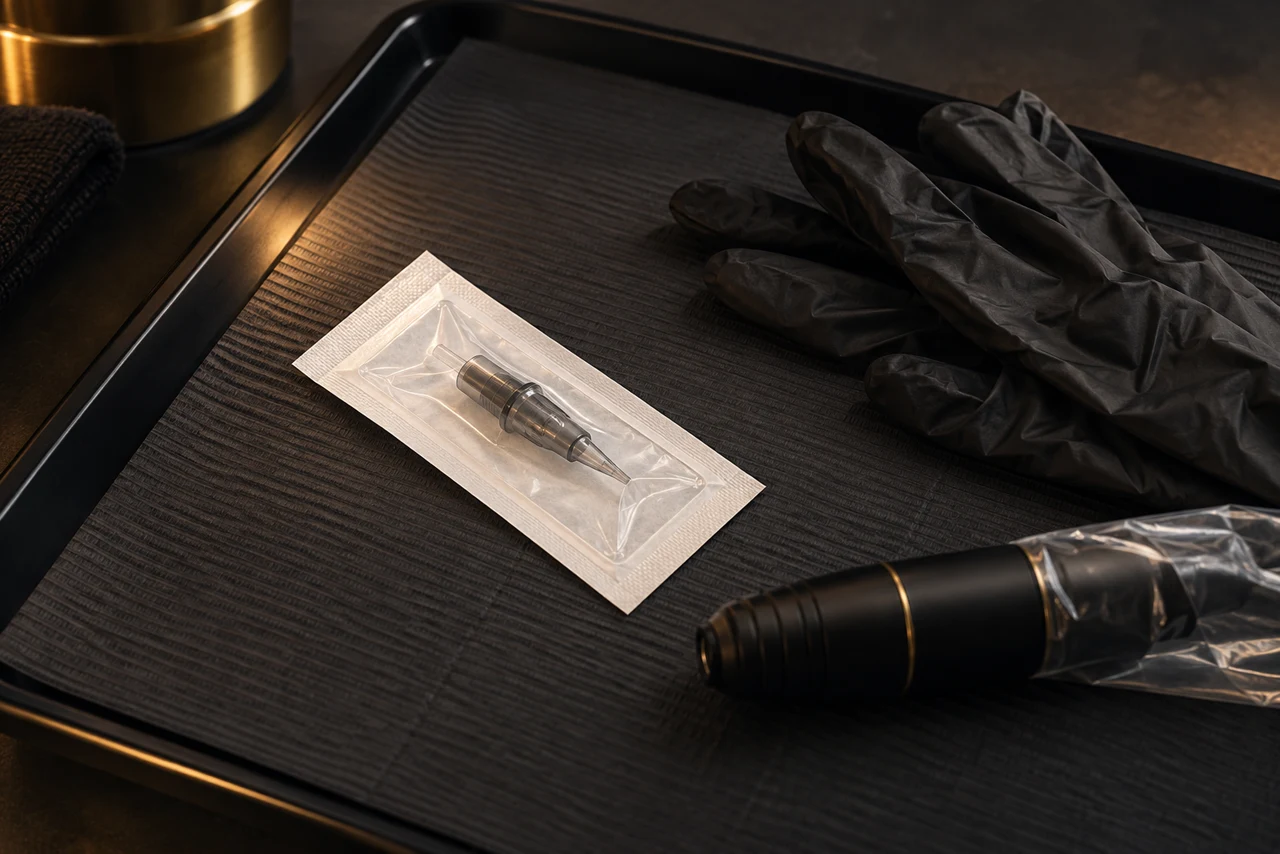
Ask about sterile single-use needles or cartridges, protective barriers and glove changes. Have the artist explain equipment cleaning and disposal of used sharps.
Why it matters · read more
Check the permissions and inspections that apply locally. Pause if the artist cannot clearly explain how they prevent contamination between clients.
Your written
care plan.
What do I do at home?
When is my follow-up?
Who can I contact?
Get instructions
before you leave.
Request written aftercare, a contact for concerns and guidance about when medical advice is needed. Ask how your treatment and pigment details are recorded.
Why it matters · read more
Chapter 1 · 2 of 4 · Working habits
Check the artist’s
social media videos.
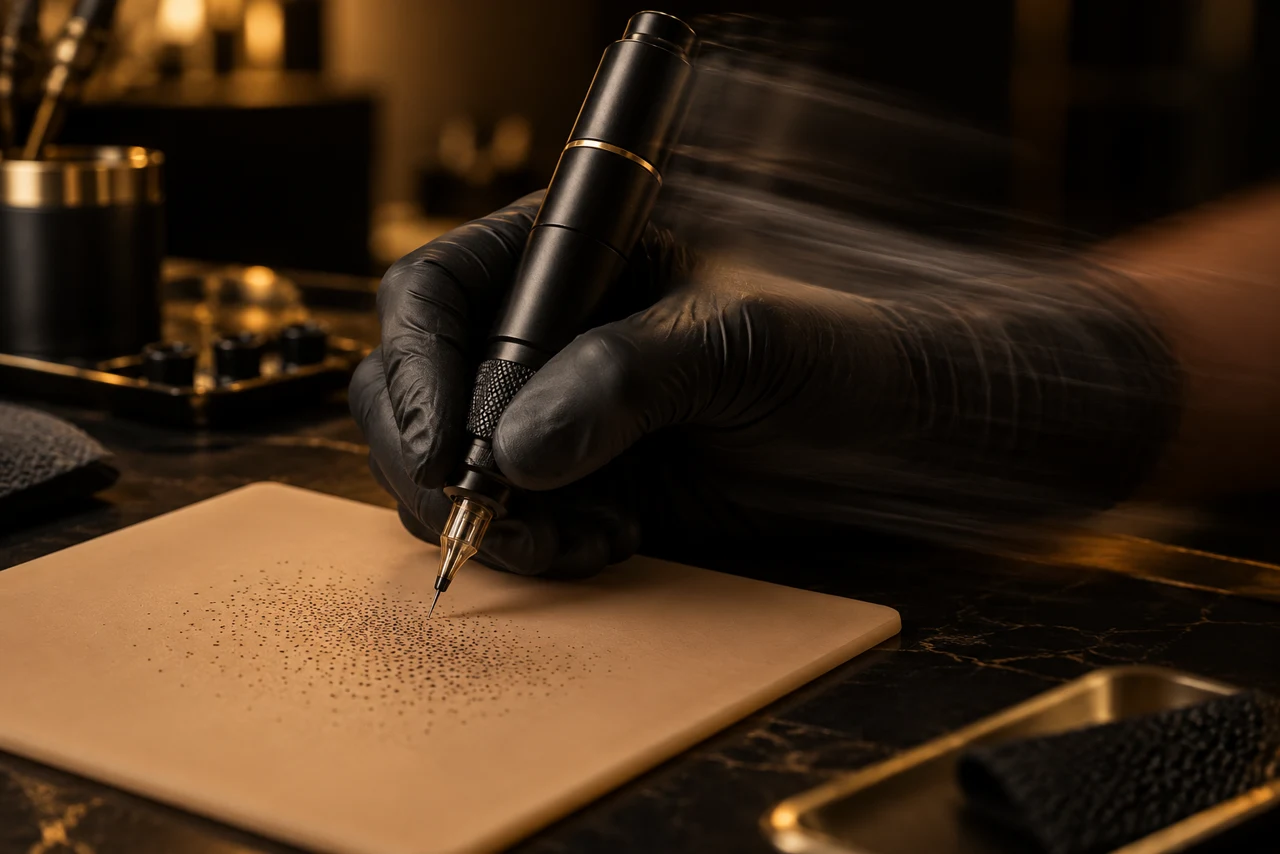
Use the videos they already share.
Chapter 1 · 3 of 4 · Speak to your artist
Speak to
your SMP artist.
Three questions to settle before you book.


Get a name
Who will
do my SMP?
Review that person’s own work. Ask the studio to confirm your chosen artist in writing before taking a deposit.
Will the artist whose work I chose perform my treatment?
Before you book
How easy is it
to reach your artist?
Notice the effort it takes to get a clear answer.
- Easy to arrange?Or a complicated back-and-forth?
- A clear reply time?Know when to expect an answer.
- Help during treatment?Know who to contact if a concern comes up.
Ask which ways you can reach them
Why contact matters
Repeated delays or unclear answers before booking are worth considering. Ask how the artist handles questions during treatment and afterward. They may be working with a client, so an instant reply is not the test. Look for a dependable way to reach the right person.
Use the conversation to explain your starting point and the look you want. Ask how the artist would approach your head, how long they need and what limitations they see.
Know who follows through
Will you do
my later sessions?
Confirm who performs the later visits and checks your progress. Agree what happens if your chosen artist becomes unavailable.
Who stays responsible for my SMP across all my visits?
What should make me pause?
You choose one artist’s portfolio, but the studio will assign whoever is available. Access to the artist is refused, or nobody can explain who will follow your treatment through. A studio with several artists can still give you a clear choice and an agreed plan.
 02
Chapter 2 of 3
Know what good
SMP looks like.
Learn what to compare in real results, including work after healing.
Rafael’s documented SCALPS case
Compare fresh
and healed SMP.
One client. Tap a stage.
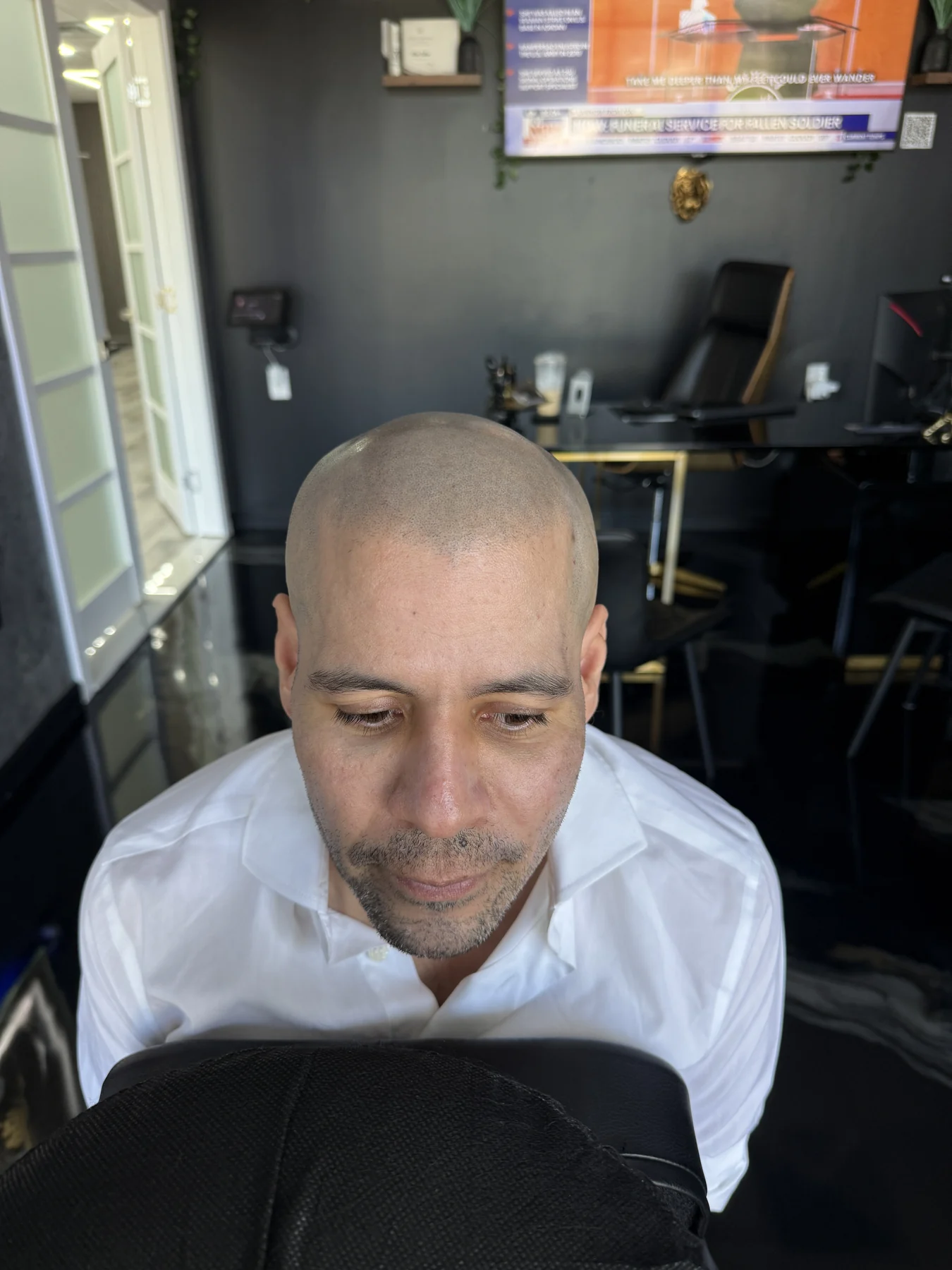
60 days after the final session.
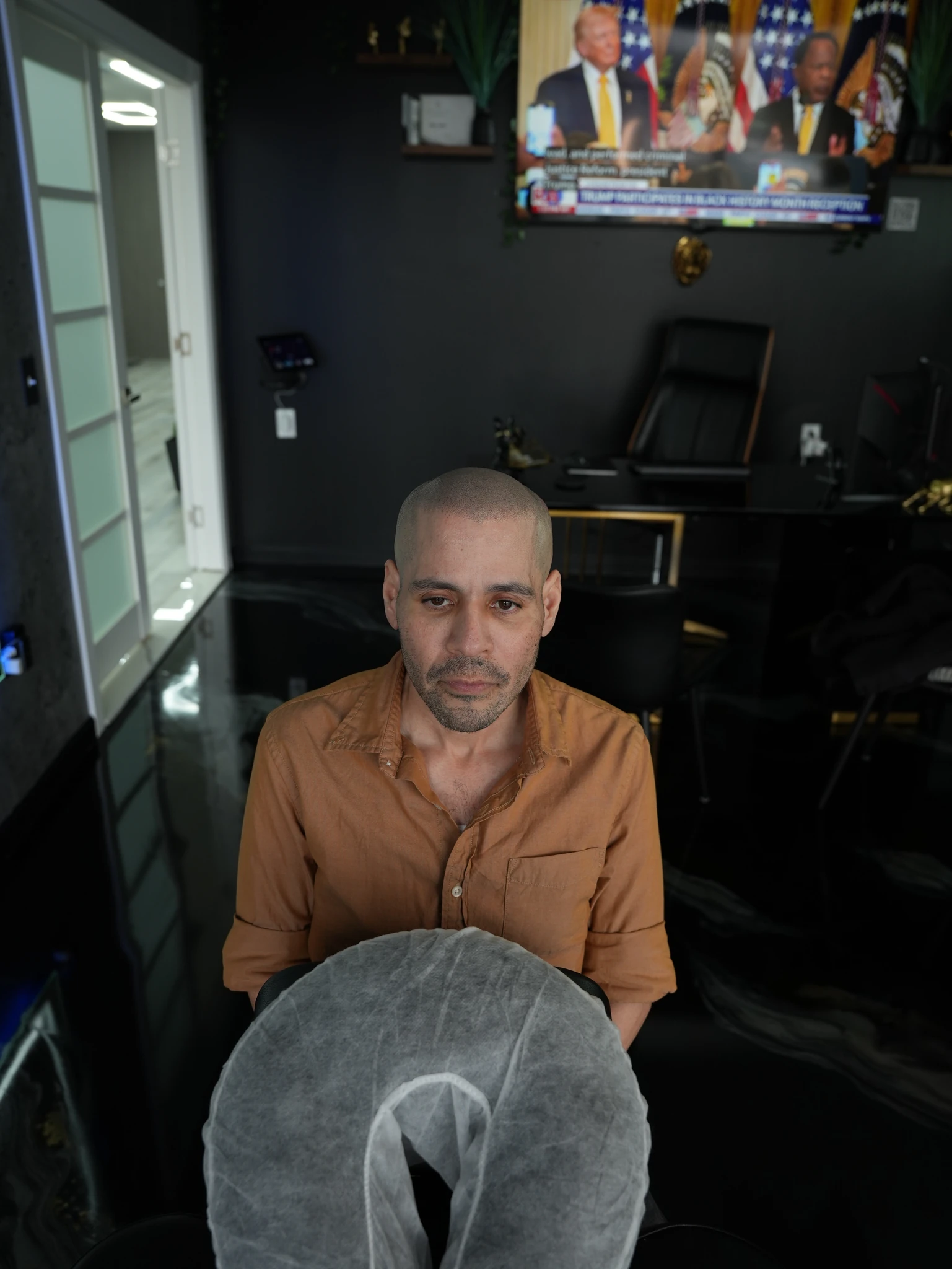
Immediately after session 3. A fourth refinement followed.
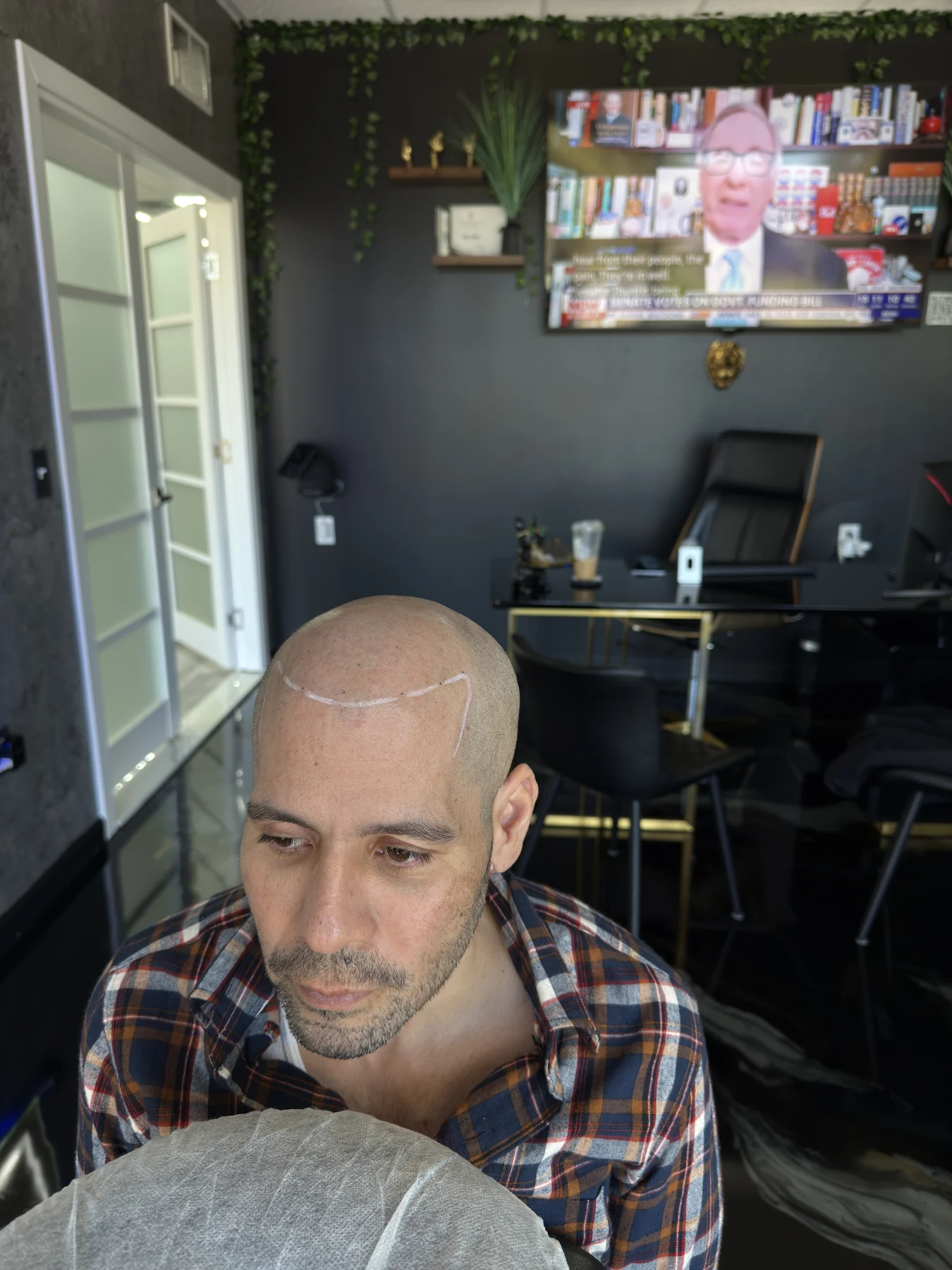
Before SMP. Proposed hairline in white.
Different lighting and angles. Individual results vary.
What to look for
Five details worth checking.
Tap a detail to learn what it means.
Size and shapeControlled marks
Controlled impressions that suit the surrounding hair and the intended design.
SeparationSkin between dots
Distinct marks with visible skin between them.
ConsistencyAn even overall pattern
A pattern that blends across the scalp at a normal viewing distance.
FeatheringA gradual front edge
A gradual transition at the front, with spacing and tone suited to the agreed design.
Pigment boundariesDefined after healing
Defined impressions after healing. Ask about areas that appear blurred or blotchy.
Why compare fresh and healed work?
Fresh work and healed work answer different questions. Ask to see both, including clear close views and ordinary viewing distance. Use several clients with starting points like yours.
Compare examples that resemble your situation
A shaved appearance, density between longer hair and scar camouflage have different limits. Ask for work relevant to your skin, hair coverage and intended style. A certificate, award or one striking case does not replace a portfolio you can inspect.
Chapter 2 takeaway
Now you have a reference point.
Next, compare the warning examples. Small differences in marks and spacing can change the overall appearance.
 03
Chapter 3 of 3
Spot the
SMP red flags.
You have seen what to look for. Now learn five warning signs to question before you book.
What these examples can show you
The three videos highlight visible inconsistencies during treatment. They show work in progress; the healed results are not shown. The hairline, pigment and inspection images are teaching illustrations. Use the examples to guide your questions and request comparable healed work.
Chapter 3 · Three visual warning checks
What to look for
in SMP impressions.
Learn what to check and why it matters. These are warning examples.
Inspect individual marksRed flag check · Size and shape
Look for uneven
size and shape.
Compare impressions across a generous area of the scalp.
Large, elongated or unusually heavy marks can interrupt the overall pattern.
Read the explanation
Look across the whole patch instead of one selected spot. Some variation is deliberate, especially at a soft hairline. Compare the artist’s work at close range and at an ordinary viewing distance.
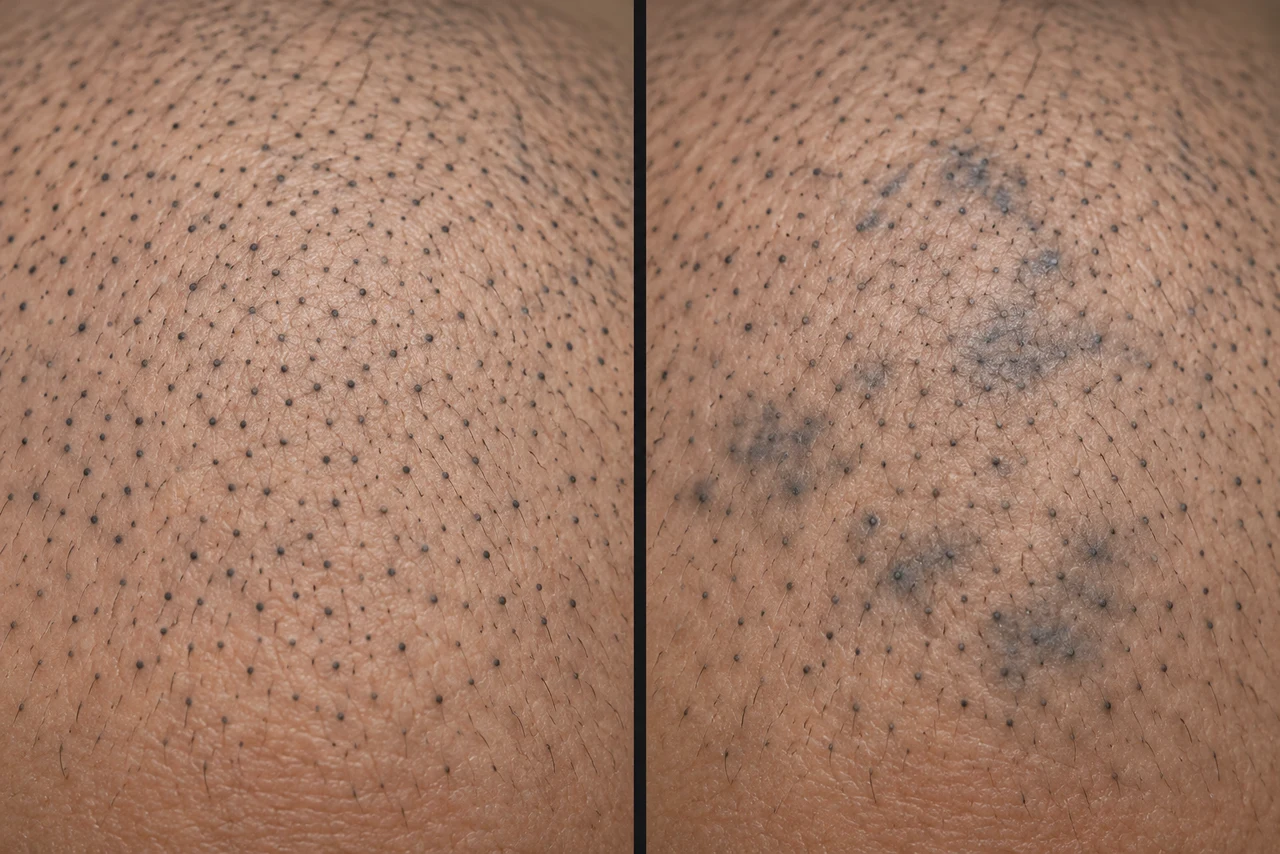 Blurred or stained-looking pigment
Red flag check · Blowouts
Blowouts:
blurred pigment.
Watch for blue-grey, blurred or stained-looking patches around the marks.
Pigment placed too deeply can spread beyond the intended impression.
Read the explanation
A photograph alone cannot establish placement depth or the cause of a colour change. Use the appearance as a clue, then compare clear healed work.
SMP technique research examines placement factors. A biopsy-confirmed tattoo blowout case documents pigment in deeper tissue.

Red flag check · Spacing
Inconsistent spacing.
Blotchy results.
Look across the whole scalp. Uneven gaps can leave scattered darker and lighter patches.
Precise spacing helps the colour look consistent across the head.
Read the explanation
Follow the gaps as well as the dots. A small change in spacing can shift the apparent density, even when the impressions are similar in size and tone.
Alex sees this precision as one difference between good work and masterful work. The goal is a natural pattern with a consistent blend, allowing for deliberate changes at the hairline and into existing hair.
This teaching image exaggerates the spacing difference so you can spot it. It is not a client result or a measured millimetre scale.
Chapter 3 · Red flag 4 of 5
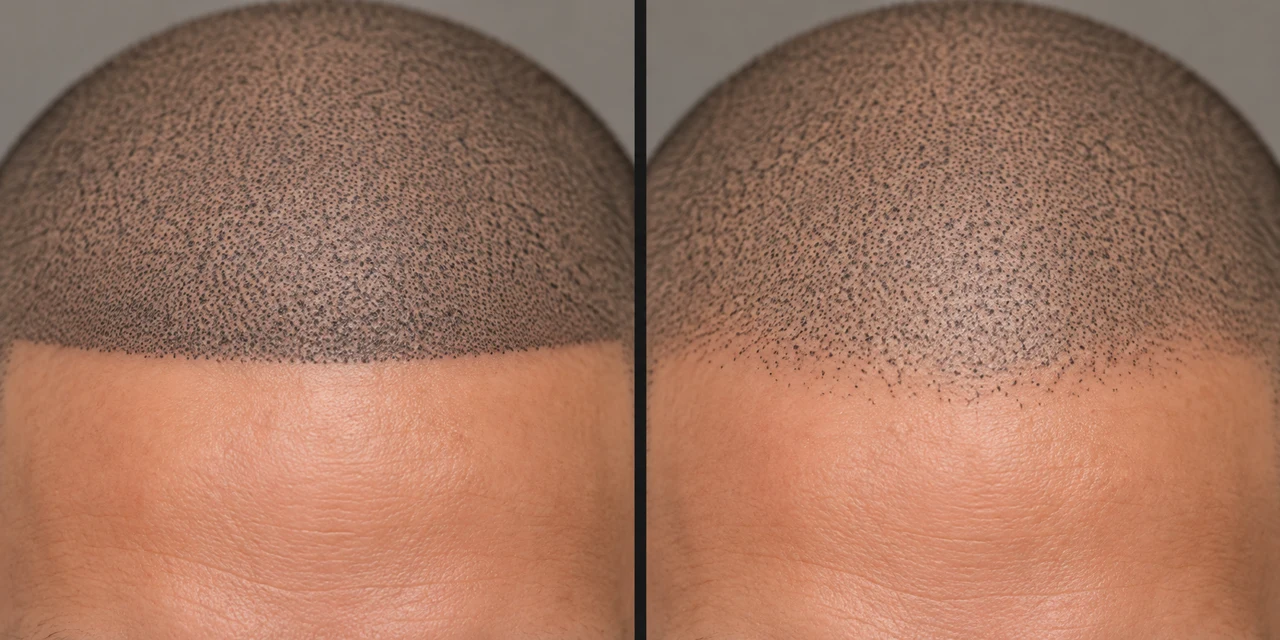
The hairline edge should blend.
Watch for a darker band.
A darker band at the front or sides deserves a closer look.
Why this matters and what to check
Soft or defined, the front and side edges should blend with the coverage behind them.
- Look for edges darker than the rest of the coverage.
- Check for a heavy band across the front or sides.
- Compare the edge and the scalp behind it in the same light.
Alex treats a darker, heavier edge as a warning sign in any hairline style. It can suggest uneven control of spacing or pigment tone. A defined shape still needs a balanced blend.
A dark band can leave the healed hairline looking separate from the rest of the scalp.
Check the healed result
Look at healed photographs from several angles. Fresh pigment, redness and lighting can change the apparent contrast. A photograph alone cannot establish an artist’s knowledge or predict exactly how the work will heal.
Discuss your preferred edge before treatment. Explore SMP hairline design.
Red flag: abrupt edge
Chapter 3 · Red flag 5 of 5
Pigment spread
and blowouts.
Blurred or blotchy areas need assessment; a video cannot establish their cause.
Why this matters and what to check
A blowout means pigment has spread beyond the intended mark.
Excessively deep placement can allow pigment to diffuse, producing a blurred or blotchy appearance. Placement needs to suit the individual scalp.
Can I distinguish the impressions and the skin between them after healing?
Can a video confirm a blowout?
A blue or grey appearance alone does not establish its cause. A recording cannot measure placement depth or predict healed colour. Ask an experienced practitioner to assess concerns with existing SMP.
Clinical references: technical SMP study and published tattoo blowout case. No artist can promise a procedure without risk.
Red flag: diffuse pigment
Put the guide to use
Ask us the same questions.
Compare our work. Understand Alex’s approach. Then discuss what fits your situation.
Still comparing? Check the full price and take the questions below with you.
Next: understand the complete price