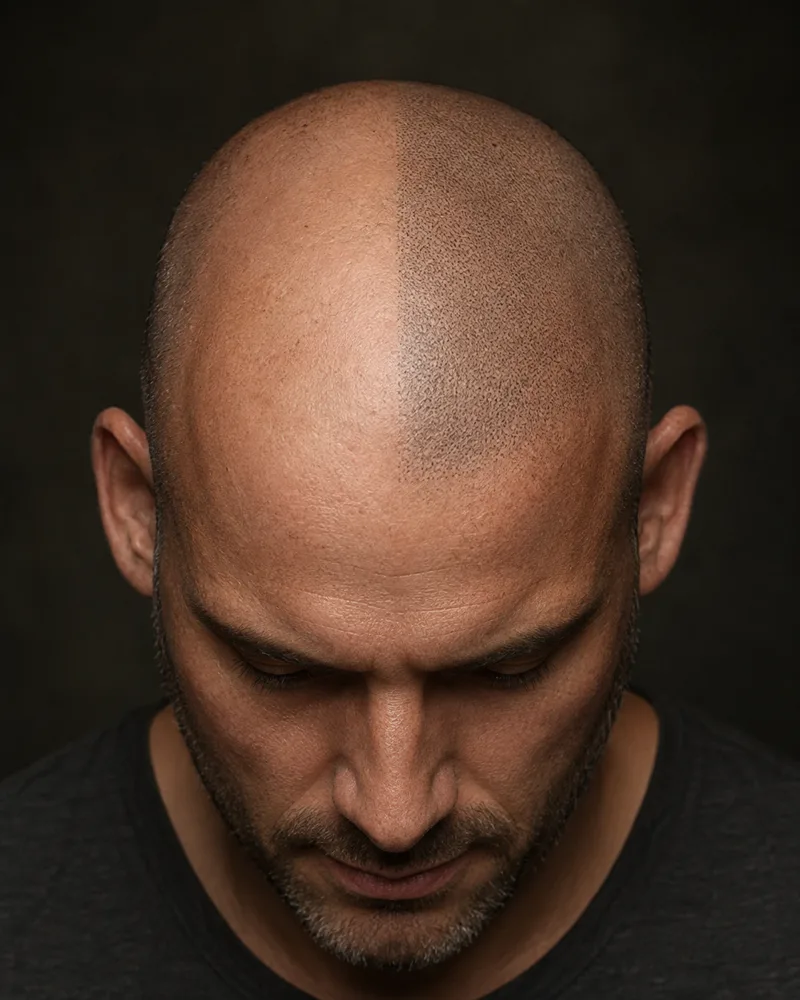
SCALPS® · FUE & FUT scar camouflage
Scalp micropigmentation Scar camouflage.
Less focus on the scar.
More freedom with your hair.
Targeted SMP to soften the contrast of scalp scars and blend with the hair around them.
Explore scar camouflageSMP for hair transplant scars
A softer contrast.
A more even appearance.
The goal is a blend.
Not a darker line.
A pale scar can stand out against the hair around it. Scalp micropigmentation places small pigment impressions in and around suitable scars to make that contrast less noticeable.
SMP camouflages the appearance. It does not remove scar tissue or change its texture.
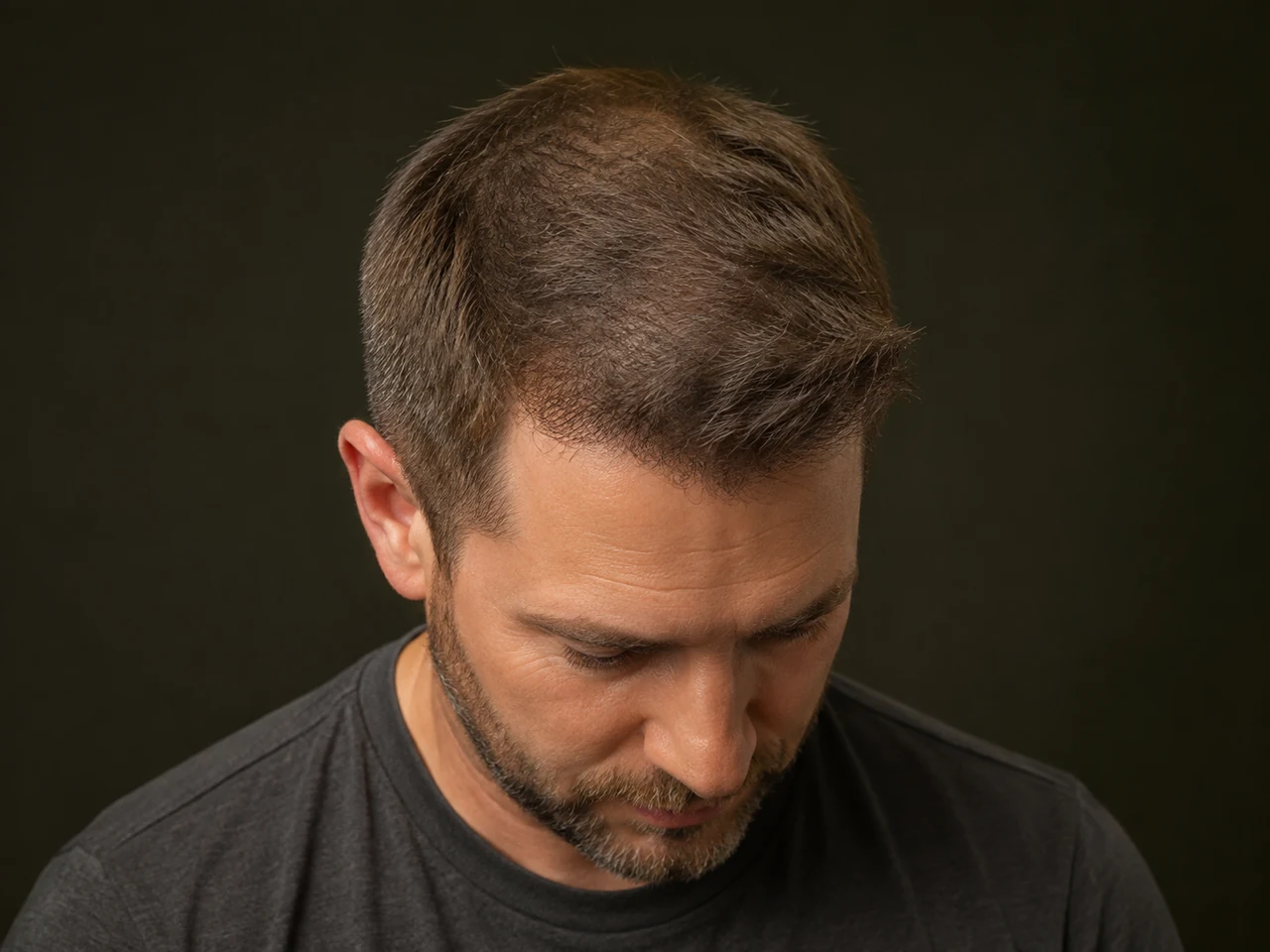
Discuss your scar with us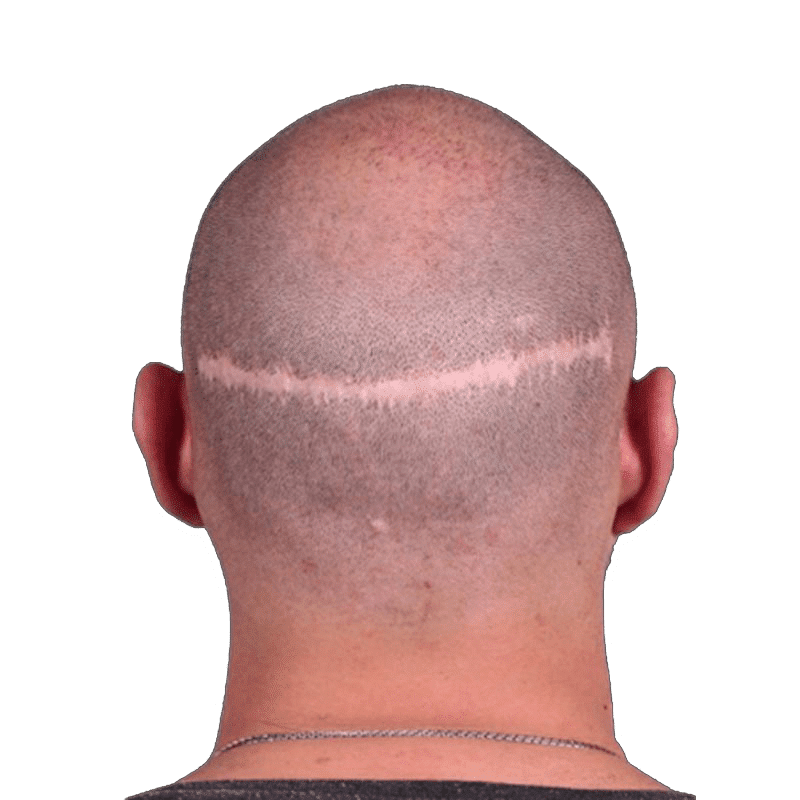 Before SMP
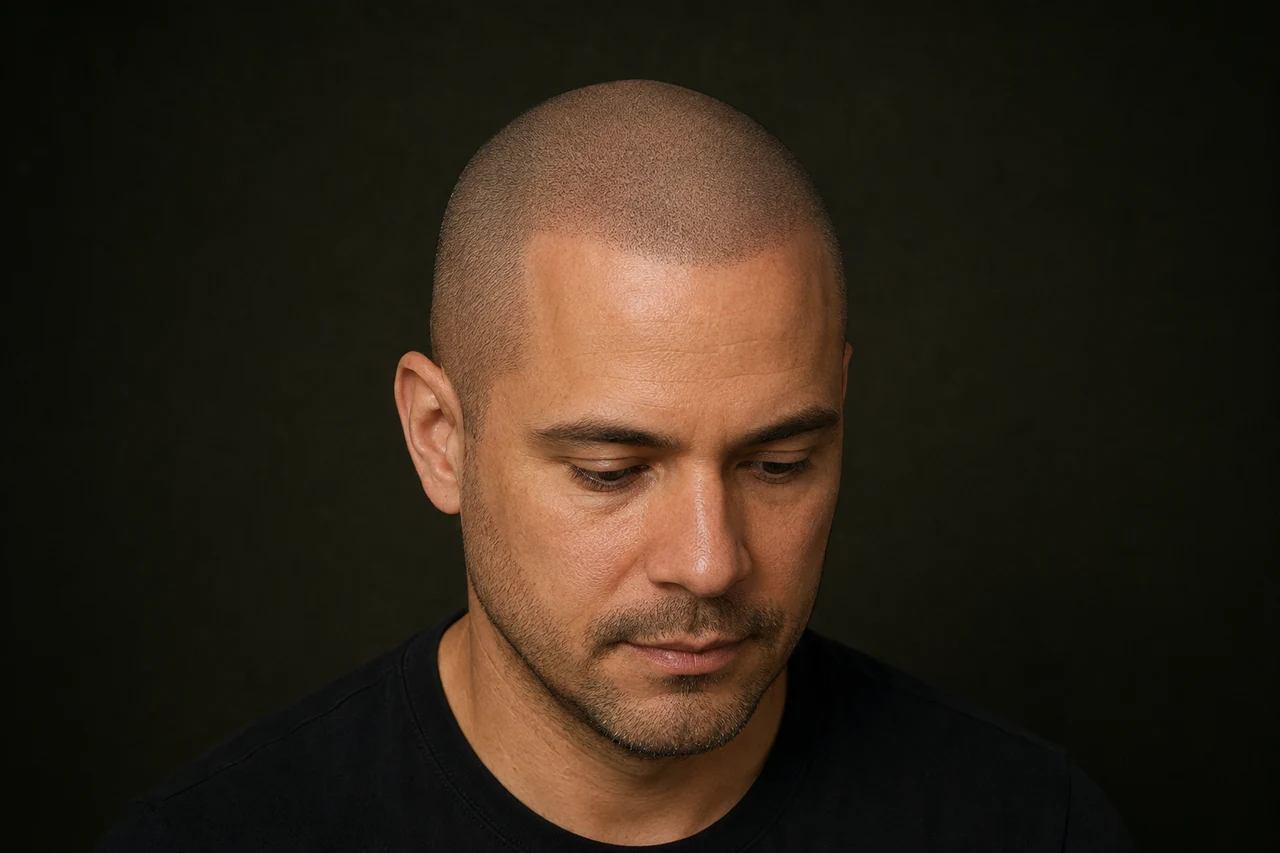
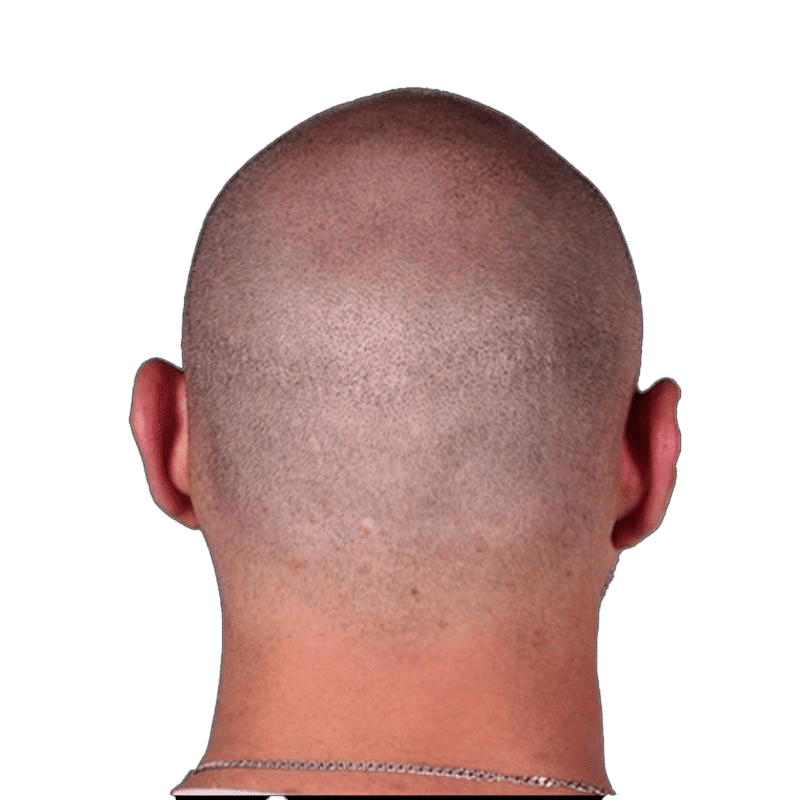 SCALPS result
A carefully planned blend.Understand how SMP works
FUE & FUT hair transplant scars
Can SMP camouflage
hair transplant scars?
Yes. Scalp micropigmentation can reduce the contrast between suitable, healed hair transplant scars and the hair around them. Fine pigment impressions create the appearance of closely cut follicles. The aim is a more continuous-looking donor area—not the removal of the scar itself.
Scar-pattern illustrations, shown with closely clipped hair. Actual scars vary in size, color and visibility.
Scattered donor marks
SMP for FUE scars
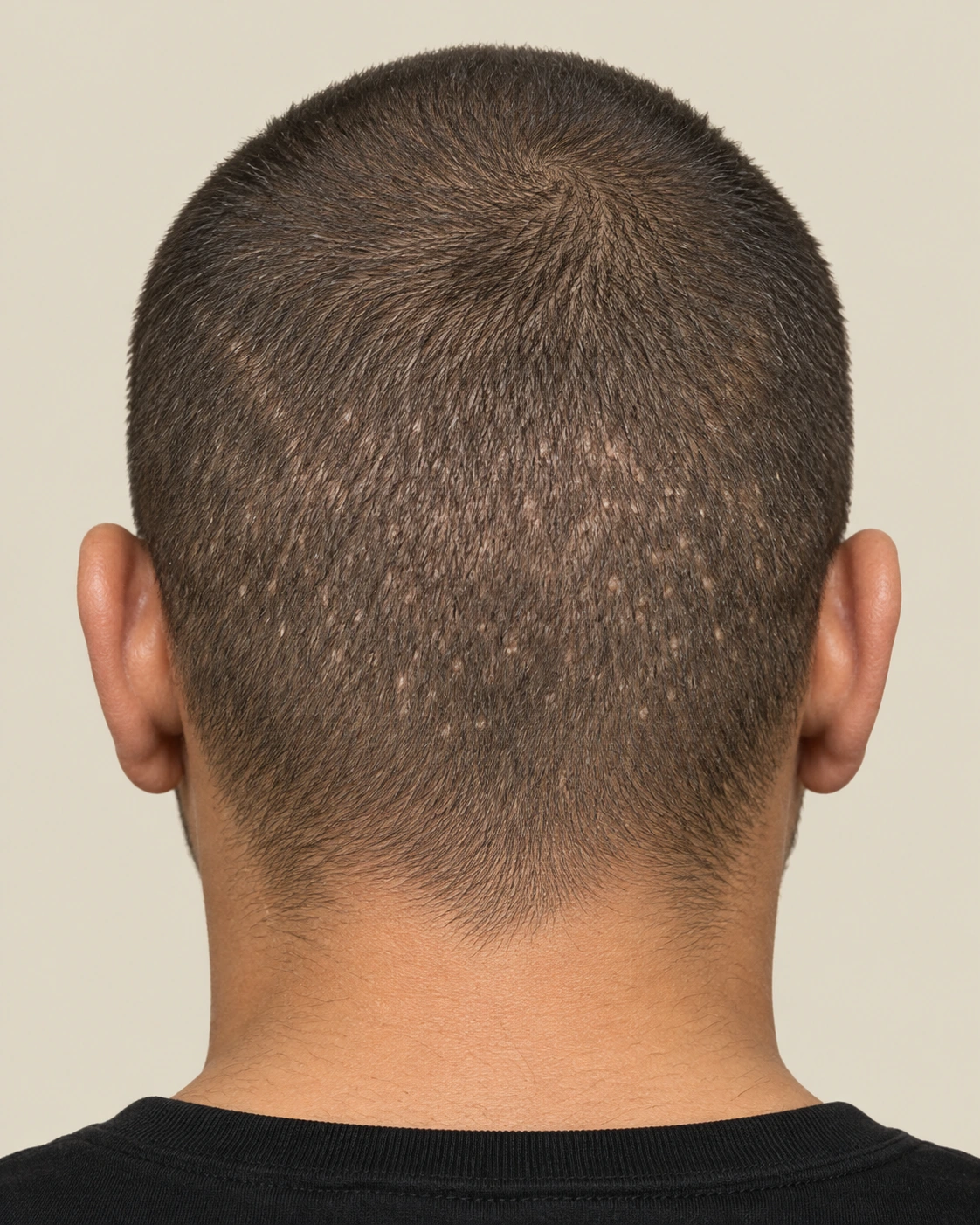
Follicular unit extraction removes individual follicular units from the donor area. It can leave small, dot-like scars across the back and sides of the scalp. When the hair is short, lighter marks and reduced donor density can make that area look uneven.
FUE scar camouflage addresses the visible pattern as a whole. The plan considers the spaces between existing hairs, the distribution of the scars and how you want to wear your hair. Pigment creates an impression of follicles; it does not replace follicles removed during surgery.
A linear donor scar
SMP for FUT scars
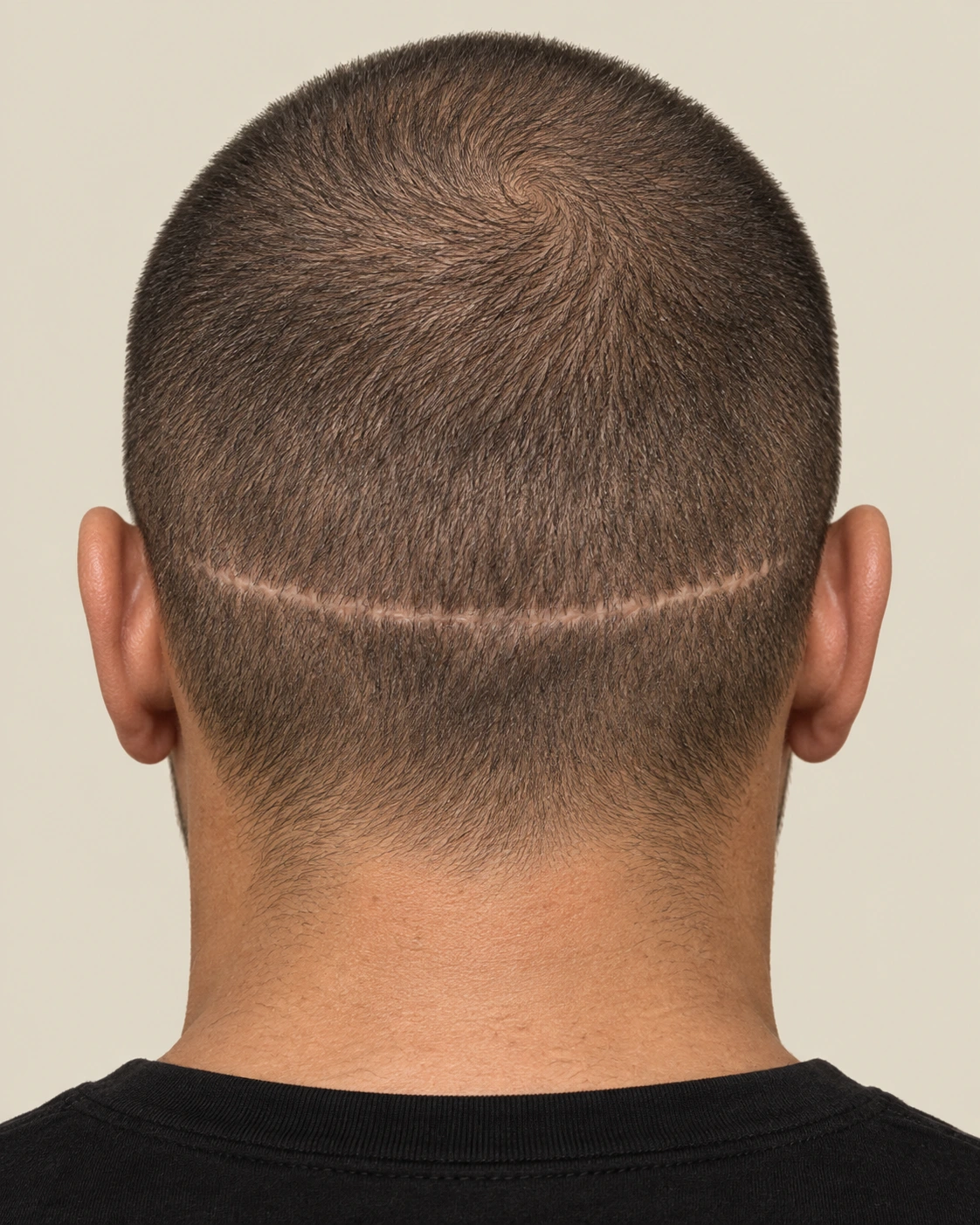
Follicular unit transplantation using a strip harvest leaves a line-shaped donor scar. Its width, color and texture vary. A pale line can be particularly noticeable against darker hair or a close haircut.
FUT scar camouflage uses small impressions within suitable scar tissue and a transition into the surrounding area. Simply making the line darker is not the same as creating a blend. The result must make sense beside the existing hair, at the length you intend to maintain.
Had both procedures? A linear scar and scattered extraction scars can be assessed together, alongside the remaining donor hair.
View the FUE / FUT donor-area illustration
The work behind the blend
How scar camouflage
is planned.
Scar tissue changes the plan.
Texture, pigment retention and the hair around a scar all matter. A convincing result depends on how those details are handled together—not on making the treatment as dark as possible.
Talk through your starting point01Assess the scar and the whole donor area.
We discuss the scar’s history, previous treatment, your current haircut and the appearance you want. Scar color and texture are considered alongside the surrounding density. A close-up assessment may be needed before confirming suitability.
02Build a blend, with room to refine.
Small pigment impressions are planned in relation to the existing hair—not as a solid band of color. Scar tissue can respond differently from surrounding scalp, so the session plan must allow for that response rather than promise a fixed result in one visit.
03Review what remains after healing.
Fresh pigment is not the final reference. Follow-up assessment considers how the impressions settle, where the blend needs refinement and whether additional work is appropriate. Your treatment plan and later maintenance should be discussed separately.
An honest assessment comes first
Is your scar suitable
for SMP?
Not every scalp scar is a good candidate. The cause of the scar matters, but so do its condition today, its color and the skin’s response to injury. A photograph starts the conversation; it does not replace an appropriate assessment.
Illustrated scar patterns—not a diagnosis. Real scars vary in color, shape and texture.
Healed, stable scars
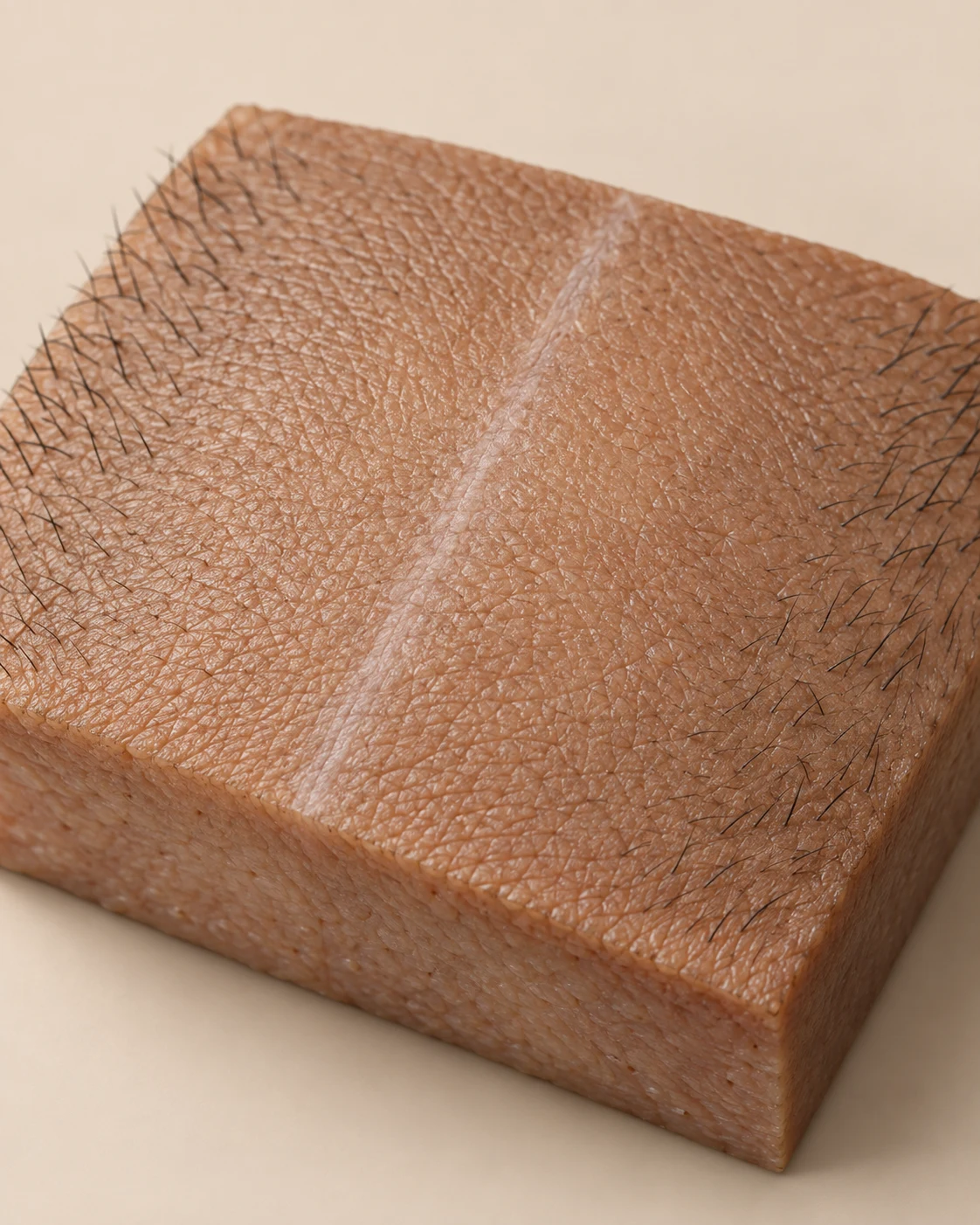
What this means for SMP
A settled scar may be considered for cosmetic camouflage. A recent operation, open skin, inflammation or a scar that is still changing needs more time or medical evaluation. There is no single waiting period that establishes readiness for every person.
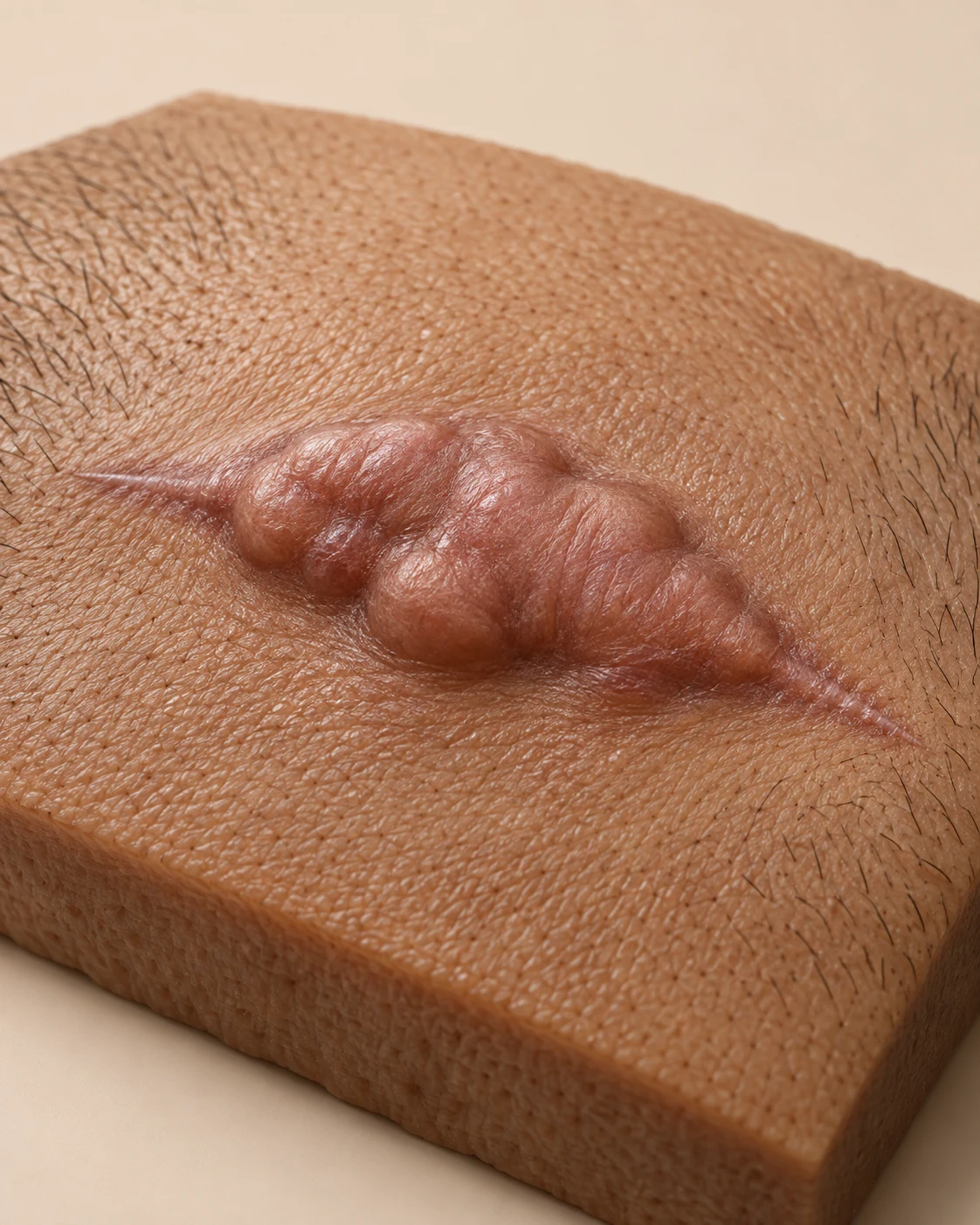
Raised or sunken texture
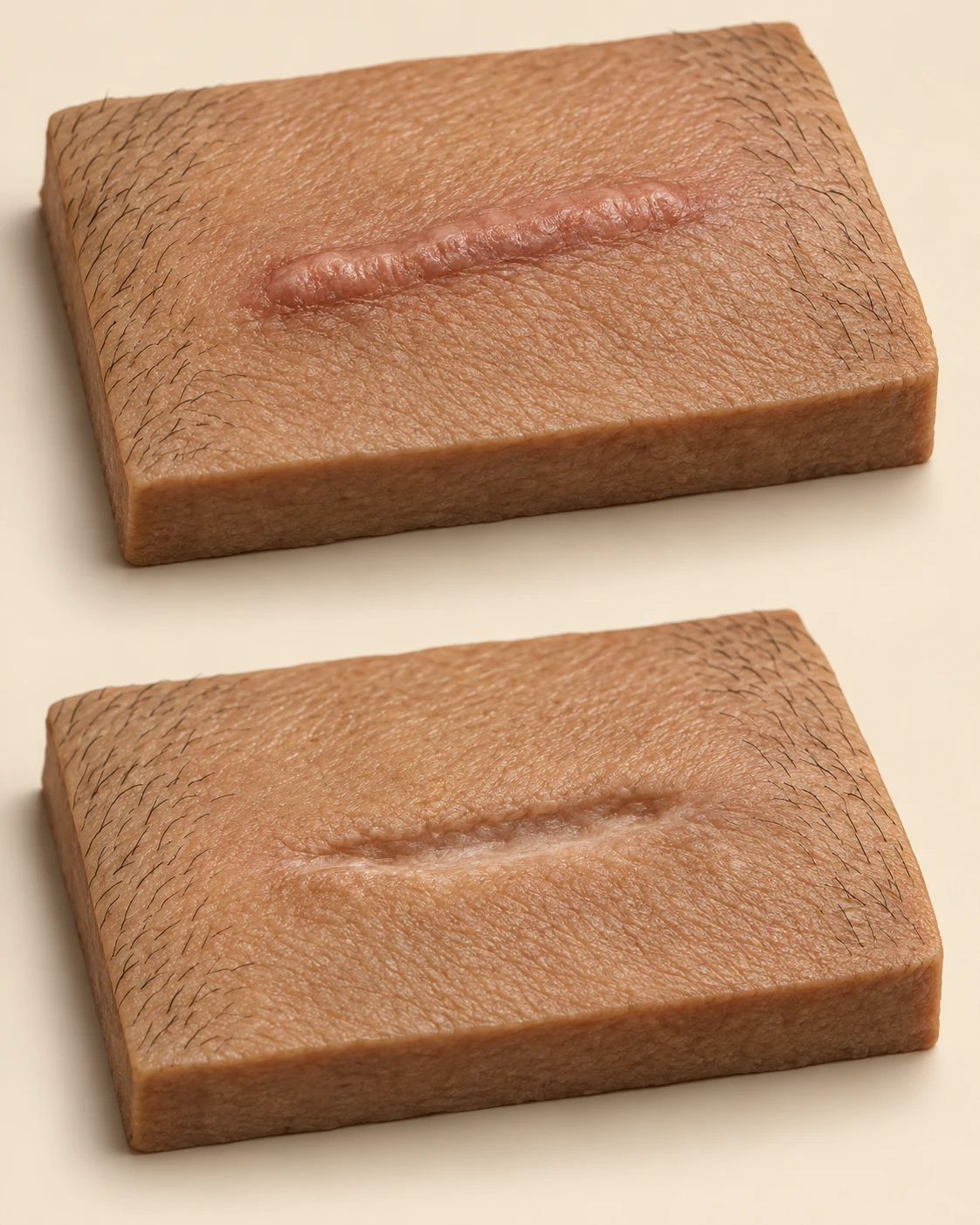
What this means for SMP
A hypertrophic scar is raised; an atrophic scar is depressed. Pigment changes the visual contrast, not the height or indentation. If texture is the main concern, a dermatologist or surgeon can discuss treatments that address the tissue itself.
Keloids and medical concerns
What this means for SMP
Keloids extend beyond the original injury. SMP is not recommended for people prone to keloids. A raised, growing or symptomatic scar should be assessed by a medical professional—not tattooed over to hide the problem.
Cosmetic does not mean risk-free.
Possible risks include infection, an allergic reaction and an unwanted pigment appearance. Tell your practitioner about allergies, medications, skin conditions and previous reactions before treatment. This page is general guidance, not personal medical clearance.
Read Cleveland Clinic’s SMP guidance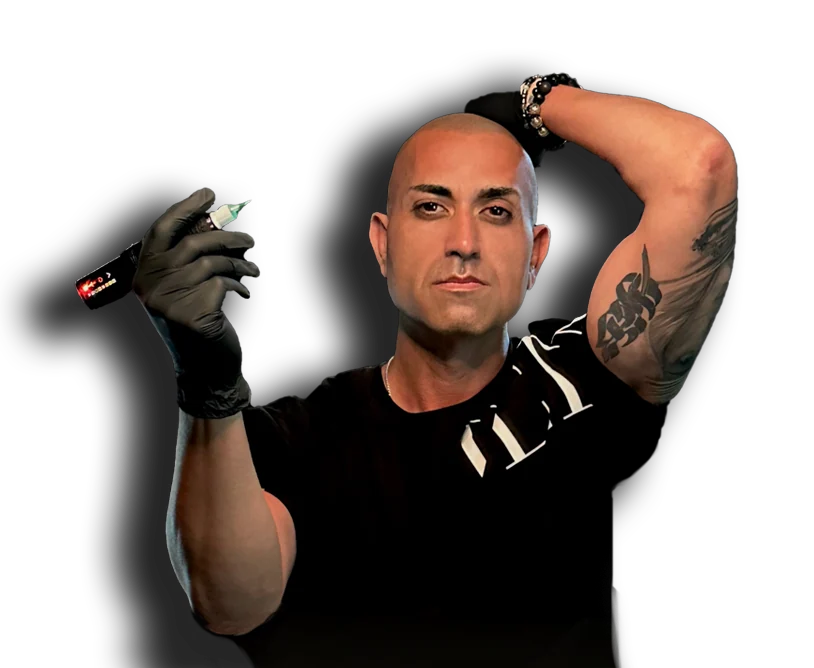
Choose the person behind the work
Your scar deserves
an artist’s judgment.
When you compare scar camouflage providers, look beyond a promise of coverage. Look at the original work. Ask how the scar was assessed, what its texture allowed and what the result looked like after healing.
SCALPS was founded by Alex Asher, whose own SMP experience shaped his commitment to helping people feel comfortable with their appearance. That personal understanding supports a practical standard: explain the plan, respect the starting point and make the work available to inspect.
Silver Award · Second Place
Best SMP Artist in North America
The linked photograph is from a separate Meeting of Minds award.
View the separate Meeting of Minds award photographConsidering traveling for treatment?
Start with a phone or Zoom consultation. Discuss suitability, the likely visit plan and what needs an in-person assessment before arranging your trip to our Manalapan, New Jersey studio.
The result beyond the appointment
Healing, hair length
and lasting expectations.
Judge the blend in everyday life.
Keep the haircut in the conversation.
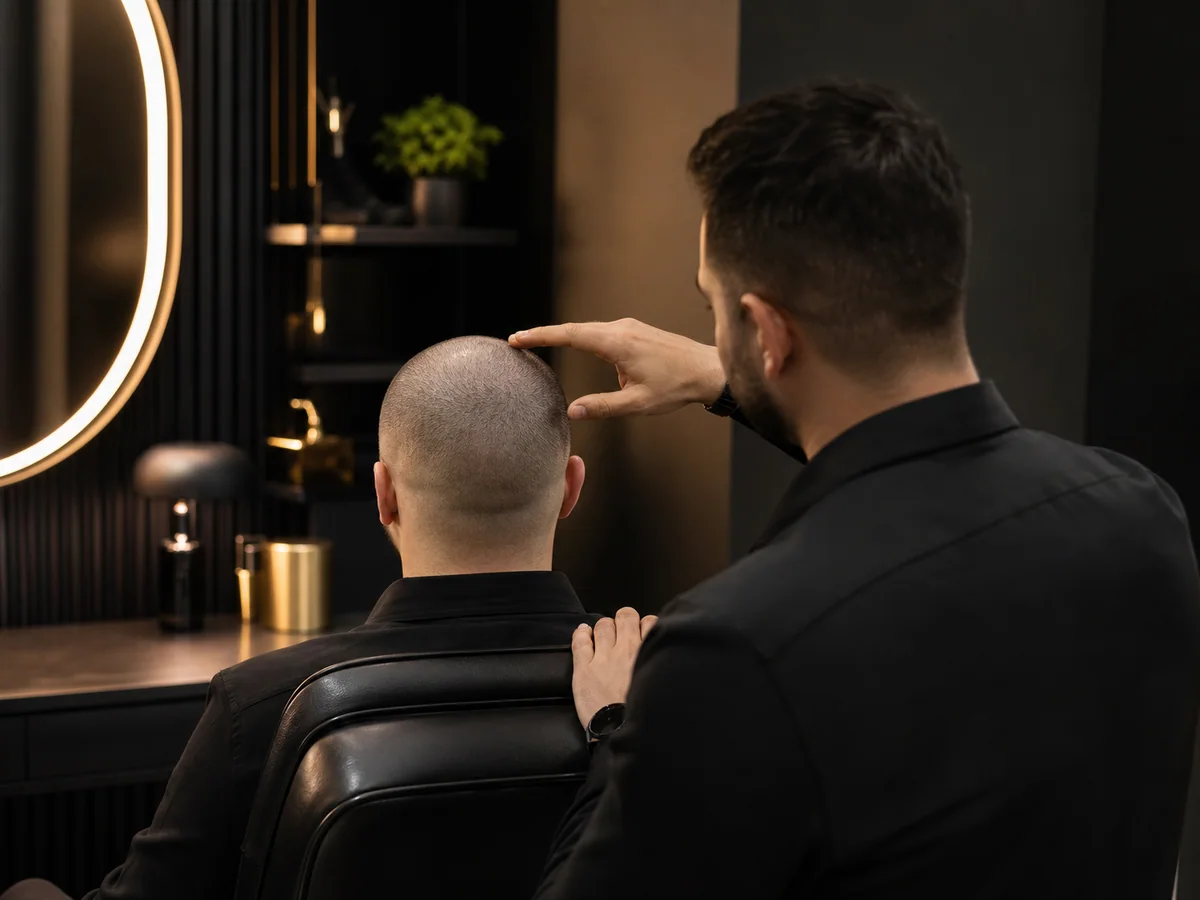
A blend planned for closely clipped hair must work beside the hair you actually wear. Scar visibility can change with haircut length, lighting and the amount of surrounding hair. SMP does not add physical thickness or cover a raised surface with new hair.
Allow for aftercare and review.
SMP does not involve transplant surgery, but the treated skin still needs care. Discuss work, exercise, washing and sun exposure before arranging treatment. Follow your individualized instructions; do not assume a “no downtime” headline means there are no restrictions.
Our pre-care instructions and SMP aftercare guidance explain the preparation and care journey. Ask us how they apply to your scar and any advice from your medical provider.
Plan for pigment to change over time.
Pigment may fade and can remain in the skin long term. Scar tissue does not always retain it evenly. Additional sessions or later touch-ups may be appropriate; a fixed lifespan is not a guarantee for your scar. Discuss maintenance, not just the first appointment.
A quote for your starting point
How much does
scar camouflage cost?
Scar camouflage at SCALPS is quoted after assessment. The area, pattern of scarring, previous pigment and planned work affect the scope. A small scar is not automatically the same treatment as a full donor-area blend.
Read the SCALPS pricing guideKnow the whole plan
Ask what your
quote includes.
- The area being treated and the intended blend.
- The expected sessions and how additional work is priced.
- Follow-up, aftercare and later touch-up costs.
Published shaved-SMP examples and existing-SMP touch-up rates are not a universal price for scar camouflage.
Discuss your scar and quote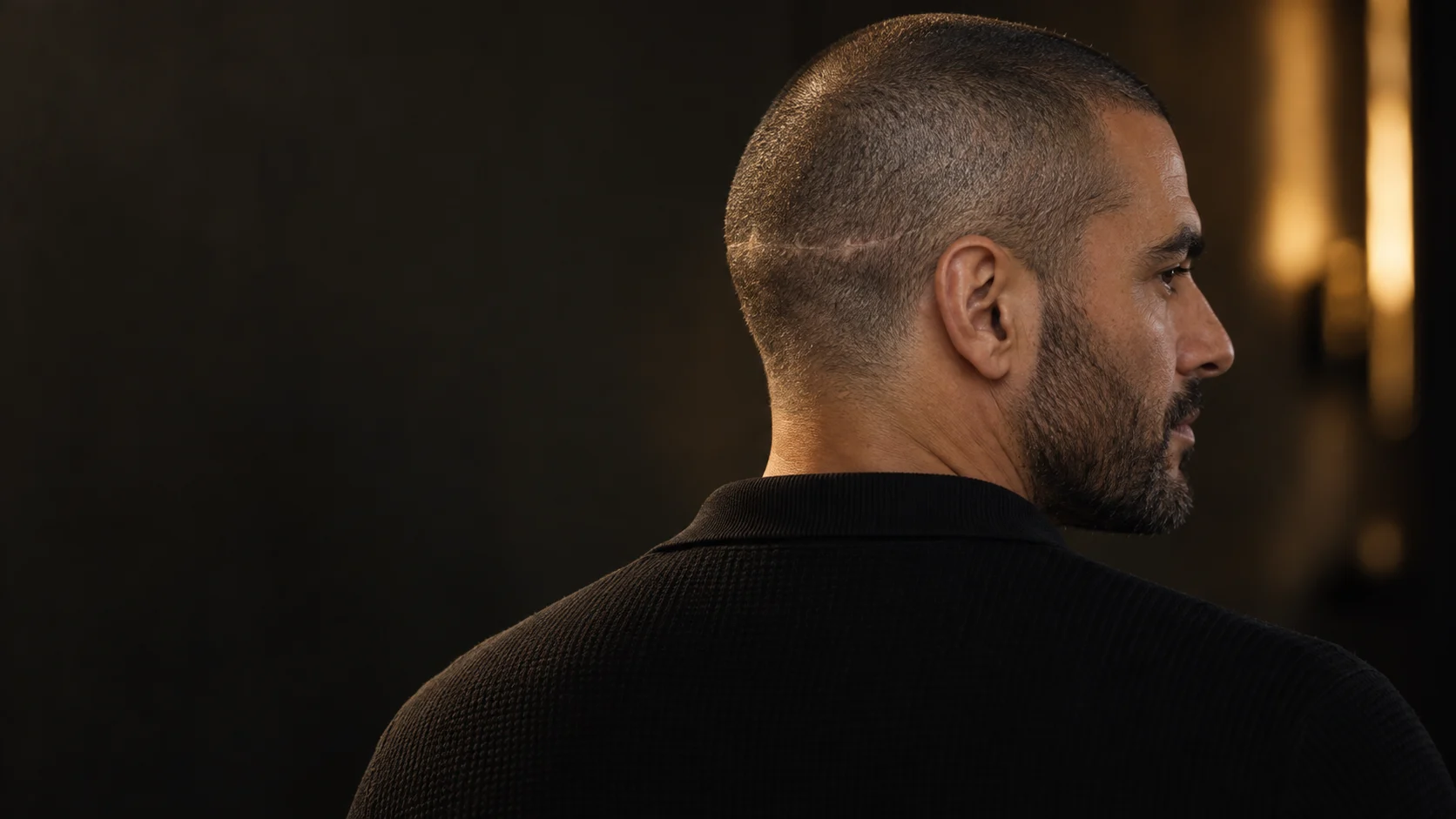
Clear answers before you decide
Scar camouflage
questions, answered.
Bring your own questions, too. The right plan starts with understanding your scar.
Ask us about your scarWill SMP completely hide my hair transplant scar?
Complete invisibility cannot be promised. SMP can reduce the contrast of a suitable scar, but its width, texture, color and surrounding hair still influence what you see. Compare original photos and discuss the expected improvement at your normal haircut length.
Is SMP scar camouflage the same as scar removal?
No. SMP is cosmetic tattooing that creates follicle-like impressions. It does not remove scar tissue, flatten a raised scar or fill a depression. Searches for “SMP scar repair” often mean camouflage; surgical scar revision and medical scar treatments address different concerns.
Can I keep my hair long, or do I need to shave it?
You do not automatically need a fully shaved head for localized scar camouflage. The scar must be accessible and the blend must suit the surrounding hair. Discuss your preferred length before changing your haircut; the right preparation depends on the area and treatment plan.
How long after a hair transplant can I have SMP?
The transplant and donor scar need to have healed and stabilized. Readiness depends on the procedure, skin and scar—not only the number of months since surgery. Ask your transplant surgeon about healing and future surgery, then discuss assessment with your SMP practitioner.
How many scar camouflage sessions will I need?
There is no reliable universal number. Scar size, coverage and pigment retention affect the plan. Ask about the expected visits, time for healing between them and how any additional sessions would be decided and priced.
Can SMP help scars from an injury or other surgery?
Some healed scalp scars beyond FUE and FUT donor scars may be considered. Their location, texture, cause and stability need assessment. Active disease, changing skin or an unexplained scar requires medical evaluation first. This page covers scalp camouflage, not every type of body-scar tattooing.
Can you work over old SMP or a previous scar tattoo?
Existing pigment changes the starting point. Its color, placement and density need assessment before more is added. Camouflage cannot reliably cover every unwanted tattoo; correction or removal options may need separate professional advice.
What should I bring to my consultation?
Be ready to discuss when and how the scar formed, previous surgery or pigment treatment, healing concerns and your preferred haircut. Clear photos in ordinary lighting can help a remote discussion. An in-person assessment may still be needed before treatment is confirmed.