THE HAIR TATTOO GUIDE
Hair tattoo.How SMP
changes your look.
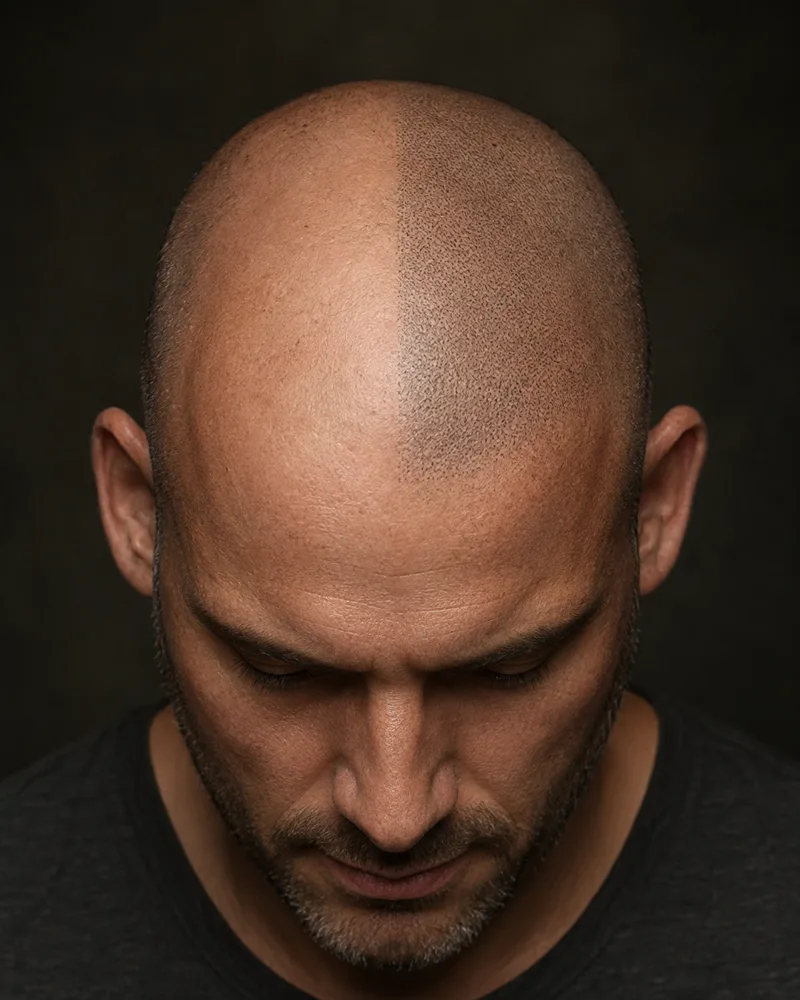
Scalp micropigmentation (SMP) is a cosmetic tattoo that creates the appearance of shaved follicles or reduces visible scalp among existing hairs.
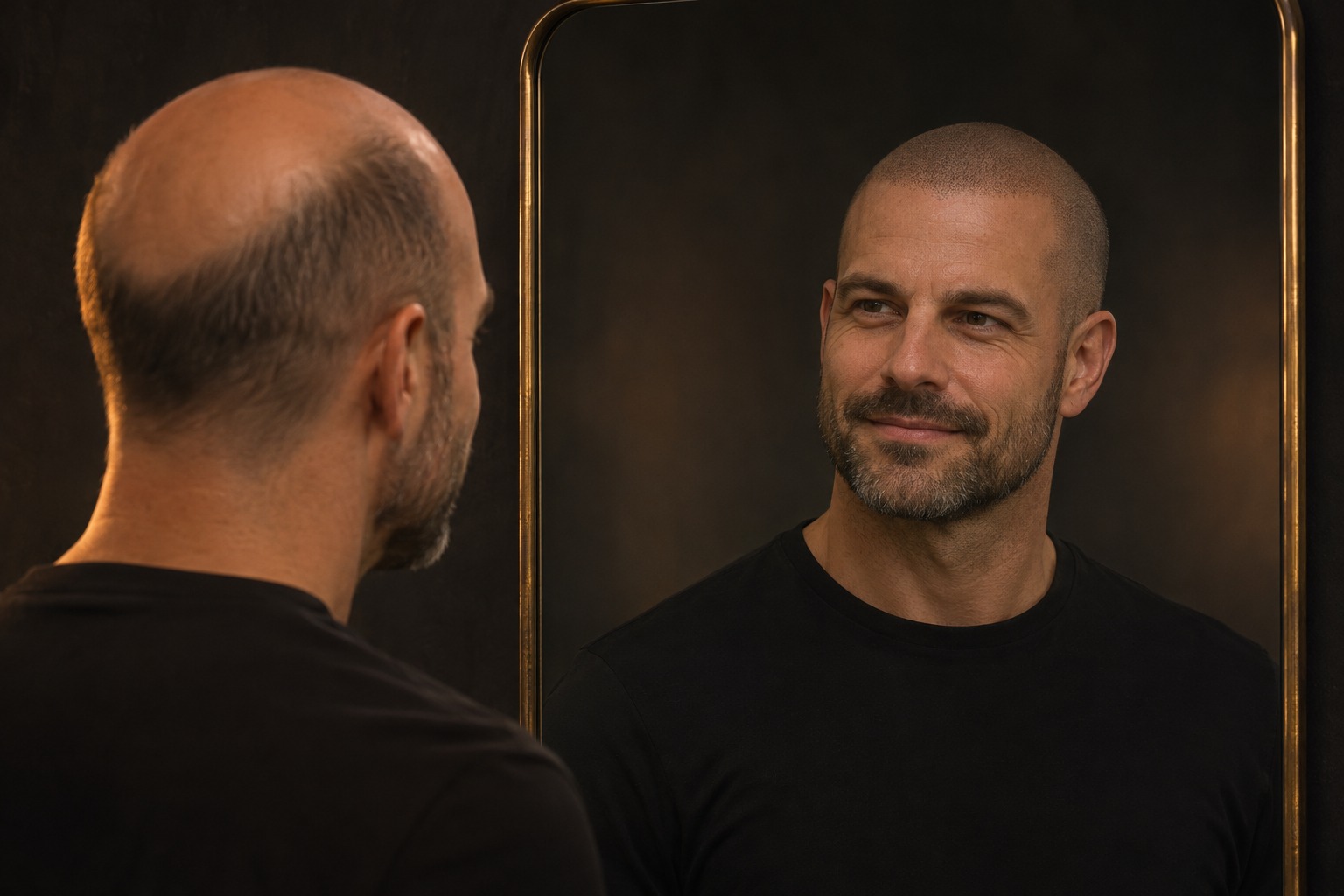
A different look in the mirror.
No new hair growth.
WHAT THE PIGMENT CHANGES
What is a
hair tattoo?
Tiny marks change the appearance of the scalp. An SMP artist places small pigment impressions in the skin to suggest the look of hair follicles.
On a shaved head, that can give the eye a hairline to follow. Among suitable existing hair, it can make exposed scalp less noticeable.
The detail is small.
The visual change can be clear.
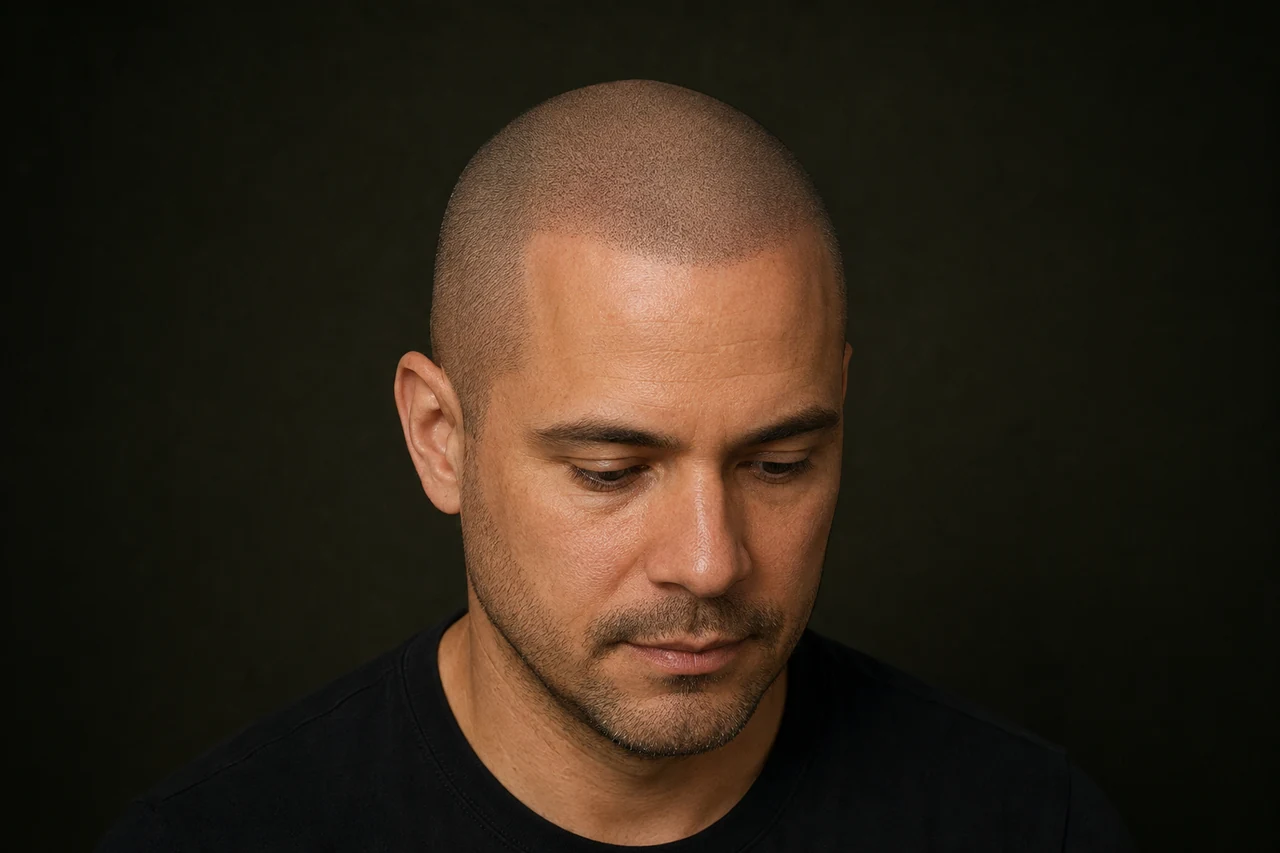
Jordan’s original photographs show the change around his front hairline and the appearance across the top. Different camera distances and lighting affect the comparison.
Is a hair tattoo the same as a regular tattoo?
Both place pigment in skin. SMP is designed around the scale of follicles, a suitable shade and the transition into remaining hair. A body-art portfolio alone cannot show those skills.
Some providers use “hair tattoo” for hair-stroke methods. Ask which technique is offered. This guide covers scalp micropigmentation impressions that suggest follicles.
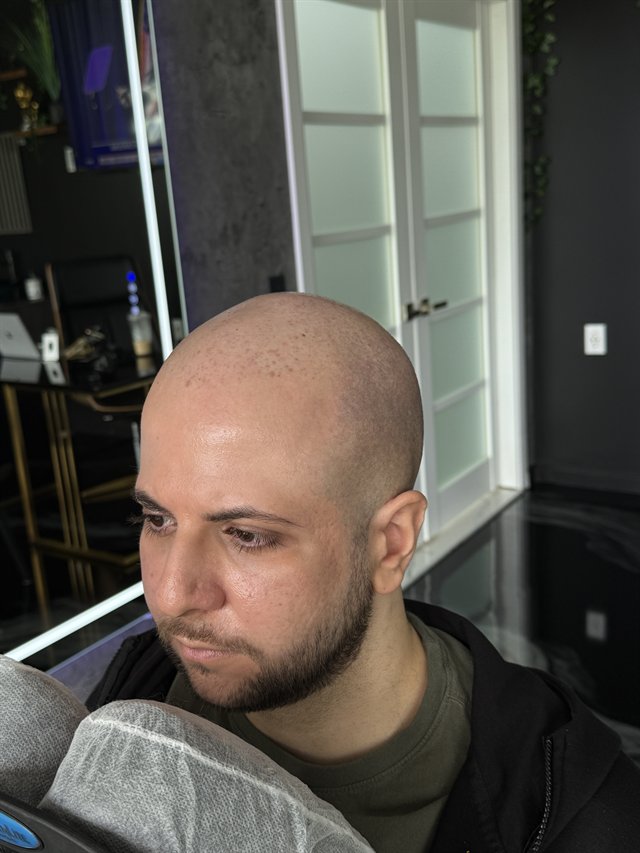 Before SMP
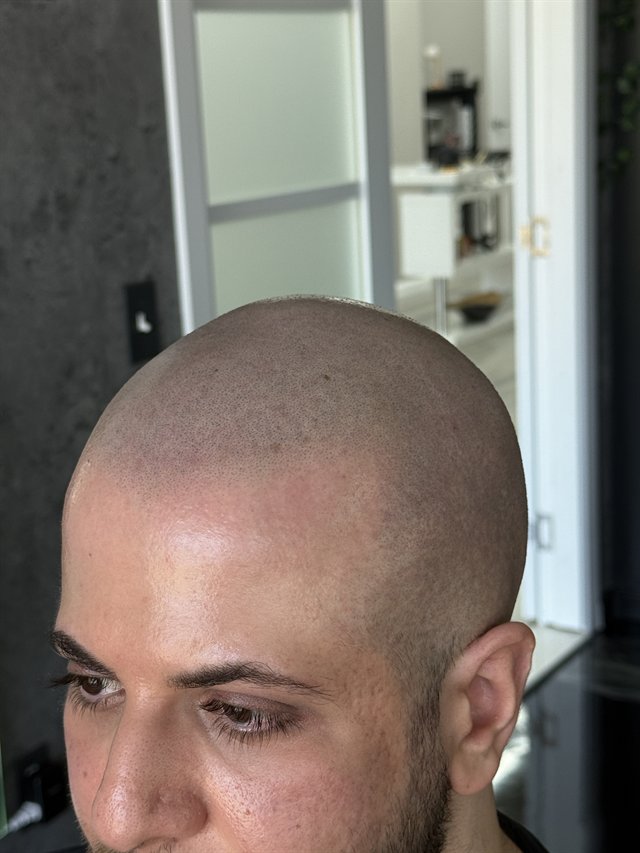 After SMP
Original photographs. Exact treatment stage is not established in this guide. Individual results vary.
START WITH THE WAY YOU WEAR YOUR HAIR
What can a hair
tattoo change?
Choose your starting point to see what SMP could change and what to consider.
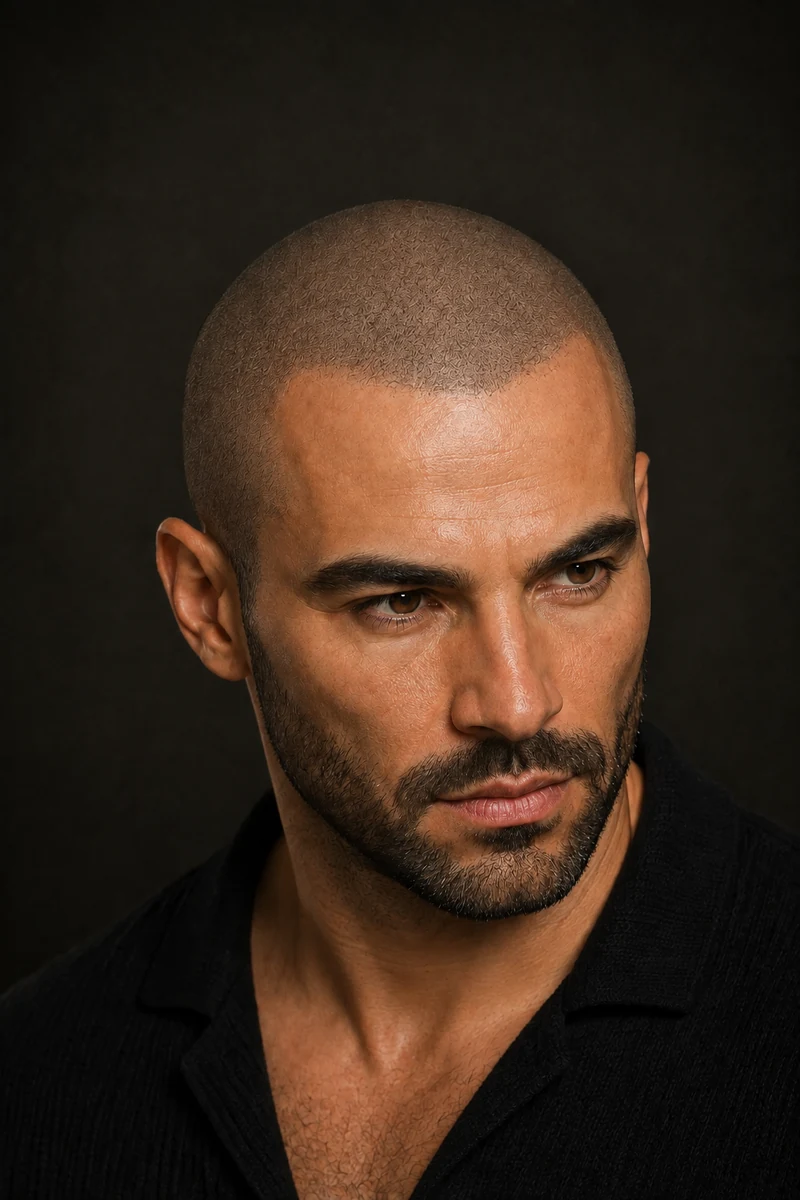
CLOSELY SHAVED
SMP for a
closely shaved look.
SMP can create the appearance of closely shaved follicles where hair is missing. The front edge, temples and coverage should work with the hair you still have.
The limit: pigment has no hair length or texture. Keeping remaining hair short may be part of making the appearance consistent.
Bring a photograph of your old hairline. Then discuss what suits your current features and remaining hair.
Explore hairline tattoo design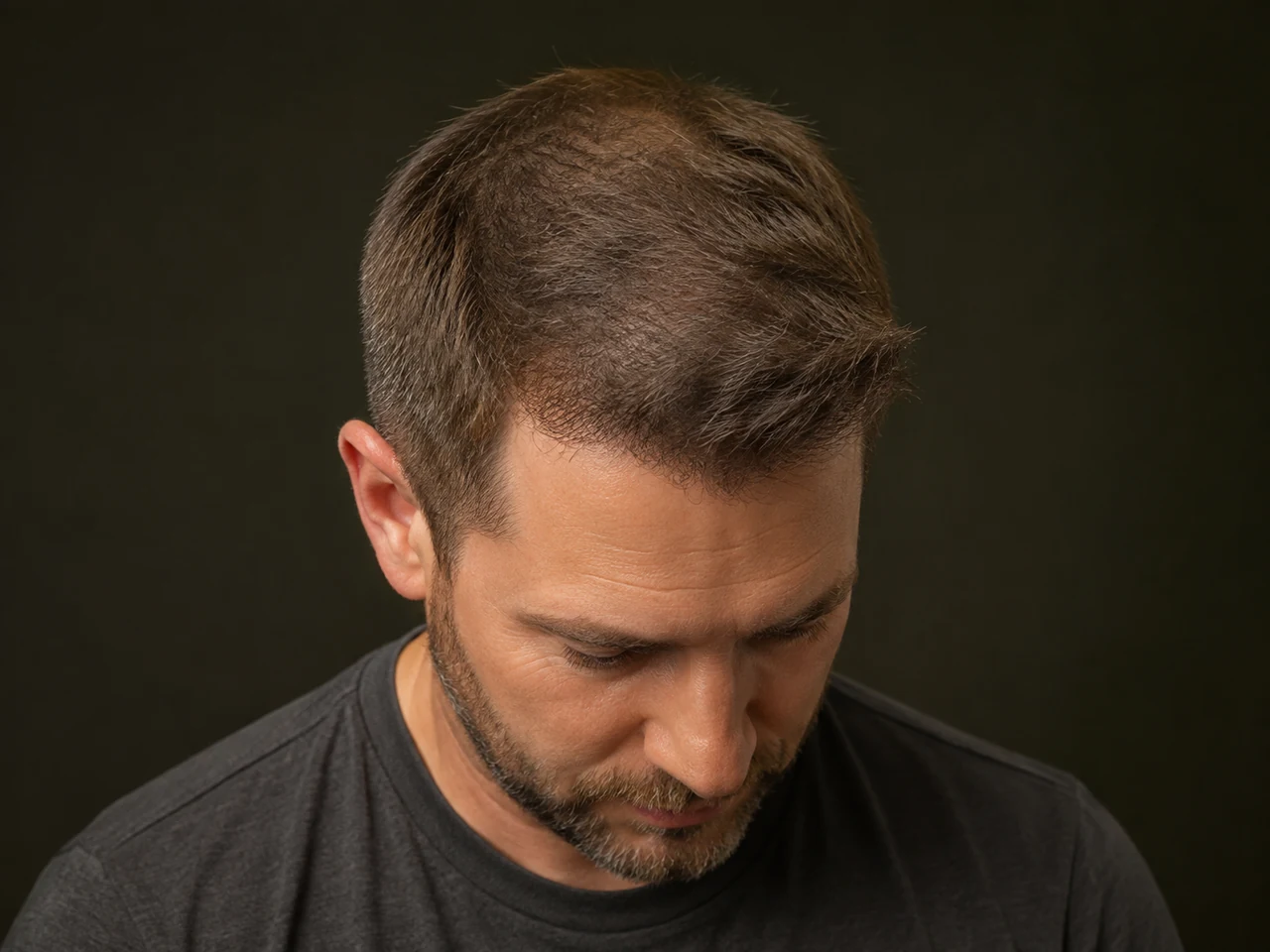
THINNING HAIR
SMP for
thinning hair.
Density SMP places pigment among remaining hairs to make exposed scalp less conspicuous. It can be considered by men and women who want to keep suitable existing hair longer.
The limit: it cannot create physical thickness. Coverage, hair length, color contrast and the possibility of further loss all affect the plan.
Ask how the work could look if you later cut your hair shorter. A density plan should account for more than today’s hairstyle.
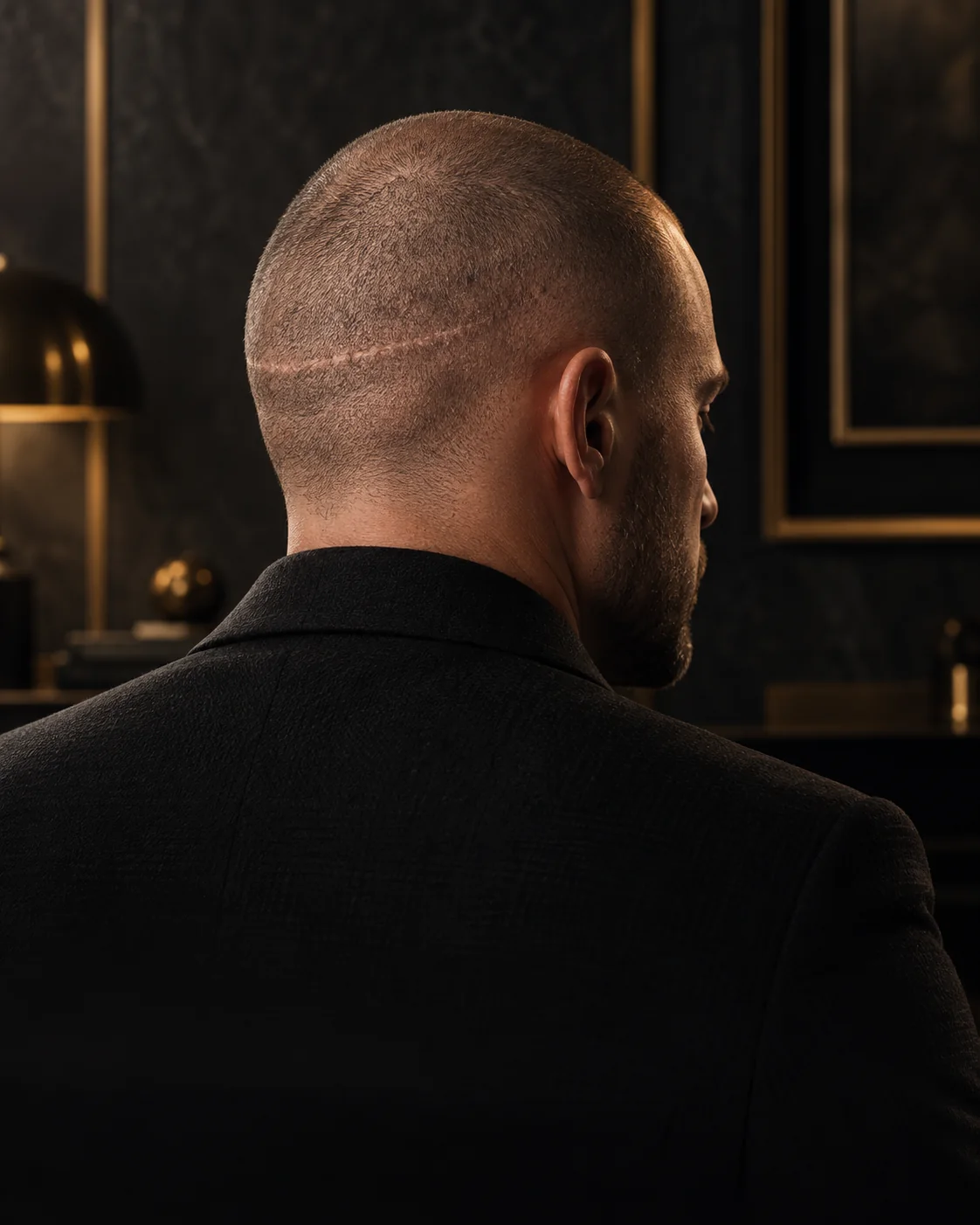
SCALP SCARS
SMP for
scalp scars.
Scalp scar camouflage uses pigment to reduce the visible color difference between a suitable scar and the surrounding scalp.
The limit: pigment does not flatten a scar or erase its texture. Scar condition, healing and the hair around it need assessment before treatment is proposed.
Bring details of earlier transplant or scalp procedures. A photograph can start the conversation, but it may not answer every suitability question.
Explore scalp scar camouflageWould another hair loss option suit my goal?
SMP may fit this goal. Consider hair length, edge design and the need for upkeep.
Discuss options such as a hair system or assessment for a transplant. SMP does not add strands.
Speak with a qualified healthcare professional about the cause and appropriate treatment. Cosmetic pigment does not treat the underlying cause.
Discuss the cause of hair loss with a qualified healthcare professional before choosing a treatment for it. SMP changes appearance; it does not treat the cause.
LOOK AT THE DETAIL
What makes SMP
look natural?
Choose a detail below. The marker shows where to look while the full head stays in view. Ask for close photographs in clear light when comparing individual impressions.
Look for a gradual beginning.
Inspect whether the front starts softly or reads as a hard band. Hairline height and temple shape should suit the person wearing them. Use the full portrait as well as the close-up.
Look beyond one neat patch.
Check how impression size and spacing work across a larger area. Alex emphasizes deliberate placement: crowded areas can read darker than nearby areas with more space. Small differences can change the overall appearance.
Follow it into the existing hair.
Compare the front, sides and crown. Look for an appearance that belongs together, while allowing for lighting and differences between photographs. A dark image alone is not evidence of dense or settled pigment.
Can SMP look blue or too solid?
An unwanted tone or a block of color is a reason to inspect more than one flattering photograph. Ask to see settled work in clear light, with close views and the full head. A photo’s lighting can also change how a shade appears.
If you already have a result you dislike, have it assessed before adding more pigment. Our visual guide to SMP warning signs shows what to inspect.
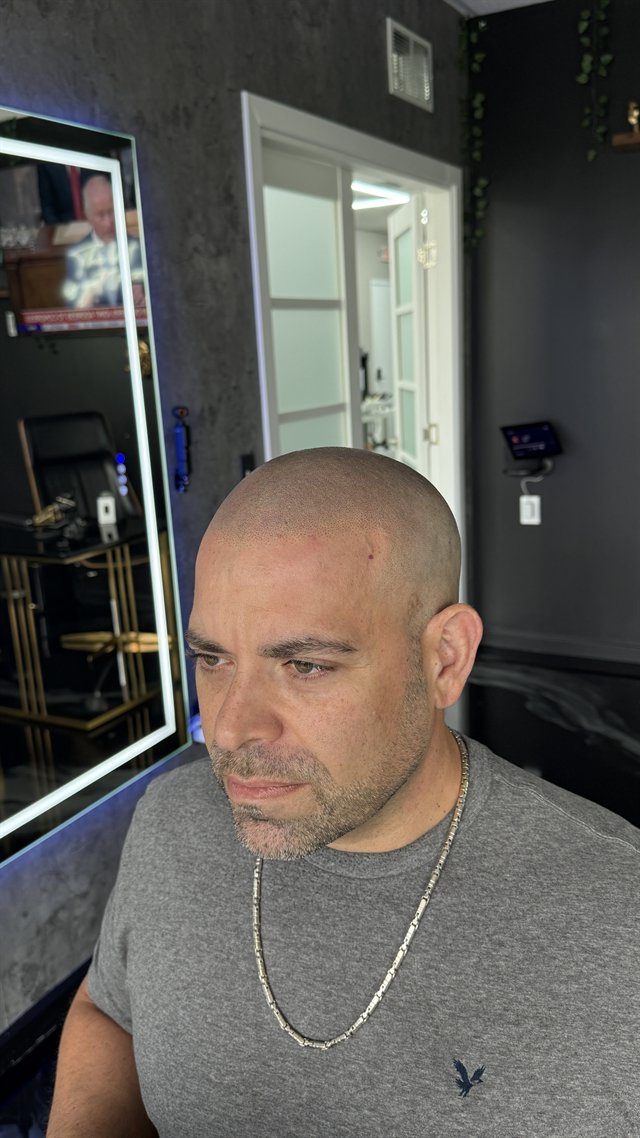
Why should I ask for healed photographs?
A fresh photograph shows one moment in the treatment. A healed photograph answers a different question: how the work looks after the skin has settled. Ask when each picture was taken and whether more sessions followed.
This photograph is original SCALPS work. Its exact treatment stage is not documented in this guide. For a documented healed example, explore Rafael’s case; confirm the recorded stage as you compare.
A PLAN BEFORE PIGMENT
What happens
during treatment?
A hairline is worth discussing before it becomes a tattoo. Agree the design, treatment plan and aftercare first.
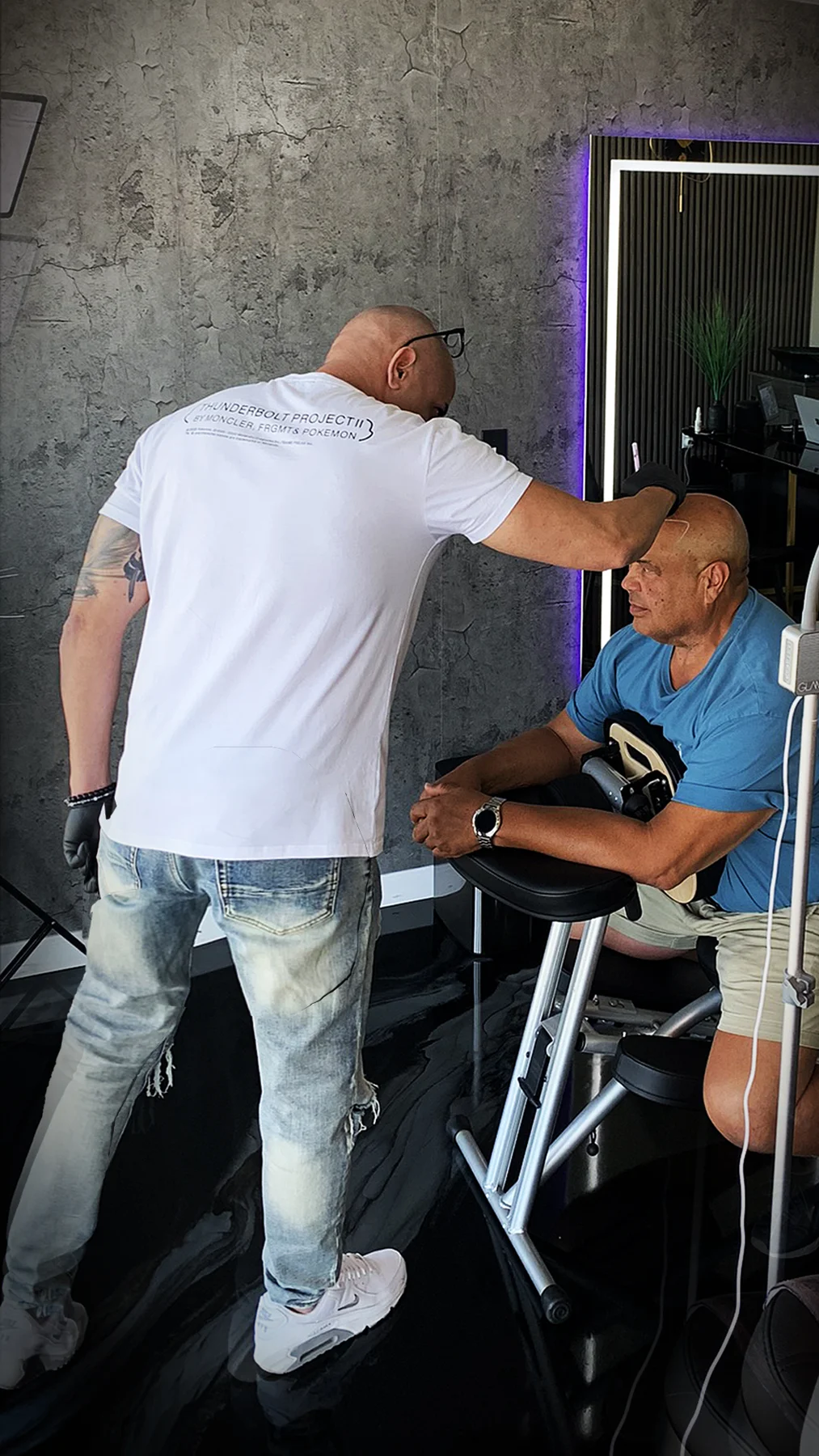
Plan the appearance.
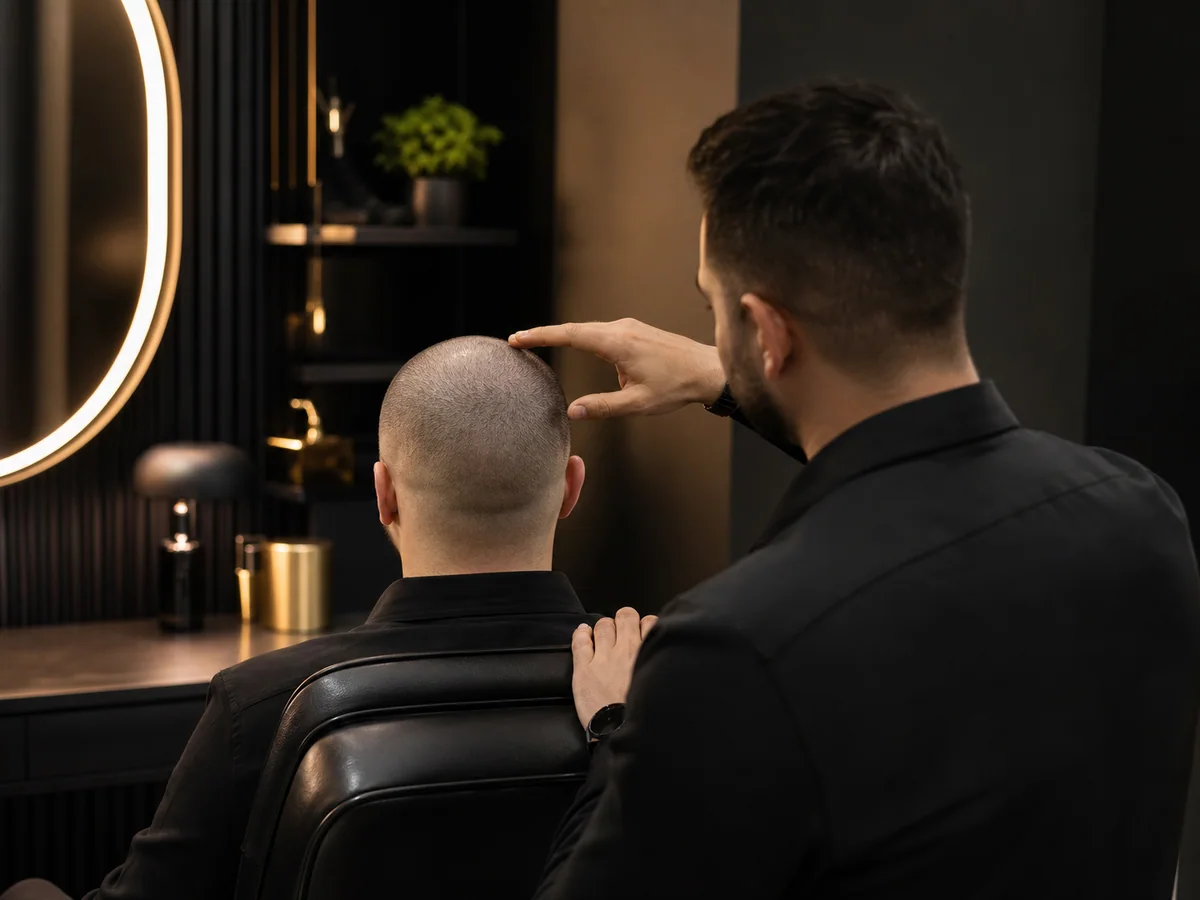
Discuss your hair, your features and the look you want. A drawn hairline lets you consider its shape before treatment.
Build the coverage.
The artist places pigment impressions through the agreed sessions, assessing how earlier work settles before adding more.
Review the balance.
Check how the front transitions into the sides. Your plan should cover your daily routine and account for future hair loss.
KNOW BEFORE YOU COMMIT
Does SMP hurt?
Know the risks.
A cosmetic tattoo still involves your skin. Get a clear answer about comfort, hygiene and aftercare.
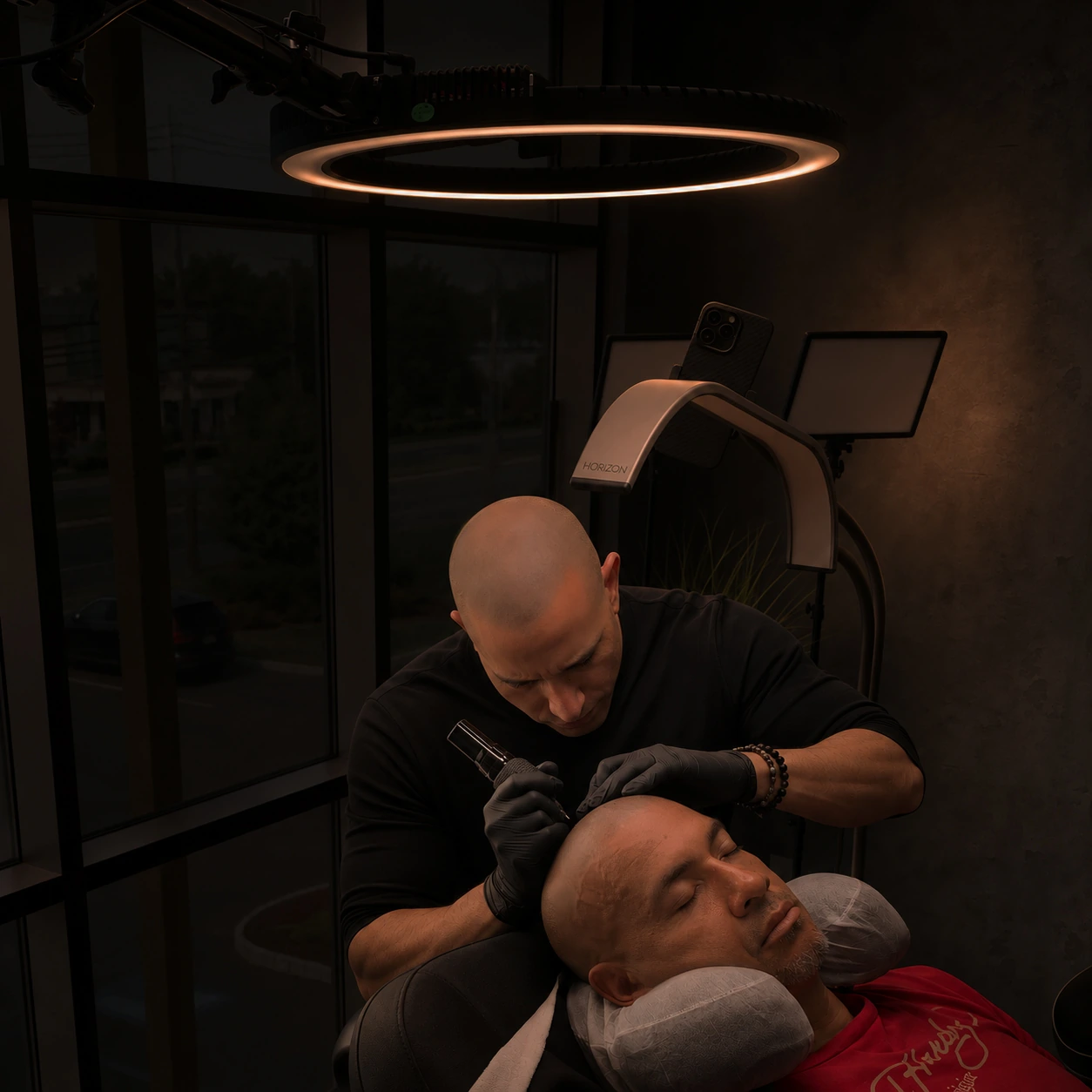
What does SMP feel like?
Alex’s clients most often describe a small pinching sensation. He says the temples and top middle of the scalp can feel more sensitive. Discuss breaks and comfort before your session.
Does everyone need numbing?
Alex says he rarely uses it because he prefers to assess how the skin responds as he works. That describes his technique, not a reason to change medication or apply a numbing product yourself. Discuss comfort and any products with your practitioner beforehand.
What are the risks?
Possible complications include infection, pigment reactions, scarring and an appearance you dislike. The FDA notes that contaminated ink can cause infection even when equipment is handled properly. Discuss skin conditions, allergies and any history of raised scars before treatment.
Ask about hygienic practice, single-use needles and the pigments being used. If healing concerns or a rash develop, contact your healthcare professional. Read the FDA’s tattoo safety guidance.