
How much hair loss is normal?
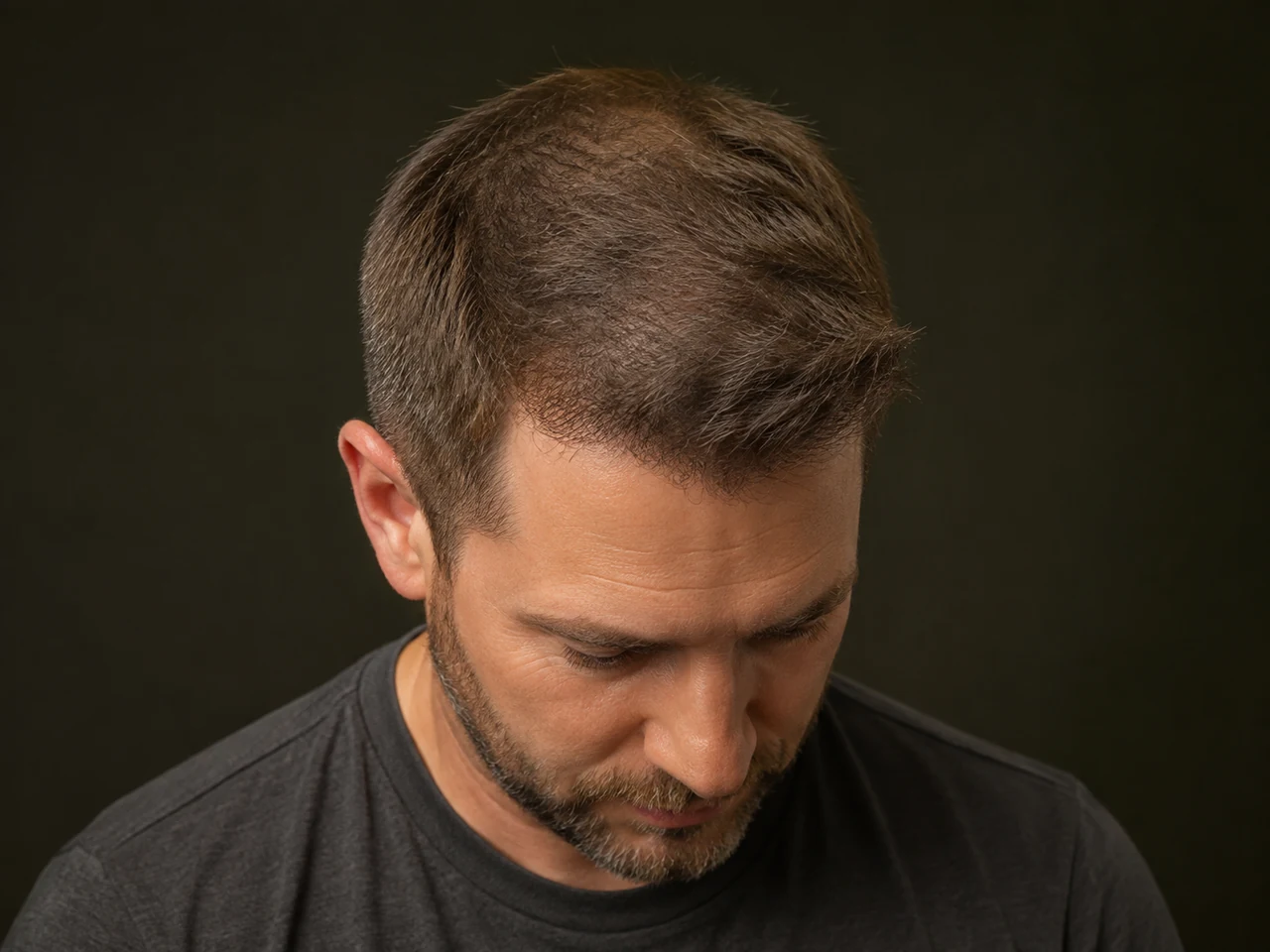
Shedding about 50 to 100 hairs a day is common. A brush full of loose hair can catch your eye. A widening part, a new patch or shedding that keeps increasing tells you more than a strand count. Source
Compare what you’re seeing
Normal shedding or visible thinning?
Pick the change you’ve noticed. Both shedding and thinning can happen at the same time.
Why might shedding start months later?
Illness with a high fever, surgery, childbirth and major stress can be followed by temporary extra shedding. Dermatologists call this telogen effluvium. Timing can help a clinician investigate the cause.
A change in your health
More hair follicles than usual can enter their resting phase.
Two to three months later
You may see more loose hair in the shower, on the pillow or in the brush.
What to bring to a dermatology visit
Three details give the conversation a useful starting point.
- When it began. Note whether it came on suddenly or gradually.
- Where you see a change. If you have photos, bring ones taken from the same angle and in similar light.
- What changed beforehand. Mention recent illness, major stress and changes to medication or supplements. Ask your prescriber before stopping any prescription.
Where scalp micropigmentation fits
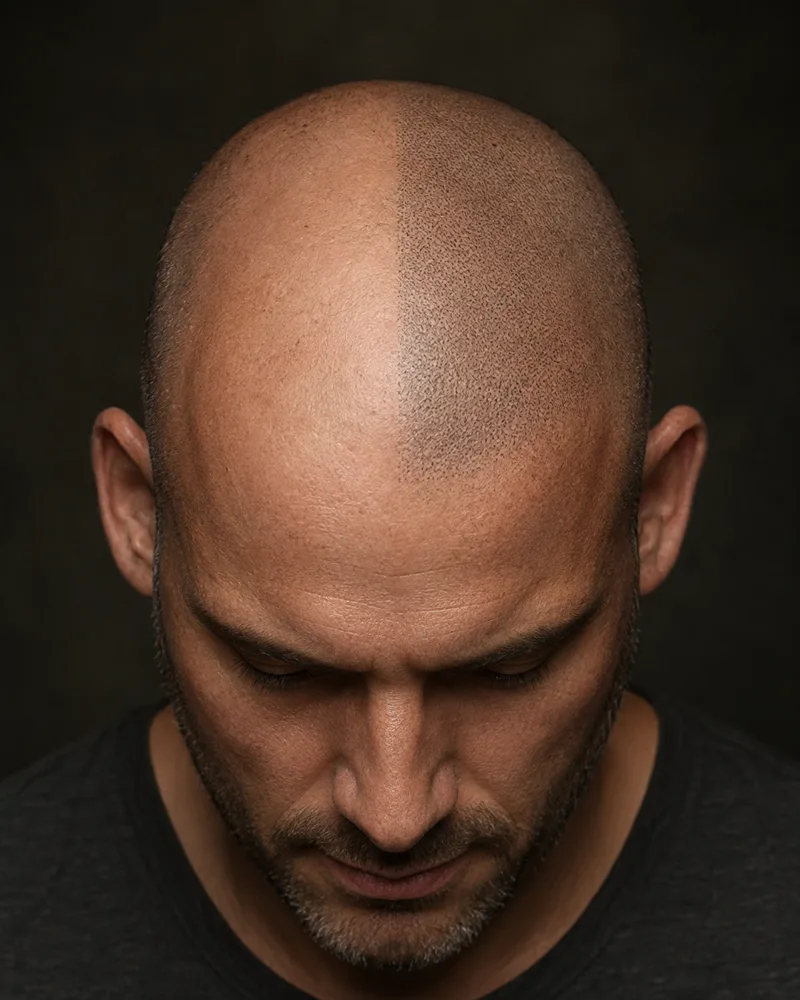
Once you know why your hair is changing, you may also want to explore how it looks. Scalp micropigmentation (SMP) uses small pigment impressions to reduce the contrast between hair and visible scalp. It changes appearance only. A dermatologist can assess the cause of shedding and discuss treatment.
See what scalp micropigmentation can do