SCALPS Journal · Hair and nutrition
Foods for hair growth and scalp health
If you’re searching for the best foods for hair growth, start with enough food and a variety of protein and iron sources. Low intake can contribute to shedding. If you’re losing hair, a dermatologist can check whether nutrition is part of the picture.
By Alex Asher, scalp micropigmentation artist

How nutrition can affect hair and scalp health
Getting enough calories, protein, iron and zinc supports normal hair growth. When your intake is low, correcting the shortfall may help. Hair can also thin for reasons that a change in diet won’t address, including inherited pattern hair loss and alopecia areata.
Three meals with protein, iron or zinc
Pick a meal to see what it adds. These are ideas to start with, and you can use foods you already enjoy.
Lentils and peppers
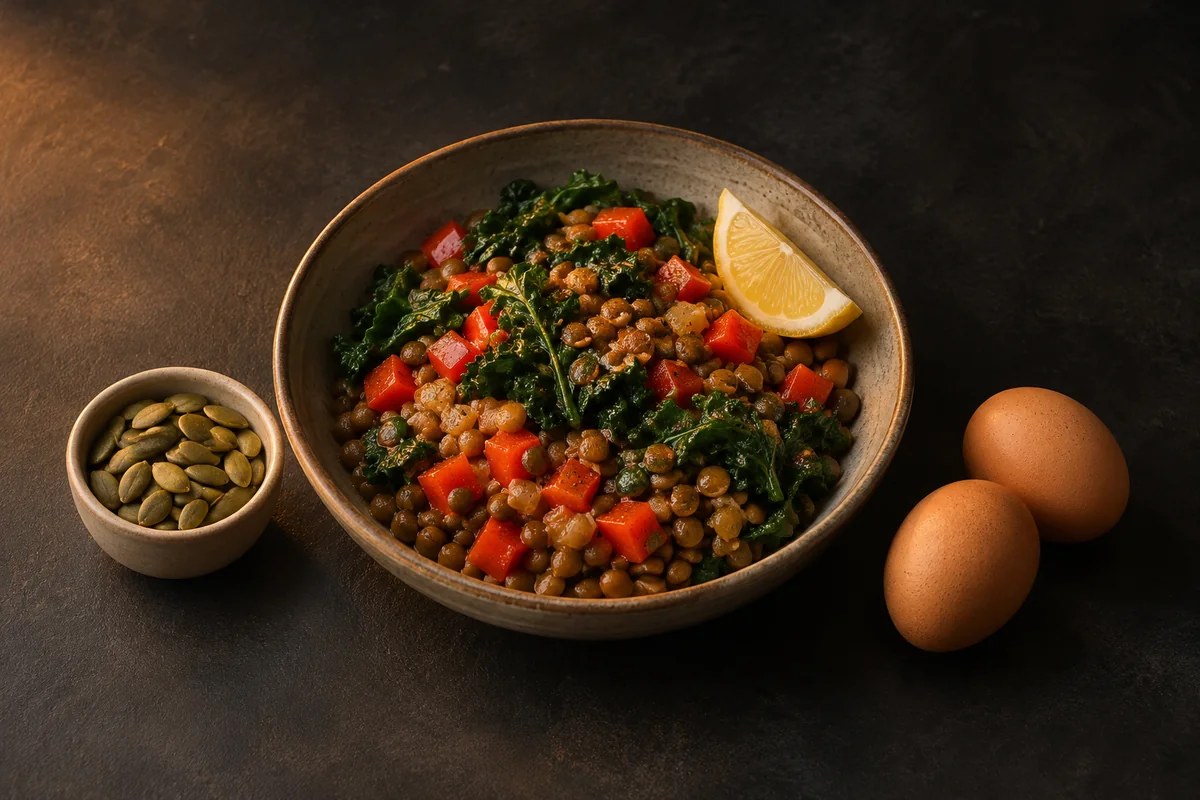
Lentil bowl with red peppers and lemon. Lentils provide protein and iron. Pair them with peppers or a squeeze of lemon. Vitamin C helps your body absorb iron from plant foods.
Eggs and greens
Eggs with spinach on whole grain toast. Eggs provide protein and biotin. Spinach adds plant iron. Add an orange on the side for vitamin C.
Chicken or chickpeas
Chicken or chickpeas with greens and seeds. Chicken and chickpeas offer different ways to add protein. Pumpkin seeds add some zinc. Use whichever option fits how you already eat.
Should you take biotin or iron for hair loss?
Biotin gets a lot of attention, but deficiency is rare. Evidence for taking extra biotin for hair is limited, and high doses can interfere with some blood tests. Tell your clinician about any hair, skin and nail supplements you take. Ask before starting iron or zinc supplements.
When to talk to a dermatologist
If you notice a new bald patch, ongoing shedding or a widening part, ask a dermatologist about the cause. Mention when the change started and any recent illness, weight change or restrictive diet. They can decide whether an exam or blood test is useful.