SCALPS Journal
Best hair growth oil recommended by doctors?
No hair oil is the best choice for every kind of hair loss. Rosemary oil has limited human research for pattern hair loss. Coconut oil has better evidence for protecting the strands you already have.
Compare the five oilsAlex Asher, SMP artist · Published · Updated

Which hair oils have evidence?
A smoother strand can look healthier. Studies that count hairs growing from the scalp answer a different question.
Rosemary oil
Limited human regrowth data
A small randomized study assigned 100 men with pattern hair loss to a rosemary formulation or 2% minoxidil. Hair counts increased in both groups at six months. The study had no placebo group, and it was unable to establish that rosemary works as well as minoxidil. An oil maker funded a separate trial of rosemary blends. That study cannot tell us what rosemary did on its own.
Coconut oil
Evidence for strand protection
A grooming study found that coconut oil reduced protein loss from hair strands. That helps explain why people use it for brittle hair. The study measured hair damage, so it offers no evidence that coconut oil regrows hair from the scalp.
Castor oil
Some evidence for shine
A systematic review found weak evidence that castor oil can improve shine. It found no strong evidence for hair growth.
Peppermint oil
Animal research
The study often cited for peppermint oil measured hair growth on mice. It leaves open whether peppermint oil helps people with thinning hair. The tingling sensation tells you little about what your follicles are doing.
Argan oil
Limited evidence for growth
Argan oil is sold as a grooming product. The same systematic review found no significant evidence that it improves hair growth or hair quality.
What do dermatologists recommend for thinning hair?
The first step is finding the cause. Pattern hair loss, a sudden increase in shedding and breakage can look alike in the mirror. They call for different next steps.
- Hair is gradually thinning
- Ask a dermatologist whether you have pattern hair loss and whether a treatment such as topical minoxidil is suitable for you.
- You see sudden loss, patches or scalp symptoms
- Arrange a dermatology visit, especially if your scalp hurts, burns or looks inflamed.
- Your hair feels dry or breaks easily
- Choose products for conditioning and gentler grooming. If you're also seeing more scalp, bring that up with your dermatologist.
American Academy of Dermatology treatment guideHair loss signs and symptoms
Trying to tell shedding from thinning? Read how much hair loss is normal.
What scalp micropigmentation can change
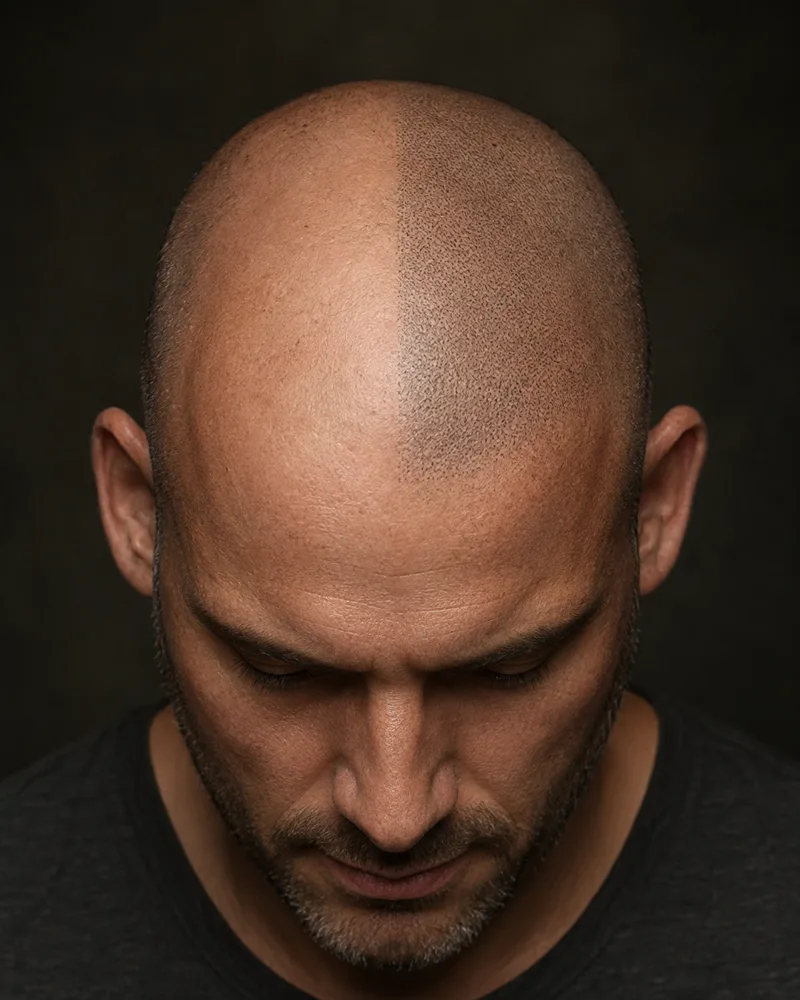
Scalp micropigmentation (SMP) uses small pigment impressions to mimic the look of closely shaved follicles or reduce contrast where the scalp shows through. It changes how the scalp looks. It does not grow hair.
If you're already using a topical product and plan to get SMP, ask your artist and prescribing clinician when to pause or resume it. Follow your SMP aftercare instructions while the skin heals.
See how SMP works