
Scalp micropigmentationin Princeton,designed to look unnoticed.
Create the visual pattern of closely shaved follicles or reduce visible scalp contrast with a treatment designed around your face, skin tone, existing hair, and long-term appearance.
601 Ewing Street, Suite C-1 · By appointment only
Different starting points need different design logic.
Choose the path closest to yours. This is educational guidance—not a candidacy decision.
For a closely shaved look when hair loss or baldness is visible.
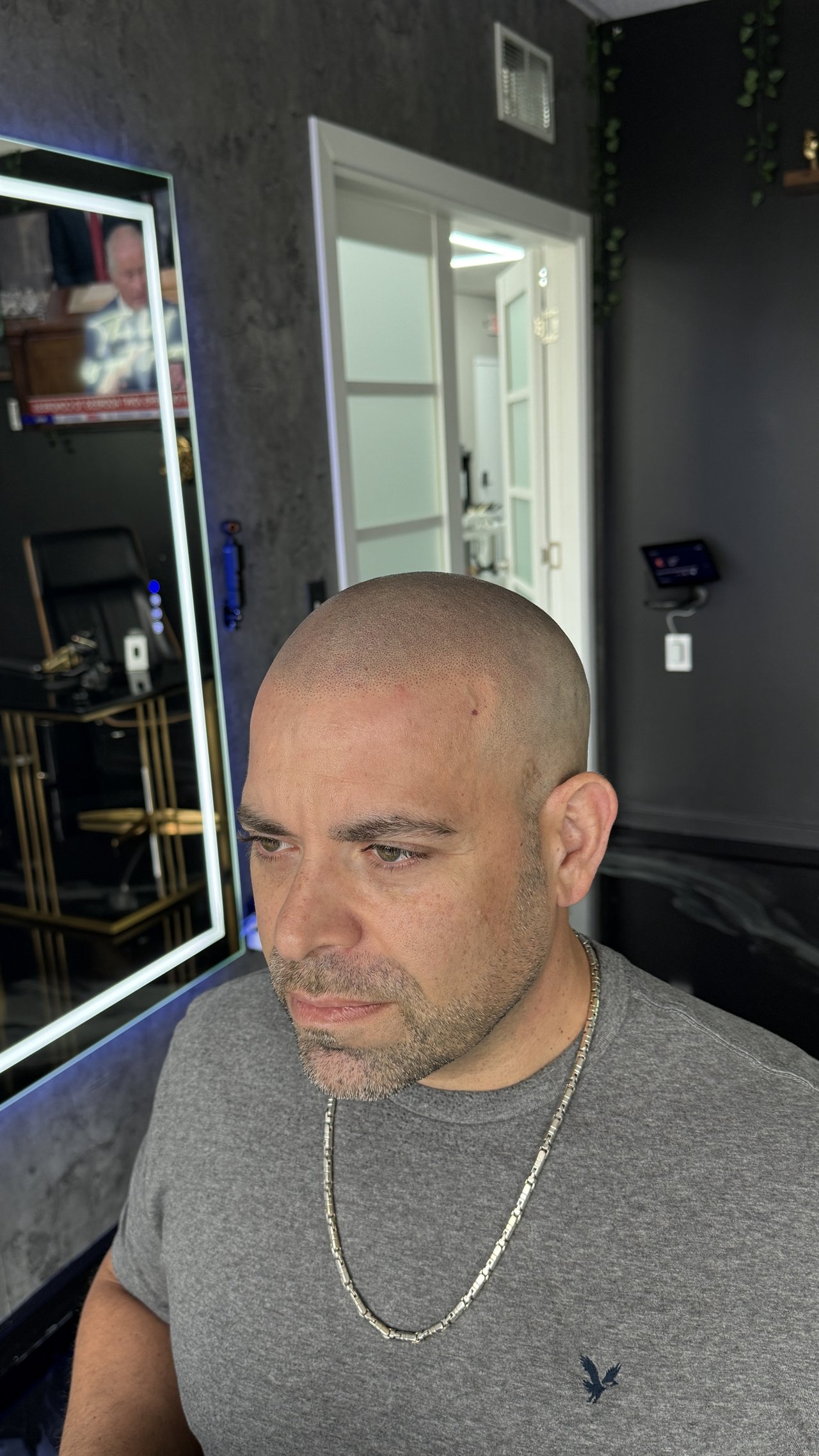
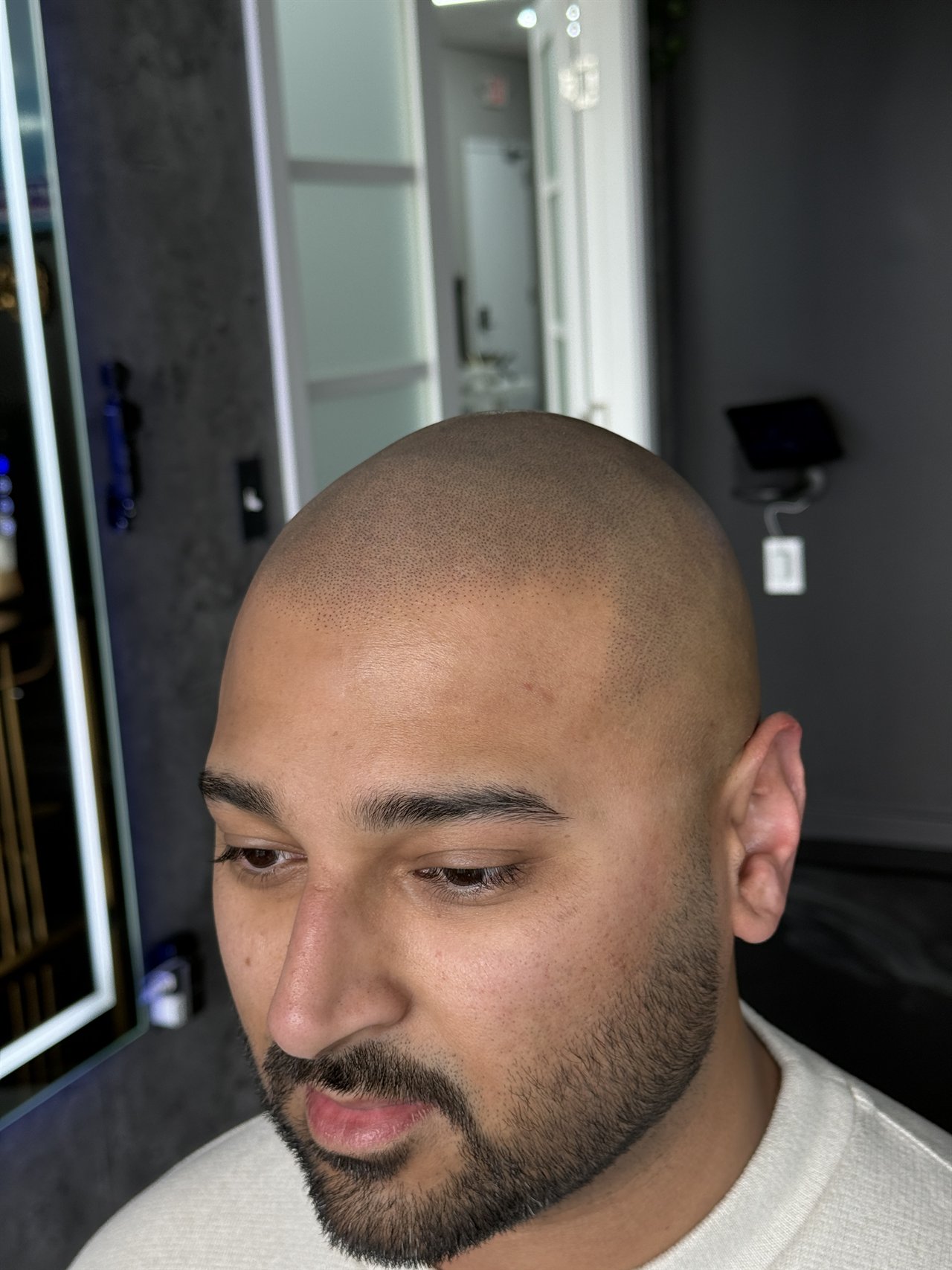
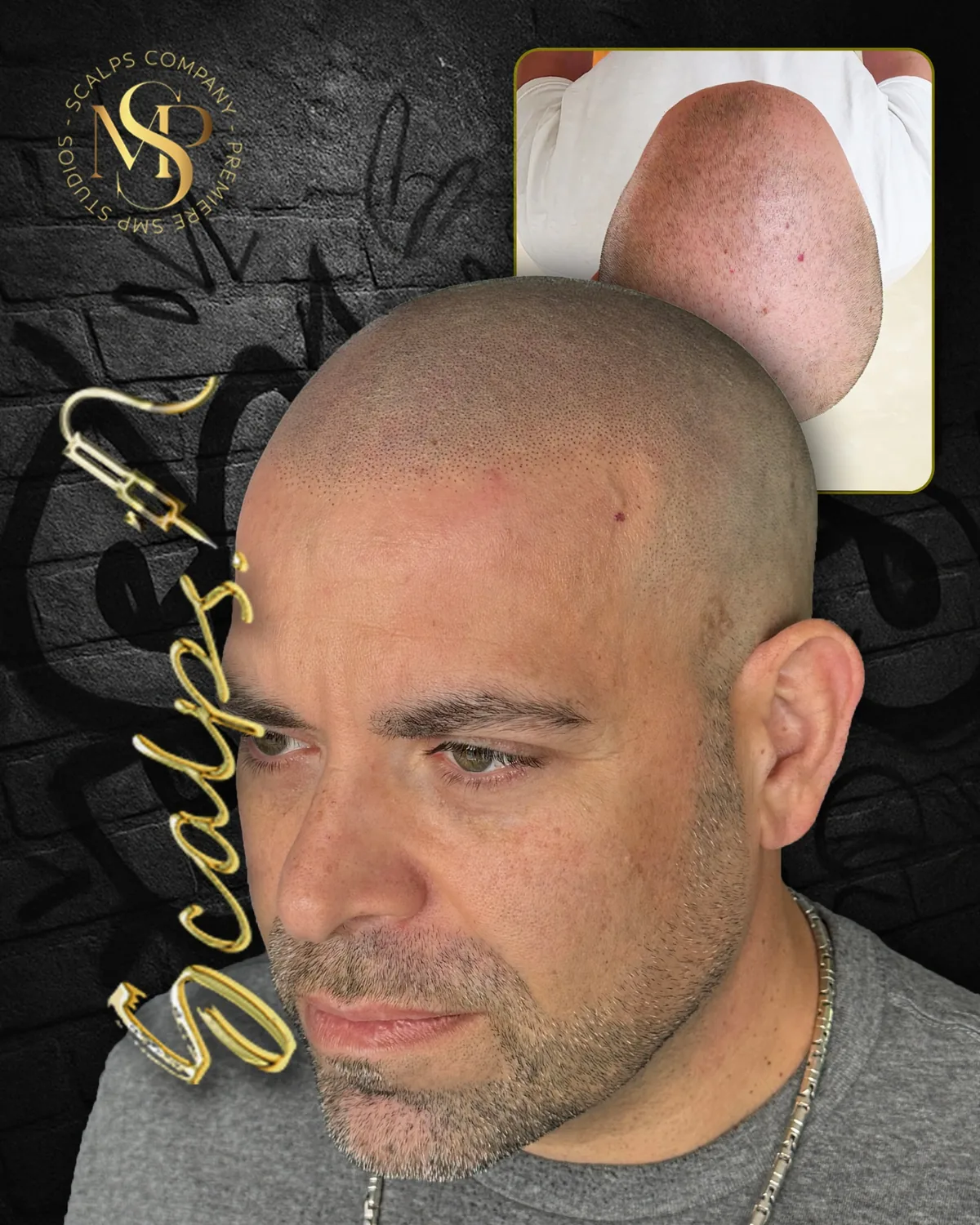
Hairline reconstruction with scalp micropigmentation is commonly considered by men with a receding hairline, a pronounced horseshoe pattern, extensive hair loss, or a bald scalp who intend to keep their hair shaved or clipped very short. Instead of creating physical hair, SMP places thousands of carefully spaced pigment impressions that resemble the visual pattern of closely shaved follicles.
The design can rebuild the appearance of a front hairline, reduce the contrast between bare scalp and remaining hair at the sides, and create a more intentional shaved-head frame. At SCALPS in Princeton, the proposed shape is planned around facial structure, age, skin tone, natural recession, and any existing follicle pattern—not copied from a standard template.
- Best suited to a consistently shaved or very closely clipped style.
- Hairline softness, recession, and irregularity are planned for realism.
- Multiple sessions allow density and tone to be built conservatively.
Important: SMP does not grow hair, restore follicles, or create three-dimensional strands. The goal is a believable cosmetic impression of a closely shaved scalp.
For reducing visible scalp contrast where adequate native hair remains.
Density-focused scalp micropigmentation is intended for selected clients who plan to keep longer hair and still have sufficiently continuous native coverage. Pigment impressions are placed between existing follicles to reduce the visual contrast between the hair and the lighter scalp underneath. This can make diffuse thinning appear less obvious in ordinary viewing conditions.
This approach is not appropriate for every pattern of hair loss. If the remaining hair is too sparse, unstable, or separated by exposed areas, pigment can become visible without enough hair to support the illusion. A candidacy assessment at SCALPS in Princeton considers density, likely progression, styling habits, scalp visibility, skin tone, and whether a shorter hairstyle would produce a more believable result.
- Requires adequate, continuous hair across the treatment area.
- Works by reducing scalp contrast—not by thickening individual hairs.
- Future hair loss may change how the treatment should be maintained.
Important: Density SMP cannot create missing hair volume. Treatment may be declined when the remaining hair cannot support a natural-looking result.
For softening the contrast of selected FUE, FUT, surgical, or injury-related scars.
Scalp scar camouflage uses carefully selected pigment impressions to help a light or contrasting scar blend more closely with the follicle pattern around it. It may be considered for linear FUT transplant scars, dot-like FUE extraction scars, and certain healed surgical or trauma-related scars when the tissue is stable enough to receive pigment.
Scar tissue behaves differently from ordinary scalp skin. Texture, thickness, color, blood supply, prior treatments, and the way the scar has healed can all affect pigment retention. Planning therefore starts with a close assessment and may require a conservative test area or additional refinement sessions. The surrounding haircut and follicle direction also influence how convincing the camouflage can appear.
- The scar should be fully healed and medically stable before assessment.
- Pigment color and spacing must blend with nearby shaved follicles.
- Raised, indented, or highly textured scars may remain physically visible.
Important: SMP can reduce color contrast, but it does not remove scar tissue or guarantee that texture will become invisible.
Start with the concern, hair length, and result you want to maintain.
You do not need to diagnose your own hair-loss pattern before contacting SCALPS. Many clients know what bothers them—an uneven hairline, a bald crown, visible scalp through longer hair, or a transplant scar—but are unsure which approach would look most natural. The right path depends on the starting point and the hairstyle you expect to keep.
A useful first assessment considers current and future hair length, the continuity of remaining hair, skin tone, scalp condition, scarring, prior procedures, facial proportions, and how subtle or defined you want the finished result to appear. Photos can begin the conversation, while an in-person visit provides the most complete visual assessment.
- Use the private fit survey to describe the main concern.
- Choose an in-person or Zoom consultation for visual guidance.
- Bring examples of results that feel natural—and results you want to avoid.
Next step: Begin with the guided survey below; it routes the concern into a more focused consultation without making a candidacy promise.
The survey turns your concern into a more useful first conversation.

A visual solution.
Not hair growth.
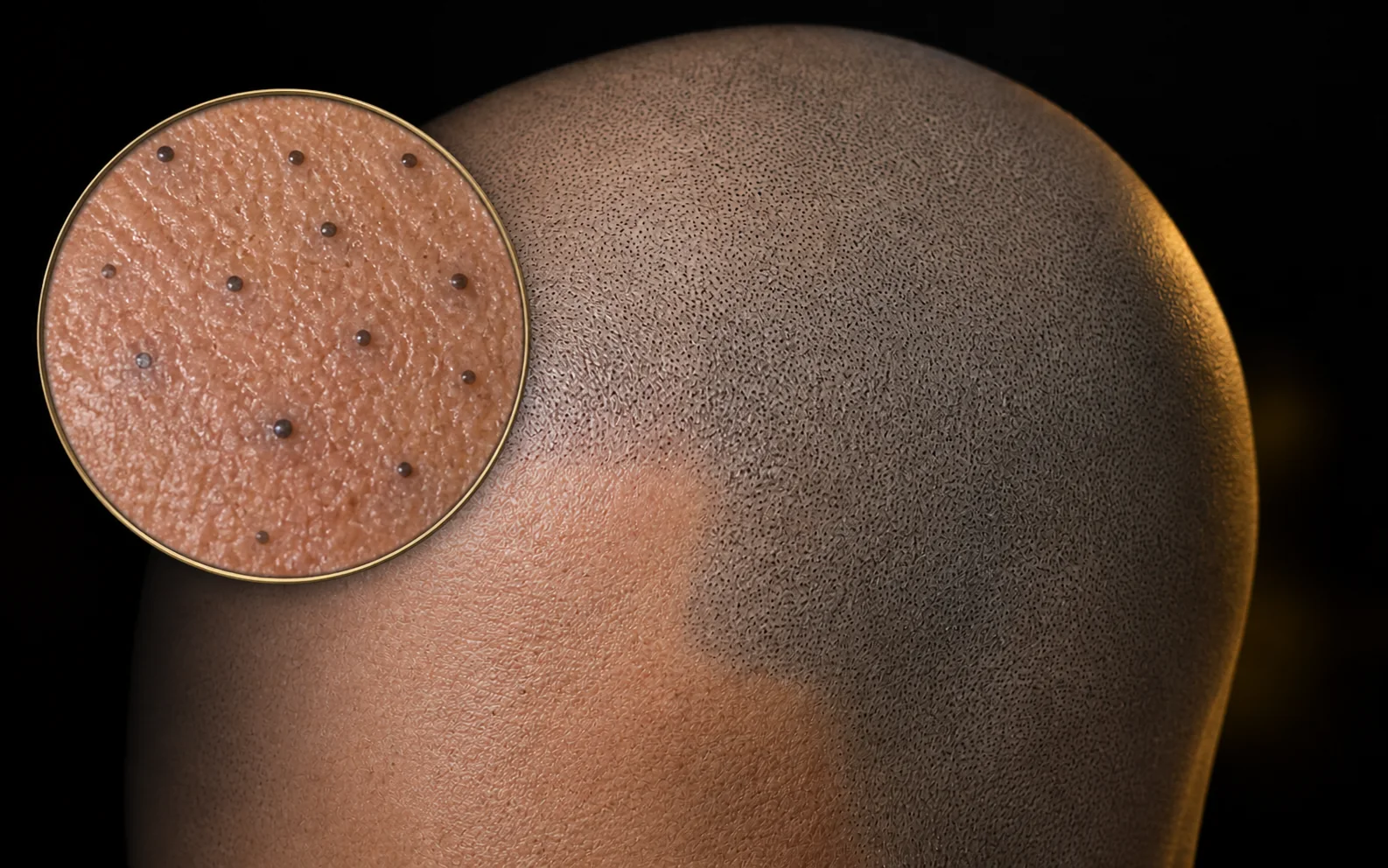
Scalp micropigmentation, also called SMP or a hair tattoo, is a cosmetic tattoo technique. Tiny pigment impressions create the visual pattern of closely shaved follicles or reduce contrast where longer hair is thinning.
Natural scalp micropigmentation results,
shown clearly.
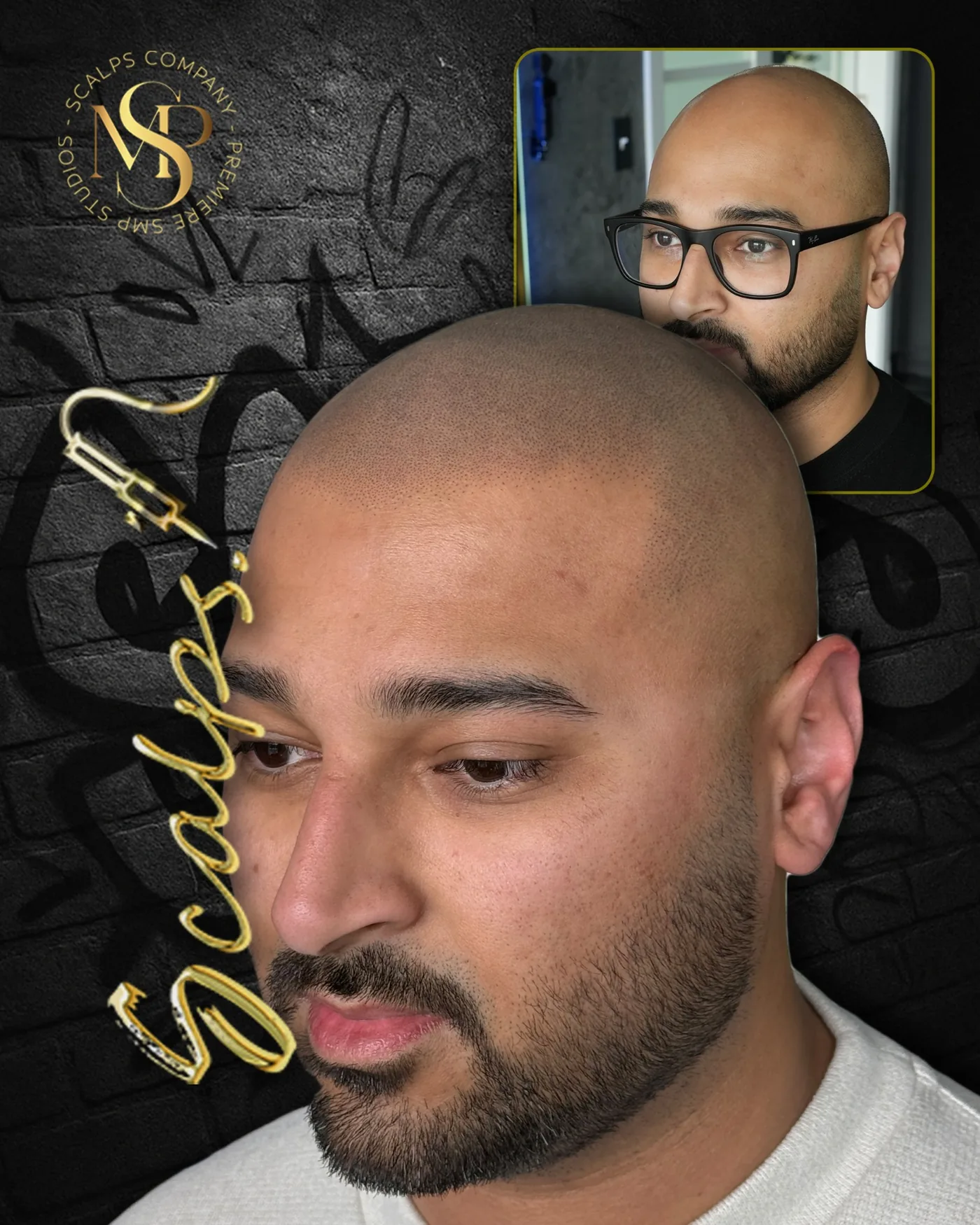
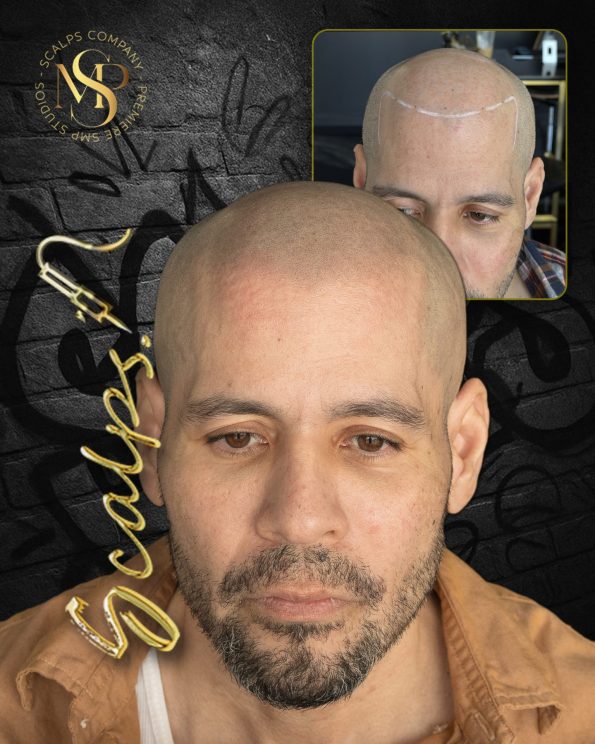
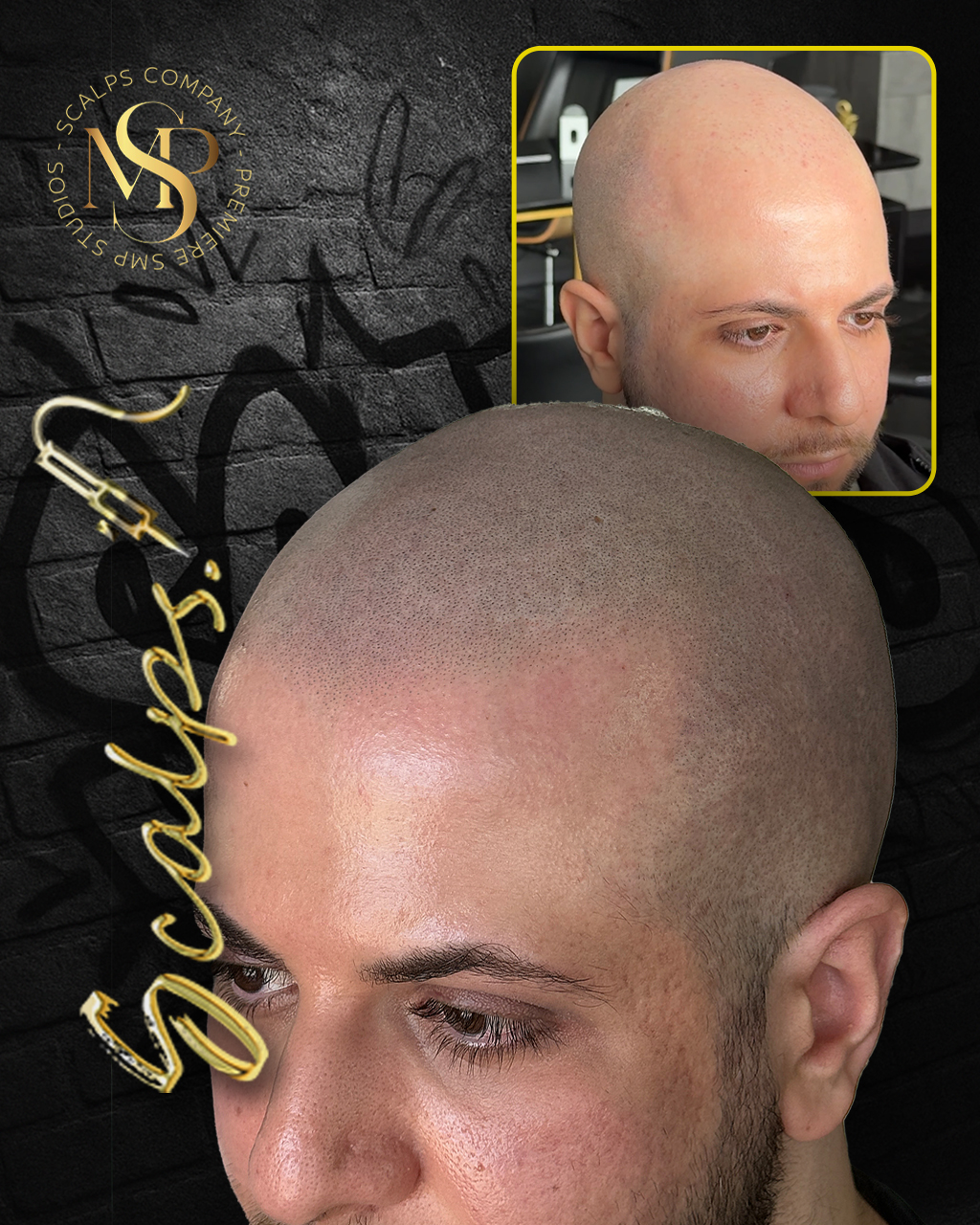
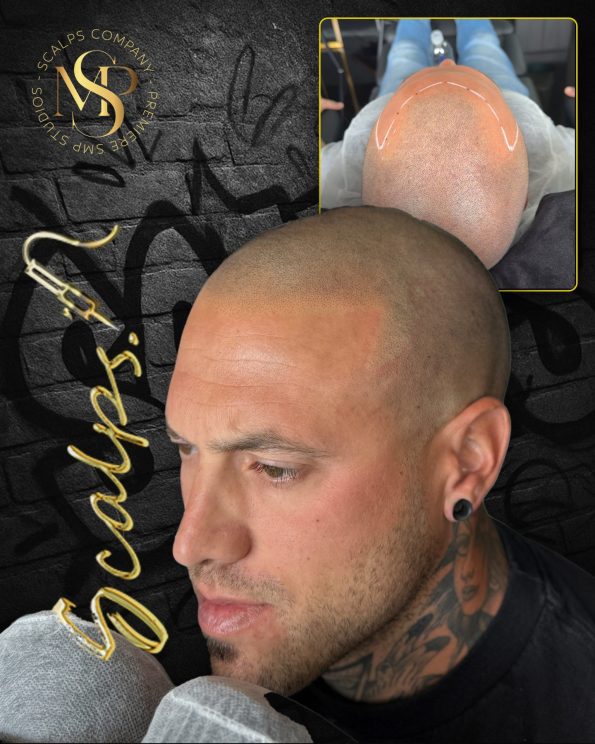
Compare real SCALPS before-and-after results from Princeton for hairline reconstruction, bald-scalp coverage, and the appearance of greater density. Each treatment is designed around the client’s starting point; individual results vary.
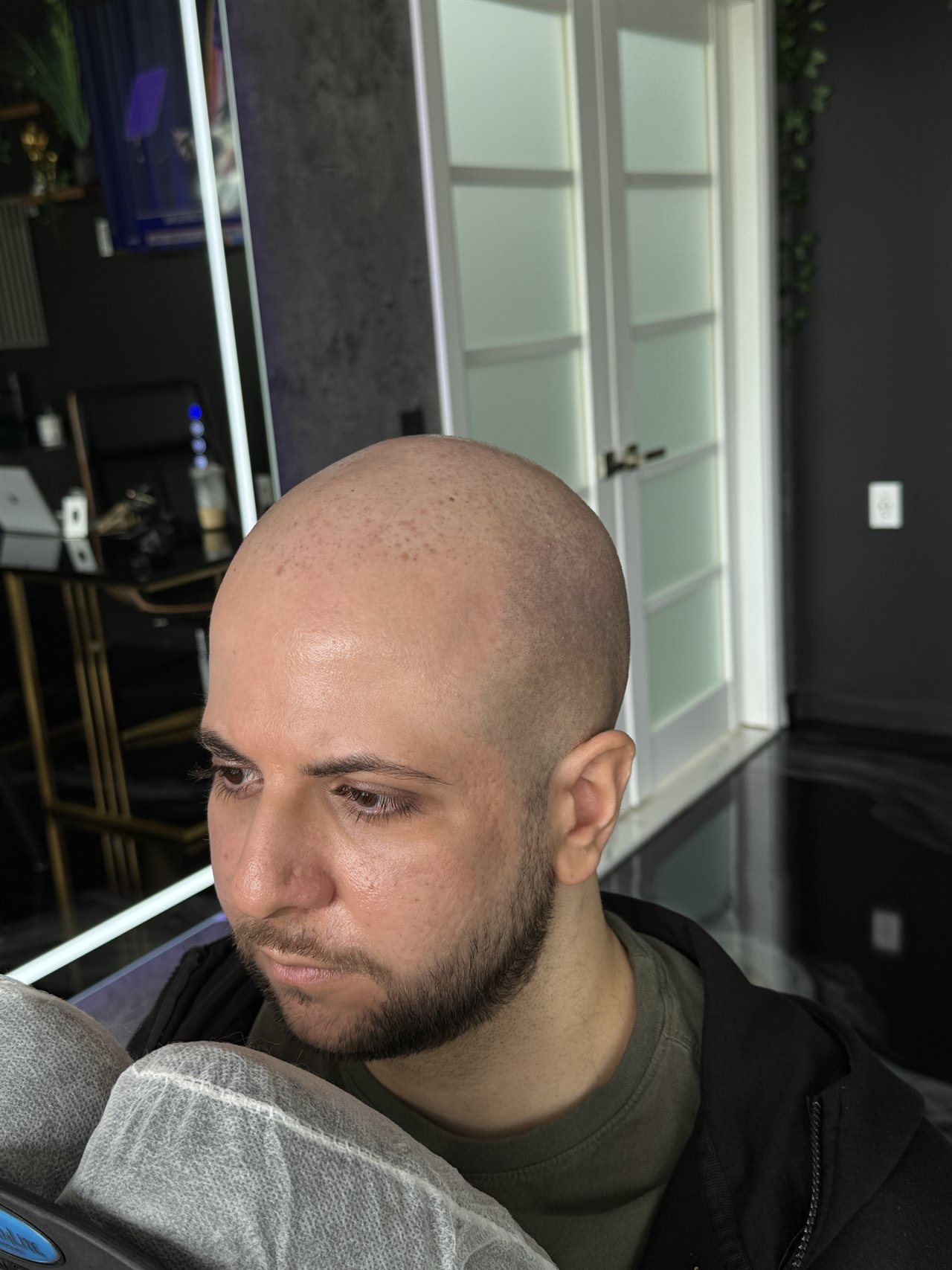
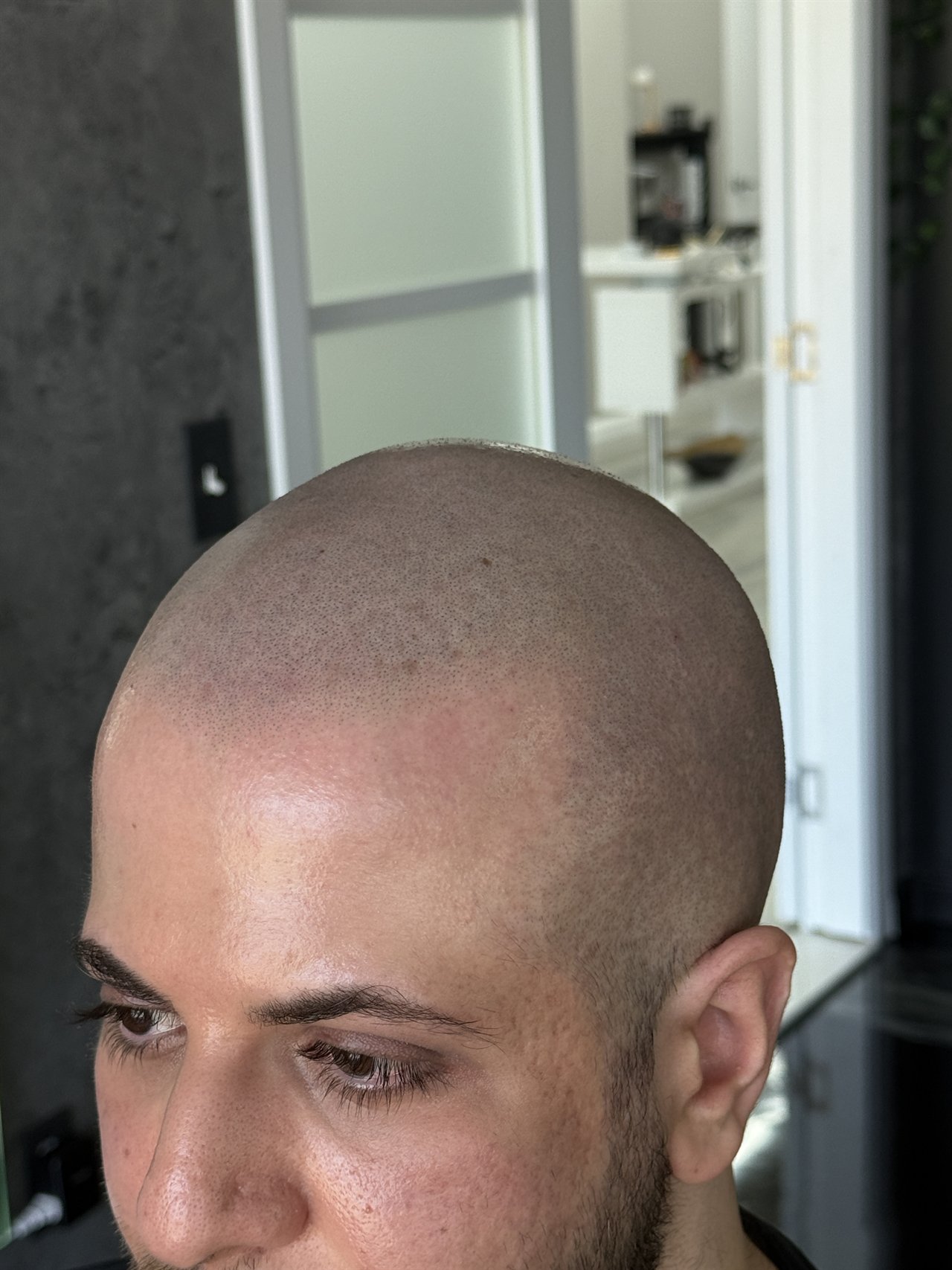
BeforeAfterDrag to compareJordan G.
Soft profile transition · actual SCALPS client
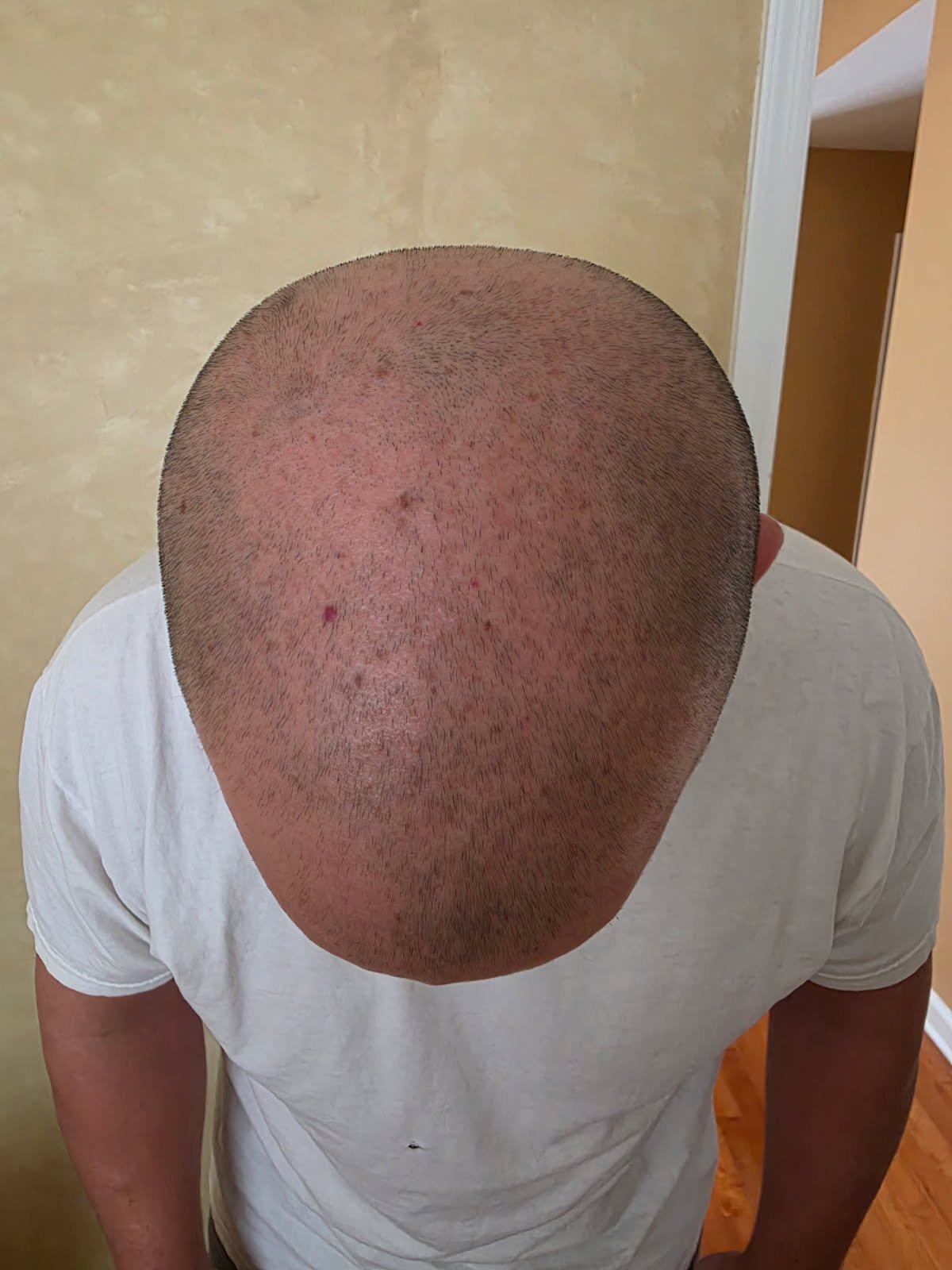
BeforeAfterDrag to compareHelder M.
Balanced density from crown forward · actual SCALPS client
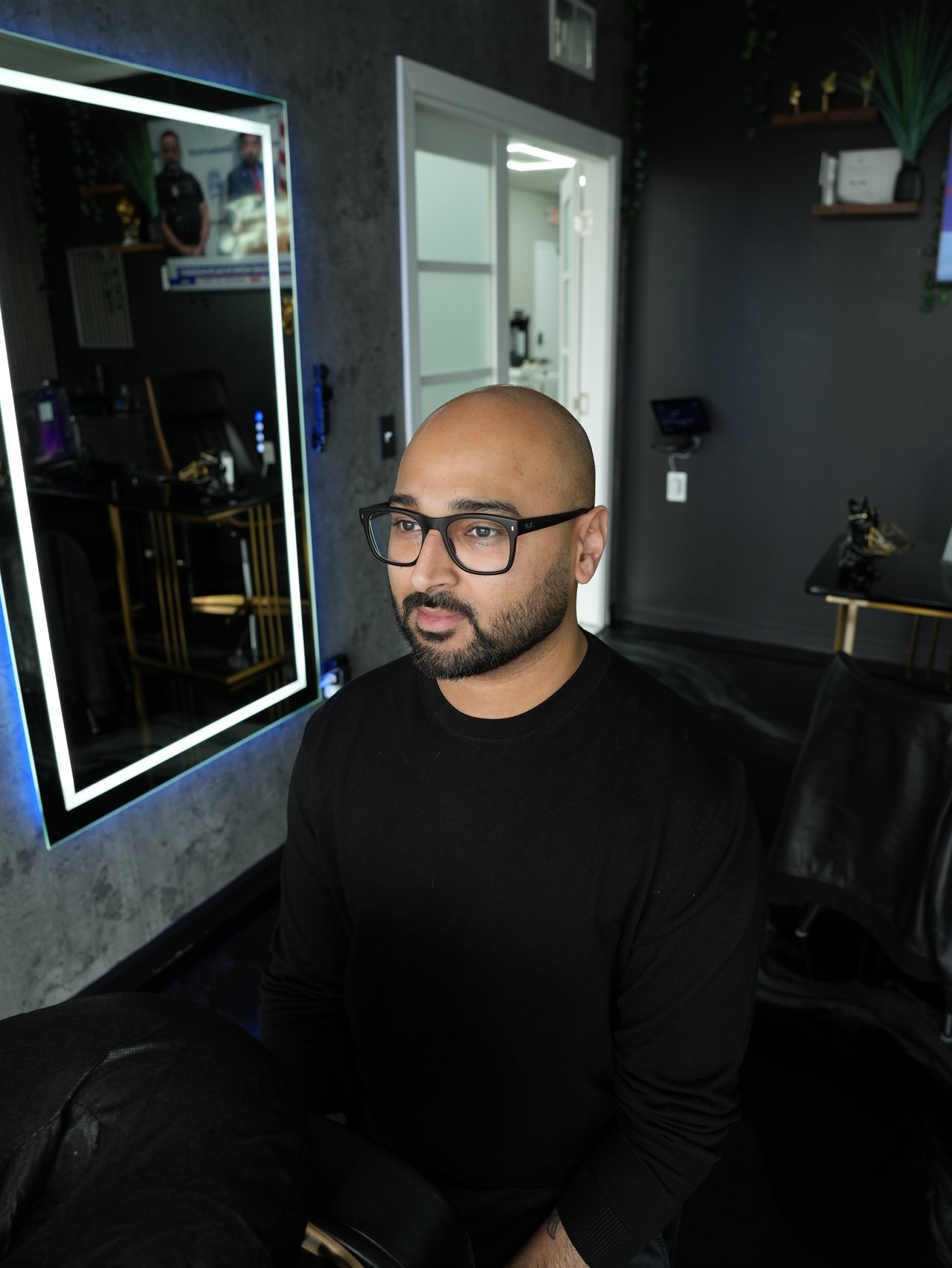
BeforeAfterDrag to compareHaris S.
Natural frontal framing · actual SCALPS client
Real SCALPS clients photographed before and after treatment. Photo timing, lighting, and individual outcomes vary.
Trust the result only when the evidence survives a closer look.
A dramatic before-and-after is not enough. Useful scalp micropigmentation proof shows the real starting point, identifies the treatment or healing stage accurately, and lets you judge the hairline, spacing, tone, and blend under more than one honest viewing condition.
Daylight evidence
Natural light can expose overly dark tone, sharp edges, or spacing that flattering studio light may soften.
Indoor light
Consistent indoor photos help show how the result reads in the conditions clients encounter every day.
Close-up detail
Close views should reveal controlled impressions and natural variation—not a solid field disguised by distance.
Age-appropriate design
The hairline should suit the client’s face, age, existing hair, and long-term appearance—not repeat a fashionable stamp.
Natural spacing
Believable work preserves variation and negative space instead of forcing uniform darkness or artificial density.
No proof tricks
Filters, retouching, mismatched angles, or inconsistent lighting should never be used to make pigment appear more successful.
SCALPS proof rule: judge consented client work in honest lighting, consistent framing, and useful close-up detail.
Believable SMP comes from restraint, variation, and healed judgment.
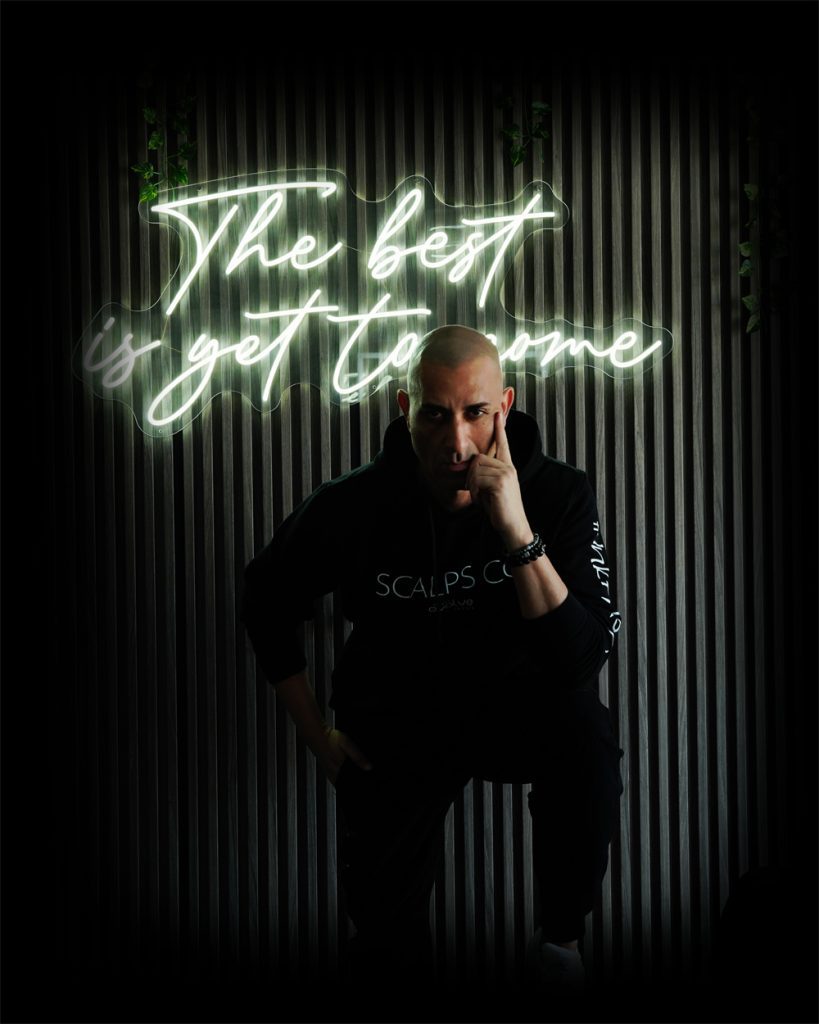
A natural scalp micropigmentation result should suit the client—not repeat a standard outline. Alex considers facial structure, age, skin tone, existing hair, follicle spacing, and the way pigment heals before refining the final density.
Face & age
The reconstructed hairline is shaped for the person wearing it, with an age-appropriate position and edge.
Tone & spacing
Controlled variation helps individual impressions read like follicles instead of a dark, uniform field.
Existing hair
Hairline and density work must blend into the pattern, color, and coverage already present.
Healed refinement
Gradual sessions let the final adjustments respond to how the pigment settles in the skin.

Conservative by instinct.
Exacting by practice.
“The goal is not the darkest result on day one. It is the most believable result after it heals—and years after that.”
Alex’s design philosophy favors natural hairline structure, preserved negative space, gradual layering, and pigment choices made around each client’s face, age, skin tone, and existing hair.
Use the fit survey to identify the work and design questions most relevant to you.


A private local studio.
A national standard for natural SMP.
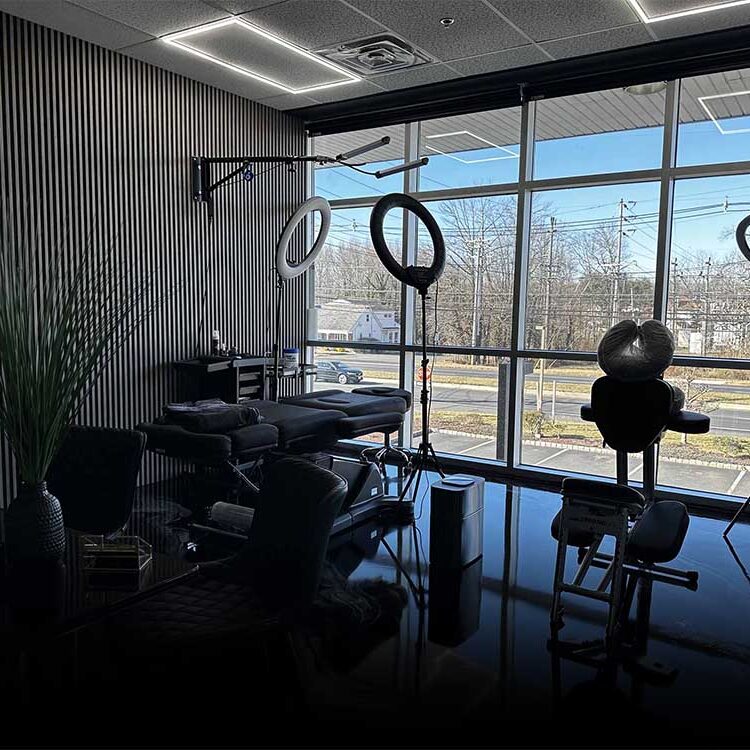
SCALPS brings Alex Asher’s nationally recognized approach to natural hairline design into a private, by-appointment Princeton studio. The setting is local; the standard of the work is not limited by geography.
Princeton, NJ 08540
By appointment only
(732) 641-8223
Not sure where to begin? Follow the path.
Scalp micropigmentation in Princeton, with a clear plan before you arrive.
Find the SCALPS studio on Ewing Street, compare consultation formats, and prepare the details that help Alex understand the result you want—and the result you want to avoid.
Open directionsSCALPS®, 601 Ewing Street, Suite C-1, Princeton, NJ 08540. Visits are by appointment. Call (732) 641-8223.
In person provides the most complete visual assessment. Zoom is the strongest remote option. Phone is available when clear scalp photos are sent beforehand.
Bring your questions, preferred hairline references if you have them, and an honest description of what would make a result look “too done” to you.
For clients flying in or driving several hours, SCALPS offers premium travel-planning assistance so the treatment schedule and the trip work together. Contact our team for help coordinating recommended flight windows, nearby hotel options, local transportation, and session timing.
See where your private SCALPS visit takes place.
The private, by-appointment studio is at 601 Ewing Street, Suite C-1, Princeton, NJ 08540.
Look for the pattern
inside the praise.
Individual experiences vary
“He utilizes genuine artistic ability to mimic natural follicles, matching density and creating a seamless, age-appropriate hairline.”Helder M. · Google review excerpt
“From pre-procedure, sessions, and aftercare, Alex made the whole process truly fantastic.”Mike R. · Google review excerpt
“Once I met Alex and saw how dedicated he was, I was very confident in his ability.”Shane · Google review excerpt
Selected public review excerpts. Individual experiences vary.
Move from general reviews to the proof and questions that match your own starting point.
Understand the plan.
Then judge the price.
SMP pricing should be explained in context: the treatment area, design work, staged sessions, healed assessment, aftercare, and possible future maintenance. A quote is not a confidence guarantee, and no outcome should be promised.
Design together
Discuss your preferred hairline, density, existing hair, and long-term expectations before pigment is placed.
Build gradually
Create the foundation, then add depth and blend during later sessions rather than forcing density at once.
Judge the healed work
Review how the pigment settles and use the final refinement to balance tone, spacing, and edge softness.
Review current SCALPS pricing without rewriting the cost page.
The dedicated cost page remains the source for approved pricing. This Princeton page explains value and links to it without creating conflicting figures or guarantees.
Useful answers before you choose a treatment.
These are the questions that separate a good-fit plan from a generic sales answer. Each one explains what SMP can do, what it cannot do, and what evidence should support the next step.
Am I a candidate for density SMP?
Density SMP can reduce the contrast between visible scalp and existing hair, but pigment cannot create missing 3D hair. Adequate, continuous native density is required to support the illusion. If exposed areas, unstable loss, or the existing pattern would make the result too visible, Alex may decline treatment or recommend a different plan.
Check My Candidacy →How should I judge an artist’s healed results?
Look for labeled, consented proof in daylight, indoor light, and close-up. The hairline should suit the client’s age and face, spacing should remain natural, and before/after framing should be consistent. Filters, hidden starting points, mismatched lighting, or an unverified “healed” label weaken the evidence.
Review real SCALPS proof →What should scalp micropigmentation pricing include?
Price should be connected to the treatment area, design work, staged sessions, healed assessment, aftercare, and expected maintenance—not reduced to a bargain number. The current SCALPS cost page remains the approved source for pricing. Payment does not guarantee confidence, invisibility, or a specific outcome.
View current SMP pricing →Will SMP look like real hair in every light and distance?
SMP is pigment, not hair, and it creates no physical strand or 3D texture. For an appropriate candidate, restrained design can create a subtle, believable visual improvement. It should not be sold as invisible from every angle, distance, or lighting condition.
Can previous SMP be touched up or corrected?
Previous work must be assessed before a recommendation is made. Depending on pigment color, saturation, placement, skin condition, scarring, and remaining hair, the safer plan may involve blending, laser removal, a limited touch-up, or no additional pigment yet. Correction is a separate path from new treatment.
Request a correction assessment →Choose the path that matches what is already on your scalp.
New treatment and previous-work correction should not enter the same generic form. The questions, proof, and possible next step are different.
Considering SMP for the first time?
Start with your hair-loss pattern, existing density, goals, and the result you want to avoid. The candidacy survey helps route the first conversation.
Already have SMP or need a touch-up?
Previous pigment needs an assessment of color, saturation, placement, skin condition, scar tissue, and remaining hair before Alex recommends blending, removal, or additional work.
The process
starts here.
Tell SCALPS whether your concern is a receding hairline, baldness, thinning density, a scalp scar—or simply “not sure.” We’ll use your starting point to guide the next conversation.
More proof.
Different starting points.
Explore consented SCALPS hairline and scalp micropigmentation results before choosing how you want to speak with Alex. Explore real SCALPS hairline and scalp micropigmentation results before choosing how you want to speak with Alex.

Seen enough? Choose the consultation setting that makes the first conversation easiest.
Choose a consultationChoose the setting that feels easiest.
Each consultation is complimentary. In-person and Zoom make visual assessment easiest; phone consultations require clear scalp photos beforehand.
Prefer that
we contact you?
If you are interested but do not want to choose a calendar time yet, leave your details below. The SCALPS team will review your request and follow up privately about the most useful next step for the Princeton studio.
By submitting, you agree to the consent and privacy terms shown inside the secure SCALPS form. Page code does not treat a form view or click as a lead.